
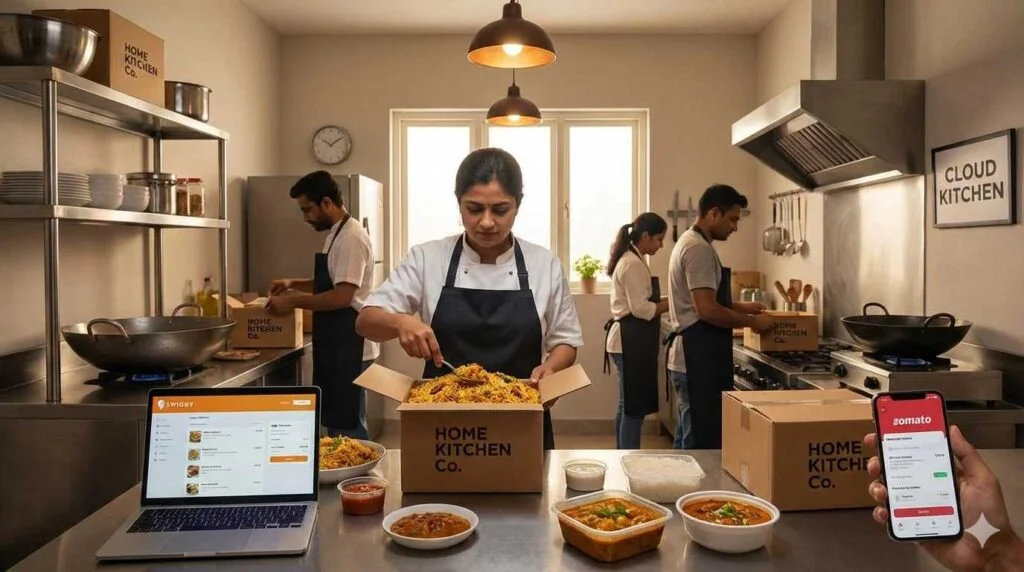

Starting a cloud kitchen from home in Tier-2 cities is becoming a practical low-investment business model in 2026. With rising food delivery demand and minimal setup costs, this guide explains how to launch a cloud kitchen under ₹50,000 with clear steps and realistic expectations.
Why Cloud Kitchens Are Growing in Tier-2 Cities
The idea of a cloud kitchen from home has gained traction due to the rapid expansion of food delivery platforms and changing consumer behavior. In Tier-2 cities, people are ordering more frequently but still prefer affordable, home-style meals over premium restaurant pricing.
Lower rental costs, less competition compared to metros, and access to local demand make smaller cities ideal for starting a cloud kitchen business. Unlike traditional restaurants, there is no need for dine-in space, which significantly reduces initial investment.
The rise of platforms like Swiggy and Zomato has made it easier for home-based food businesses to reach customers without heavy marketing spend. This shift has opened opportunities for individuals, especially homemakers and small entrepreneurs.
Budget Breakdown for Cloud Kitchen Setup Under ₹50,000
Starting a cloud kitchen on a tight budget requires prioritizing essentials and avoiding unnecessary expenses. A basic setup can be achieved within ₹30,000 to ₹50,000 if you already have a home kitchen.
Major cost components include basic equipment upgrades, packaging materials, FSSAI registration, and initial raw materials. Gas stove, utensils, and refrigerator are usually already available in most homes, reducing setup costs.
Packaging plays a critical role in delivery businesses. Investing in leak-proof and hygienic packaging builds trust and reduces complaints. Allocate around ₹5,000 to ₹8,000 for initial packaging supplies.
Registration under FSSAI is mandatory for food businesses in India and costs around ₹100 to ₹2,000 depending on the scale. This ensures compliance and improves customer credibility.
Step-by-Step Process to Start a Home Cloud Kitchen
The process to start a cloud kitchen from home is straightforward but requires discipline in execution. Skipping steps often leads to early failure.
Step 1: Identify a niche or cuisine with demand in your area such as tiffin meals, बिरयानी, snacks, or healthy food
Step 2: Test your menu with a small audience before launching publicly
Step 3: Register your business under FSSAI and ensure hygiene compliance
Step 4: Partner with delivery platforms or start with WhatsApp orders locally
Step 5: Set up basic branding including a name, menu, and pricing
Step 6: Start operations with limited daily orders to maintain quality
Starting small helps control costs and build consistency before scaling.
Best Low-Investment Menu Ideas for Tier-2 Markets
Choosing the right menu is often more important than the setup itself. Tier-2 customers prioritize value, taste, and familiarity.
Tiffin services, combo meals, and regional dishes tend to perform well because they align with daily consumption patterns. For example, a simple dal, rice, sabzi combo priced affordably can generate repeat customers.
Street-style snacks like momos, rolls, and sandwiches also have high demand due to low price points and quick delivery cycles. These items require minimal ingredients and offer better margins.
Avoid overly complex menus in the beginning. Fewer items mean better quality control and faster preparation.
Licensing, Hygiene, and Compliance Requirements
Even small home kitchens must follow basic food safety guidelines. Registration with FSSAI is not optional and is required for listing on delivery platforms.
Maintaining hygiene standards is critical. Clean cooking surfaces, proper storage, and safe packaging reduce health risks and customer complaints. Food delivery platforms also monitor ratings, which directly impact visibility.
Local municipal rules may vary slightly across cities, but most Tier-2 locations allow home-based food businesses if they meet safety standards.
Keeping records of raw materials and maintaining consistency in preparation helps build long-term trust.
Marketing Strategies Without Spending on Ads
Most successful cloud kitchens in smaller cities grow through organic channels rather than paid advertising.
WhatsApp groups, local Facebook communities, and word-of-mouth are powerful tools in Tier-2 markets. Early customers often become repeat buyers if the quality is consistent.
Listing on food delivery apps increases visibility, but commissions can reduce margins. Many operators balance this by encouraging direct orders after initial discovery.
Offering small discounts or combo deals during the launch phase can help acquire the first 50 to 100 customers quickly.
Challenges and Realistic Expectations
Starting a cloud kitchen is not a guaranteed success. Many fail due to inconsistent quality, poor packaging, or lack of demand research.
Initial months may generate low profits as you build a customer base. Managing costs and maintaining discipline during this phase is critical.
Delivery delays, customer complaints, and platform commissions are common challenges. Handling feedback professionally and improving operations is key to survival.
Scaling should only happen after achieving consistent daily orders and stable quality.
Takeaways
Cloud kitchens can be started from home with under ₹50,000 investment
Tier-2 cities offer strong demand for affordable and home-style food
Menu selection and consistency matter more than branding initially
Organic marketing and repeat customers drive long-term success
FAQs
Can I start a cloud kitchen without registering a business?
No, FSSAI registration is mandatory even for small home-based food businesses.
Is ₹50,000 enough to start a cloud kitchen?
Yes, if you already have a basic kitchen setup, this budget is sufficient for a small-scale launch.
Do I need to join Swiggy or Zomato immediately?
No, you can start with local orders and join platforms later once operations stabilize.
How long does it take to become profitable?
It usually takes 2 to 4 months to build steady demand and start seeing consistent profits.