
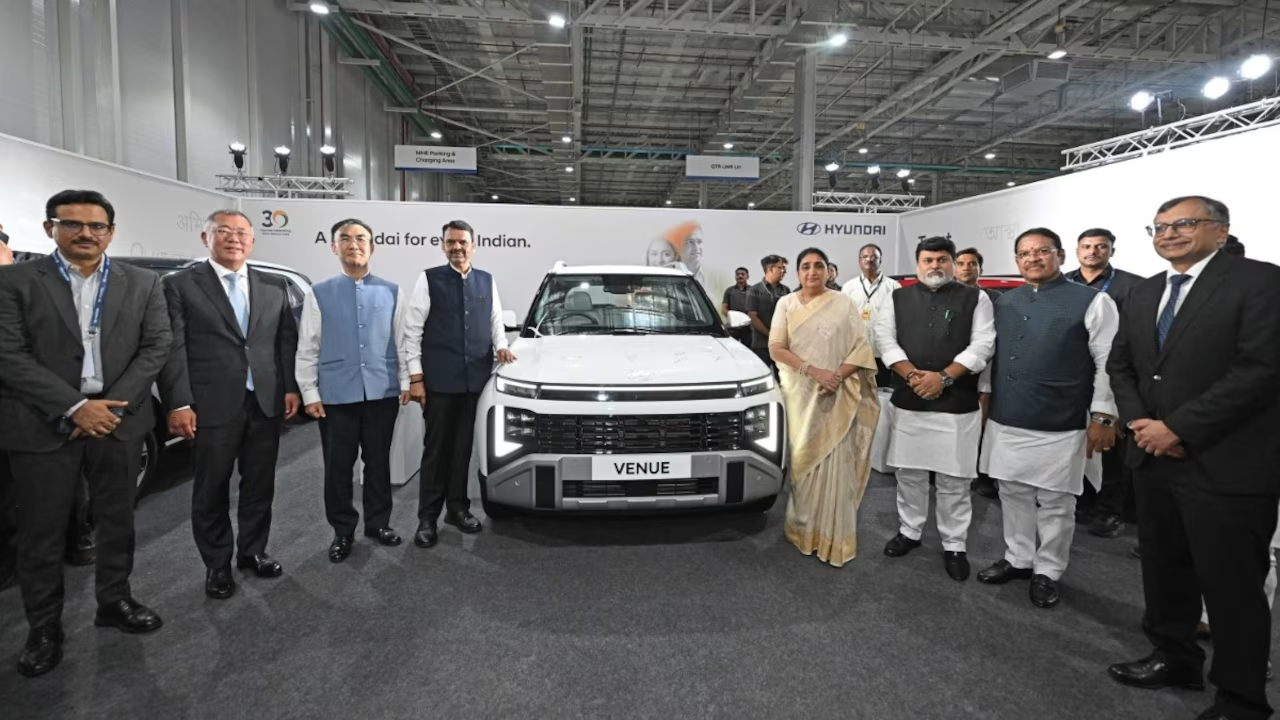

Hyundai Motor India’s expanded manufacturing plans in Pune could create fresh opportunities for Maharashtra’s automotive suppliers, engineering firms and small businesses. With additional investment planned by 2030, the development highlights the growing importance of local manufacturing, supply-chain partnerships and industrial skills.
Hyundai Pune Plant Expansion: What Has Been Announced?
Hyundai Motor India has inaugurated its manufacturing facility in Talegaon, Pune, marking a significant expansion of its manufacturing presence in Maharashtra. The development comes as the automaker looks to strengthen its production capabilities and respond to demand in India’s passenger vehicle market.
On October 14, 2026, the company announced plans to invest an additional ₹11,000 crore at the Pune facility in phases. Its current installed annual production capacity of 1.7 lakh vehicles is planned to increase to 3.2 lakh vehicles by 2030.
The investment forms part of a wider strategy to expand manufacturing and strengthen India’s role in Hyundai Motor Group’s global operations. The group separately announced a commitment to invest $15.5 billion in India between 2026 and 2032.
For Maharashtra, the expansion brings attention to the industrial ecosystem surrounding Pune. Beyond vehicle production, the development could create opportunities for businesses that supply components, maintain machinery, provide logistics services and support factory operations.
However, the scale of the actual benefits for individual businesses will depend on future procurement decisions, production requirements and the pace at which the planned expansion takes place.
Local Automotive Suppliers Could See New Opportunities
An automobile manufacturing facility depends on a network of suppliers that provide components, materials and specialised services. As production capacity increases, manufacturers may need to strengthen their supply chains to meet quality, delivery and cost requirements.
For local suppliers, this could create opportunities to explore partnerships with Hyundai or businesses already working within its supplier network.
Potential areas include metal components, plastic mouldings, rubber parts, electrical assemblies, fasteners, packaging materials and precision-engineered products. Companies that specialise in machine maintenance, industrial tooling and quality testing may also find opportunities as manufacturing activity grows.
These possibilities do not mean Hyundai will automatically purchase from every nearby business. Suppliers generally need to meet technical specifications, quality standards, production volumes and commercial terms set by the manufacturer or its approved vendors.
Businesses should therefore treat the expansion as a reason to assess their capabilities and investigate procurement opportunities rather than assume that new contracts are guaranteed.
For smaller manufacturers in Maharashtra, the most practical first step is to identify the products or services they can supply competitively and determine whether they meet the requirements of automotive manufacturing.
How Small Businesses Can Benefit From Industrial Growth
The impact of an automobile plant can extend beyond companies that manufacture vehicle parts. Industrial facilities require a range of supporting services to keep operations running efficiently.
Small businesses around Pune and neighbouring industrial areas could explore opportunities in several areas:
Logistics and transportation: Manufacturers and suppliers need materials moved between factories, warehouses and distribution points. Transport operators and warehousing businesses may explore relevant contracts.
Industrial maintenance: Factories require equipment servicing, electrical maintenance, machine repairs and other technical support. Businesses with qualified personnel and suitable safety procedures may be able to serve this demand.
Packaging and material handling: Components often need specialised packaging, storage and handling. Local firms that provide industrial packaging solutions could approach relevant suppliers and logistics partners.
Workplace services: Industrial operations also require housekeeping, facility management, catering and other support services, subject to the company’s procurement policies.
Technical services: Testing, calibration, industrial software, equipment installation and engineering support can form part of a manufacturing ecosystem.
The commercial opportunity will differ for each business. A small transport operator may have different entry requirements from a precision engineering company. Businesses should evaluate their existing resources, operating costs and ability to meet contractual commitments before investing in expansion.
Pune’s Automotive Ecosystem Could Gain Momentum
Pune has an established automotive and engineering ecosystem, supported by manufacturing facilities, component makers, industrial estates and technical institutions. Hyundai’s expansion adds another major development to this industrial landscape.
The potential benefit lies in how effectively local businesses connect with the wider manufacturing network. A company that does not directly supply Hyundai may still serve a component manufacturer, logistics provider or maintenance contractor associated with the facility.
Such indirect relationships can be important for smaller enterprises that may not initially have the capacity to supply a large automaker directly.
The planned increase in production capacity could also encourage some suppliers to review their own manufacturing capabilities. Depending on demand and procurement arrangements, businesses may consider upgrading equipment, improving production processes or developing new technical skills.
At the same time, growth is not automatic. Suppliers face competition from established vendors across India, and manufacturers typically evaluate cost, reliability, quality and delivery performance before awarding contracts.
Local businesses will need to demonstrate that they can compete on these factors. Proximity to the plant may help with transportation and coordination, but it is unlikely to be sufficient on its own.
Employment and Skills: What the Expansion Could Mean
An increase in manufacturing activity can support employment across factory operations, engineering, quality control, maintenance and supply-chain management. Additional activity among suppliers and service providers may also create work beyond the plant itself.
For job seekers in Pune and nearby districts, relevant skills could include mechanical and electrical engineering, industrial automation, production planning, welding, machine operation, quality inspection and logistics management.
However, the planned capacity increase should not be interpreted as a confirmed number of new jobs. Employment will depend on the company’s production plans, level of automation, staffing requirements and the expansion of its supplier network.
Industrial training institutions and vocational programmes can help candidates develop skills relevant to manufacturing roles. Businesses that need specialised workers may also benefit from investing in employee training and workplace safety.
Small enterprises should pay particular attention to technical competence and compliance when preparing to work with large manufacturers. Automotive supply chains often require consistent quality documentation, trained personnel and reliable production processes.
Challenges Local Suppliers Must Prepare For
Although the expansion could open new business avenues, entering an automotive supply chain can be challenging for small enterprises.
Manufacturers generally expect suppliers to maintain consistent product quality, meet delivery schedules and handle changes in production requirements. Businesses may also need to invest in machinery, testing equipment, certification and trained employees.
Cash flow is another important consideration. Supplying a large customer can require businesses to purchase raw materials and pay workers before receiving payment for completed orders. Small firms should understand payment terms and working-capital requirements before accepting contracts.
Competition is also likely to remain significant. Established suppliers may have advantages in production scale, technology and experience. Smaller businesses can respond by specialising in particular components or services, improving efficiency and building a record of dependable performance.
Companies should avoid borrowing heavily or purchasing expensive equipment solely on the assumption that Hyundai’s expansion will generate immediate orders. A careful assessment of confirmed demand, investment requirements and financial risk is essential.
How Local Businesses Can Explore Supply Opportunities
Businesses interested in the expansion can begin by preparing a clear profile of their products, services, production capacity and technical capabilities.
They should identify relevant procurement or supplier-enquiry channels through official company websites and established industry networks. Another option is to approach existing automotive component manufacturers and logistics providers that may require additional vendors.
Companies should also review their quality-control systems, statutory registrations, tax compliance, insurance requirements and workplace safety procedures. The precise requirements will depend on the nature of the product or service being supplied.
Industry associations, manufacturing clusters and business networking events can help smaller firms understand common supplier expectations and connect with potential partners.
Before accepting an order, businesses should verify the identity of the buyer, review contractual terms and assess whether they can deliver the required quantity and quality within the agreed timeline.
Hyundai’s Pune expansion presents a significant industrial development for Maharashtra. Its long-term economic impact will depend not only on higher vehicle production but also on how effectively manufacturers, suppliers, workers and small enterprises build sustainable relationships.
Key Takeaways
- Hyundai Motor India plans to invest ₹11,000 crore in phases at its Pune facility, with annual capacity targeted to rise from 1.7 lakh to 3.2 lakh vehicles by 2030.
- Local suppliers could explore opportunities in automotive components, engineering, logistics, packaging and industrial support services.
- Employment and business benefits are possible, but confirmed job numbers and individual supplier contracts should not be assumed.
- Small businesses should prioritise quality standards, financial planning, technical skills and verified procurement channels before investing in expansion.
Frequently Asked Questions
1. How much is Hyundai planning to invest in its Pune plant?
Hyundai Motor India has announced plans for an additional investment of ₹11,000 crore at its Pune facility in phases. The investment is intended to support manufacturing expansion, with the planned annual production capacity reaching 3.2 lakh vehicles by 2030.
2. Can small businesses in Maharashtra become Hyundai suppliers?
Potentially, yes. Businesses that provide automotive components, industrial services, packaging, logistics or other relevant products can investigate supplier opportunities. They must meet the applicable technical, commercial, quality and compliance requirements. A contract is not guaranteed simply because a business operates near the plant.
3. Which industries could benefit from Hyundai’s Pune expansion?
Potentially relevant sectors include automotive components, precision engineering, metal fabrication, plastics, electrical equipment, transportation, warehousing, industrial maintenance and technical services. The actual opportunities will depend on procurement requirements and the expansion of the supplier network.
4. Will Hyundai’s Pune expansion create new jobs?
The expansion could support employment across manufacturing, engineering and supply-chain activities. However, the number and types of new positions will depend on production requirements, automation, staffing decisions and supplier demand. Job seekers should rely on verified recruitment announcements rather than unconfirmed claims.