
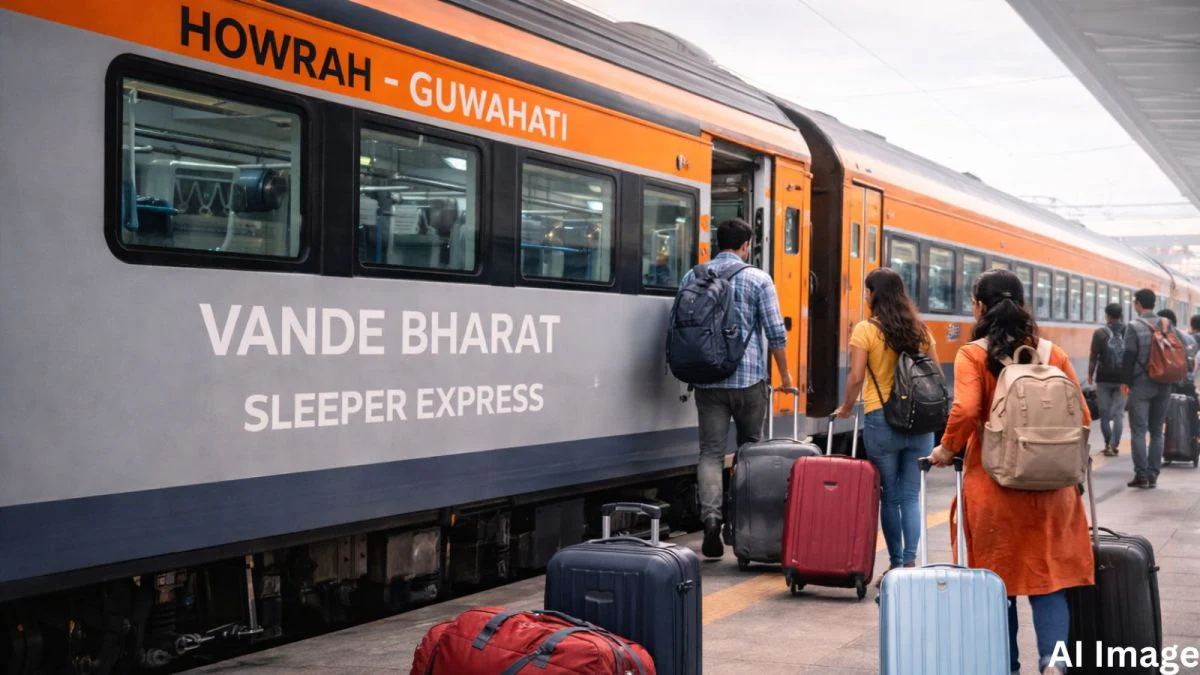

India’s first Vande Bharat Sleeper Train marks a significant shift in how long distance rail connectivity is planned, especially for regions like North Bengal that depend heavily on overnight travel. This development is time sensitive and infrastructure focused, with direct implications for mobility, economic access, and regional integration.
The introduction of a sleeper version of the Vande Bharat train moves premium rail travel beyond short daytime routes and into longer corridors that connect eastern, northeastern, and northern India more efficiently.
What Makes the Vande Bharat Sleeper Train Different
India’s first Vande Bharat Sleeper Train is designed specifically for overnight journeys, unlike earlier Vande Bharat services that focused on chair car seating and short travel durations. This train offers sleeper and AC sleeper classes, allowing passengers to travel long distances while resting overnight.
The sleeper configuration addresses a long standing gap in Indian Railways where faster trains were available mostly for daytime travel. For regions like North Bengal, where journeys to metros and major hubs often exceed ten hours, overnight connectivity is critical.
The train is also built with modern safety systems, improved suspension for night travel comfort, and onboard amenities suited for longer durations. These features aim to make rail travel competitive with flights for medium to long distance routes.
Why North Bengal Gains Strategic Importance
North Bengal occupies a unique geographic position, acting as a gateway to the Northeast while also connecting eastern India with the rest of the country. Rail infrastructure in this region carries not just passengers but also essential goods and services.
The arrival of India’s first Vande Bharat Sleeper Train improves access between North Bengal towns and major urban centers. Faster overnight travel reduces dependence on limited flight connectivity and long, slow express trains.
For residents, this means easier access to education, healthcare, and employment opportunities in larger cities. For the region, it enhances strategic connectivity, especially important given North Bengal’s proximity to international borders and sensitive corridors.
Impact on Passenger Mobility and Travel Behavior
One of the most immediate effects of the Vande Bharat Sleeper Train is a shift in passenger behavior. Overnight trains allow travelers to save daytime hours, avoid hotel costs, and arrive early morning ready for work or onward travel.
For families, students, and business travelers in North Bengal and adjoining areas, this changes how trips are planned. Journeys that previously required two days can now be completed overnight with better comfort.
Improved reliability and speed also reduce uncertainty. Consistent schedules and reduced travel times encourage rail over road transport, easing pressure on highways and improving overall travel safety.
Economic and Trade Implications for the Region
Connectivity improvements often translate into economic benefits, and this train is no exception. North Bengal’s economy relies on agriculture, tea production, tourism, and small scale trade. Faster rail links help move people and light cargo more efficiently.
Tourism stands to gain significantly. Hill stations, wildlife reserves, and cultural destinations become more accessible for travelers from distant cities. Overnight trains make weekend travel practical, increasing footfall without overwhelming local infrastructure.
Small traders and service providers benefit from better access to markets and supply chains. While the train is passenger focused, improved mobility supports broader economic activity across districts.
Strengthening Integration With the Northeast
Beyond North Bengal, the sleeper Vande Bharat train strengthens integration with the Northeast. Rail routes passing through North Bengal are lifelines for states further east, many of which rely heavily on rail for passenger movement.
Faster overnight connectivity reduces the sense of isolation that has historically affected the region. It also supports administrative efficiency, allowing officials, professionals, and service providers to travel more easily.
Improved rail connectivity complements ongoing road and infrastructure projects, creating a more balanced transport network rather than dependence on a single mode.
Infrastructure Signaling and Policy Direction
India’s first Vande Bharat Sleeper Train sends a clear policy signal. The focus is shifting from metro centric upgrades to corridor based connectivity that includes Tier Two and Tier Three regions.
Investing in sleeper high speed trains shows recognition of India’s travel realities, where long distances and overnight journeys remain common. It also reflects a move toward optimizing existing rail corridors rather than only building new lines.
For regional planners, this sets expectations for future investments in stations, maintenance facilities, and supporting infrastructure along the route.
Challenges and Operational Expectations
While the connectivity boost is clear, operational challenges remain. Maintaining punctuality, managing demand during peak seasons, and ensuring affordability will determine long term success.
Ticket pricing must strike a balance between premium positioning and mass accessibility. If fares remain competitive with traditional overnight trains, adoption will be wider.
Station readiness is another factor. Smaller stations along the route must support faster turnaround and passenger services to fully realize the benefits of the train.
Long Term Connectivity Beyond North Bengal
The significance of this train extends beyond one region. It establishes a template for future sleeper Vande Bharat routes across India, connecting distant regions overnight with modern rail services.
As more routes are introduced, regional disparities in connectivity could reduce. North Bengal’s inclusion early in this transition highlights its growing importance in national infrastructure planning.
Over time, such services could redefine how Indians perceive long distance travel, making rail the preferred option again for overnight journeys.
Takeaways
- India’s first Vande Bharat Sleeper Train upgrades long distance rail travel
- North Bengal gains faster and more reliable overnight connectivity
- Economic, tourism, and regional integration benefits are significant
- The move signals a shift toward inclusive infrastructure planning
FAQs
Why is the Vande Bharat Sleeper Train important for North Bengal?
It improves overnight connectivity to major cities and strengthens the region’s role as a transport gateway.
How is this different from existing overnight trains?
It offers faster travel, modern amenities, and improved comfort compared to conventional express trains.
Will this help tourism in North Bengal?
Yes. Easier overnight access encourages short trips and increases tourist inflow.
Is this model likely to expand to other regions?
Yes. The sleeper format is expected to be replicated on other long distance corridors.