
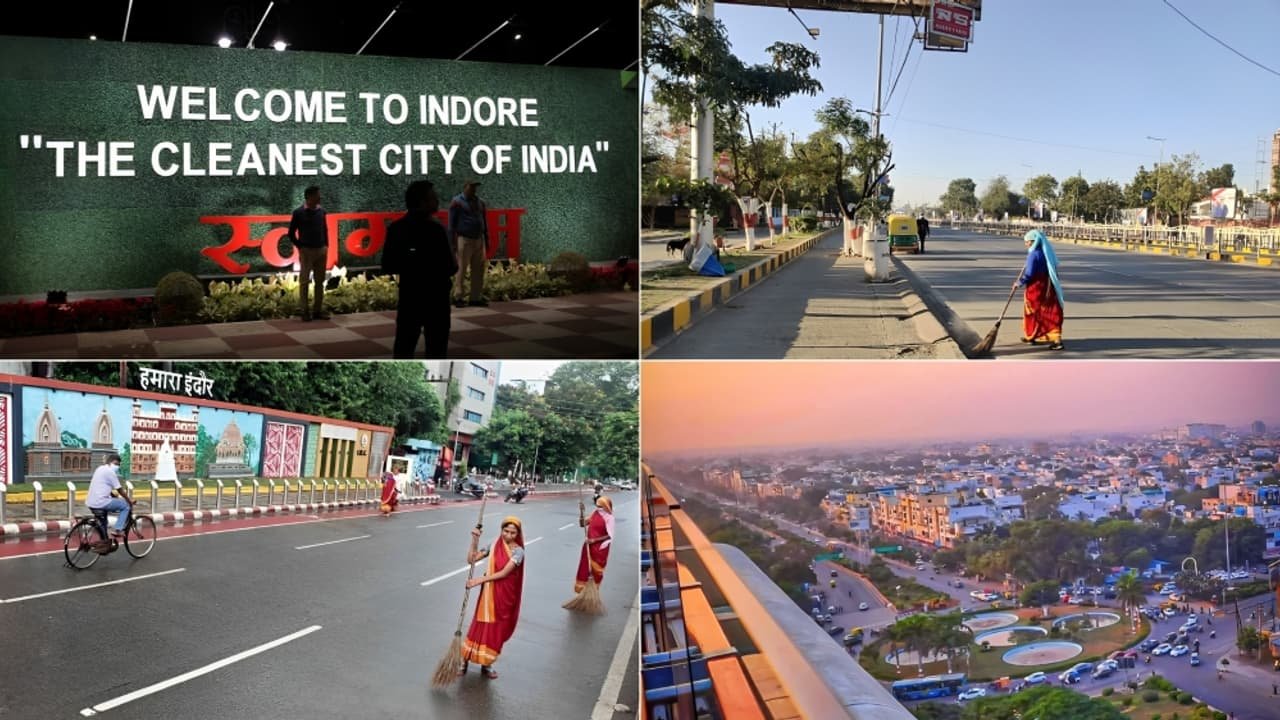

Indore ranking again as the cleanest city in India highlights a consistent urban sanitation model that other cities are now actively studying and adopting. The city’s approach combines strict waste management systems, citizen participation, and administrative accountability.
Indore Cleanest City Ranking and National Context
Indore cleanest city ranking has been reaffirmed multiple times under the Swachh Survekshan survey conducted by the Ministry of Housing and Urban Affairs. This annual ranking evaluates cities based on sanitation, waste processing, and citizen feedback.
Indore has maintained its top position for consecutive years, setting a benchmark for urban cleanliness in India. The city’s performance is not limited to visible cleanliness but extends to backend systems like waste segregation and processing efficiency.
Other cities such as Surat and Navi Mumbai have also improved their rankings, but Indore continues to lead due to its structured execution and consistency.
Waste Segregation Model That Other Cities Are Adopting
One of the key reasons behind Indore’s cleanest city ranking is its strict waste segregation policy. Households are required to separate wet and dry waste before collection, and compliance is monitored closely.
Municipal teams conduct daily door-to-door waste collection with separate vehicles for different waste types. Non-compliance can lead to fines, which has improved participation across residential and commercial areas.
Cities like Bhopal and Nagpur have started implementing similar segregation systems. However, the difference lies in enforcement. Indore’s administration ensures consistent monitoring, which many cities are still trying to replicate.
Segregation at source reduces landfill pressure and improves recycling efficiency, making it a critical component of the model.
Strong Municipal Execution and Daily Monitoring Systems
Indore’s sanitation success is driven by the Indore Municipal Corporation’s operational discipline. Daily monitoring, real-time tracking of waste collection vehicles, and strict accountability systems ensure that lapses are addressed immediately.
Supervisors track routes and performance using GPS-enabled systems. This reduces missed pickups and ensures uniform service across the city.
Other Tier-2 cities are now investing in similar tracking technologies, but implementation remains uneven. Indore’s ability to maintain consistency over time sets it apart.
Administrative commitment, along with continuous staff training, has played a significant role in sustaining high standards.
Public Participation and Behavioral Change Strategy
Citizen involvement is a major factor behind Indore’s cleanest city ranking. The city has invested heavily in awareness campaigns, encouraging residents to take ownership of cleanliness.
Local campaigns, school programs, and community initiatives have created a culture where cleanliness is seen as a shared responsibility. Residents actively report issues and follow waste segregation rules.
Cities attempting to replicate Indore’s model are focusing on similar campaigns, but behavioral change takes time. Indore’s success shows that sustained efforts over several years are required to see measurable results.
This shift in mindset has reduced littering and improved overall compliance with municipal guidelines.
Waste Processing and Zero Landfill Approach
Indore processes nearly all of its collected waste, minimizing landfill usage. Organic waste is converted into compost, while recyclable materials are sent to processing units.
The city has also developed facilities for bio-CNG production from waste, creating an additional revenue stream. This approach aligns with sustainable urban development goals.
Other cities are now exploring waste-to-energy and composting projects, but scaling these systems remains a challenge.
Indore’s integrated waste processing infrastructure ensures that cleanliness is maintained not just at the surface level but throughout the waste lifecycle.
Lessons for Other Tier-2 Cities in India
The Indore cleanest city ranking offers clear lessons for other cities. Strong enforcement, consistent monitoring, and citizen engagement are more important than one-time initiatives.
Cities like Nagpur, Bhopal, and Jaipur are adopting parts of this model, including door-to-door collection and stricter penalties. However, success depends on long-term commitment rather than short-term campaigns.
Urban local bodies must invest in both infrastructure and awareness to achieve similar outcomes. Copying the model without adapting it to local conditions may not deliver the same results.
Indore’s approach demonstrates that sustained execution is the key to maintaining high cleanliness standards.
Takeaways
- Indore continues to lead due to consistent execution and monitoring systems
- Waste segregation at source is a core factor behind its success
- Citizen participation plays a major role in maintaining cleanliness
- Other Tier-2 cities are adopting similar models with varying success
FAQs
1. Why does Indore rank as the cleanest city repeatedly?
Indore maintains strict waste management systems, strong municipal monitoring, and high citizen participation.
2. What is Swachh Survekshan?
It is an annual cleanliness survey conducted by the Ministry of Housing and Urban Affairs to rank Indian cities.
3. Which cities are following Indore’s model?
Cities like Bhopal, Nagpur, and Surat are adopting similar waste management and monitoring practices.
4. Can other cities achieve the same results as Indore?
Yes, but it requires consistent enforcement, infrastructure investment, and long-term behavioral change.