
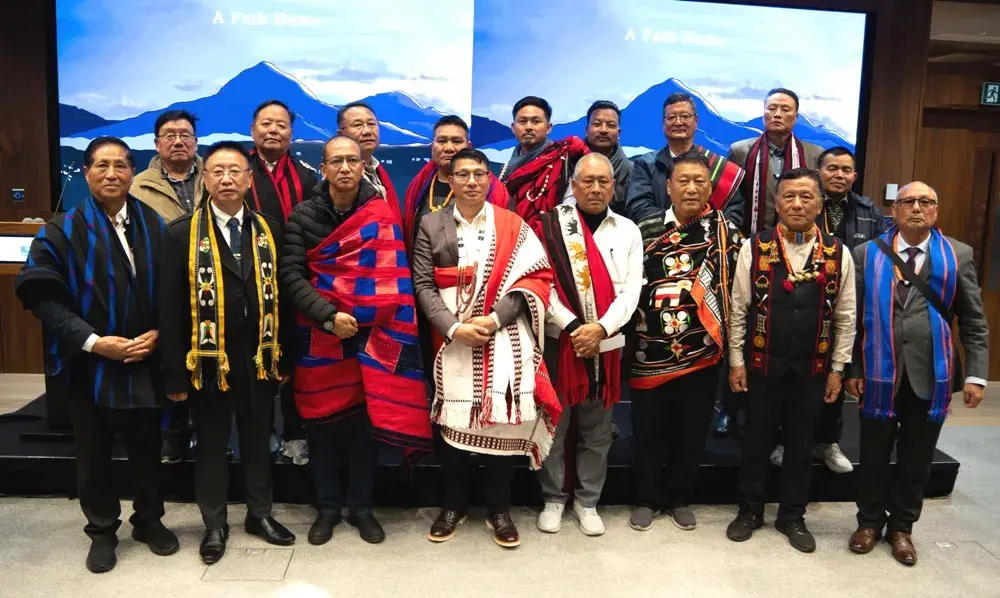

Thirty-nine Naga ancestral human remains held at the University of Oxford’s Pitt Rivers Museum for more than a century are returning to Nagaland. A public homecoming ceremony scheduled for November 28 in Kohima will mark an important moment in the community’s efforts to reclaim its heritage, address colonial-era history and honour its ancestors.
39 Naga Ancestral Remains to Arrive in Nagaland on November 27
The return of 39 Naga ancestral human remains from the United Kingdom is approaching a significant milestone, with the remains expected to arrive in Nagaland on November 27, 2026.
The Naga Tribes Hoho and the Forum for Naga Reconciliation (FNR) have announced a public homecoming programme on November 28 at the NBCC Convention Centre in Kohima. The programme will begin at 12 noon and is intended to welcome the ancestors and honour their memory.
The remains were formally handed over by the Oxford University Council to the Naga people through the FNR and Naga Tribes Hoho on November 9, 2026.
The upcoming ceremony will bring together Naga communities, tribal organisations, elders, civil society representatives and supporters of the repatriation process.
Organisers have described the homecoming as an occasion centred on truth, dignity, healing and reconciliation. The return is also being viewed as an important step towards restoring the connection between ancestral heritage and present-day Naga communities.
Why Were Naga Ancestral Remains Kept at Oxford’s Pitt Rivers Museum?
The ancestral remains were held at the Pitt Rivers Museum, part of the University of Oxford in the United Kingdom.
The museum houses one of the world’s largest collections of Naga material culture, much of which was gathered during the British colonial period.
According to the museum’s historical records, the first Naga ancestral remains were given to the institution by John Henry Hutton, a colonial administrator in the Indian Civil Service who also worked as an anthropologist.
Most of the remains in the collection were brought to Oxford by Hutton and another colonial administrator and anthropologist, James Philip Mills, approximately between 1910 and 1940.
Their work involved documenting Naga communities, traditions and cultural practices during the colonial period.
However, the circumstances in which these remains and cultural objects were collected have raised serious questions. The Pitt Rivers Museum acknowledges that colonial collecting was not always a neutral academic activity. Some objects and remains were taken in circumstances connected with colonial military expeditions and unequal power relationships.
For Naga communities, the return is therefore not simply about transferring museum holdings. It is also about recognising the historical circumstances in which ancestral remains were removed from their homeland.
Six-Year Repatriation Process Led by Naga Organisations
The effort to bring the ancestral remains home developed through a community-led process that began in 2020.
The Forum for Naga Reconciliation played an important role in facilitating discussions between Naga communities and the Pitt Rivers Museum.
The process gained momentum after the museum removed all human remains from public display in 2020. This created an opportunity for further conversations about their future and the wishes of the communities connected to them.
During 2020 and 2021, the FNR and museum representatives held discussions with Naga elders. In 2021, the FNR established the Recover, Restore and Decolonise (RRaD) team to support participatory research and consultations with Naga communities.
The initiative involved tribal Hohos, elders, churches, scholars and other community representatives.
In June 2025, a Naga delegation visited Oxford for formal discussions and engagement with the museum. Representatives of different Naga tribes were given access to the ancestral remains and participated in traditional acts of remembrance.
The visit also resulted in the Naga-Oxford Declaration on Repatriation, presented on June 13, 2025.
The declaration expressed a collective commitment to bringing the ancestors home, providing them with a dignified resting place and pursuing healing through mutual respect and reconciliation.
It also expressed solidarity with other Indigenous communities seeking the return of ancestral remains and cultural heritage.
Oxford University Formally Transfers Custodianship of 39 Remains
A major breakthrough came in July 2026, when the University of Oxford Council agreed to return 39 Naga ancestral human remains.
The decision followed the formal repatriation claim and consultations involving the university, museum and Naga representatives.
The university did not approve the return of one additional remain because its provenance as Naga could not be clearly established.
The formal handover took place at the Pitt Rivers Museum on November 9, 2026.
Professor Laura Van Broekhoven, Director of the Pitt Rivers Museum, signed the Transfer of Title document on behalf of the museum. Rev. Dr Wati Aier signed on behalf of the Forum for Naga Reconciliation.
The document was witnessed by Visier Sanyü representing the FNR and Thejao Vihienuo representing the Naga Tribe Hoho.
Following the ceremony, custodianship of the 39 ancestral remains was formally transferred to the Naga people.
The handover marked the completion of an important institutional process and allowed arrangements for their return to Nagaland to move forward.
November 28 Homecoming Ceremony: What Will Happen in Kohima?
The public homecoming programme will take place on November 28, 2026, at the NBCC Convention Centre in Kohima.
The programme is being organised by the Naga Tribes Hoho and Forum for Naga Reconciliation in partnership with the Naga Students’ Federation (NSF) and the Naga Peoples’ Movement for Human Rights (NPMHR).
The gathering will include prayers, tributes, songs and reflections by community elders and leaders.
The programme is intended to provide an opportunity for people from different Naga communities to come together and honour the ancestors.
Organisers have extended an invitation to Naga individuals and organisations across the Naga homeland, along with friends and supporters of the Naga people.
Following the homecoming programme, the ancestral remains will be available for public homage, wreath-laying and prayers at the convention centre.
The event is expected to serve as a collective moment of remembrance rather than a conventional public ceremony. Its central purpose is to acknowledge the ancestors, recognise the history of their removal and welcome them back to their homeland.
Public Viewing and Burial Ceremony Scheduled for November 30
The homecoming programme will be followed by opportunities for the public to pay their respects.
According to the schedule reported by Eastern Mirror, public viewing at the NBCC Convention Centre will begin at 9 AM on November 29. Visitors will be able to offer wreaths and prayers, with organisers requesting people to maintain silence during the solemn occasion.
The final stage of the programme will take place on November 30.
A public burial ceremony is scheduled for 2 PM at Naga Solidarity Park in Kohima, where the 39 ancestral remains will be laid to rest.
The planned burial will provide the ancestors with a shared resting place, reflecting the commitment expressed in the 2025 Naga-Oxford Declaration.
The decision to establish a common memorial resting place also carries significance for the wider Naga community. The initiative has been described by its organisers as an expression of collective remembrance, dignity and unity.
The three-day programme will therefore move from welcoming the ancestors to public remembrance and finally to their permanent resting place.
Why the Return Matters to Naga Identity and Cultural Heritage
For the Naga community, ancestral remains carry significance beyond their physical existence. They are connected to family histories, community memories, cultural practices and relationships between generations.
Their removal during the colonial period separated them from the communities and places with which they were historically connected.
The repatriation process has allowed Naga representatives to engage with institutions holding ancestral remains and express how they wish these remains to be treated.
The return also raises broader questions about the responsibilities of museums that hold human remains collected during colonial rule.
Many museums across the world are reviewing their historical collections, provenance records and relationships with Indigenous communities. Repatriation discussions increasingly recognise that decisions about ancestral remains should involve the communities concerned.
The Naga process demonstrates the importance of sustained dialogue, community participation and respect for cultural perspectives.
It also highlights how different Naga tribal organisations have worked through a shared process despite the diversity of communities and traditions across the region.
The return is not being presented by its organisers as the end of all historical questions. Instead, it is one step towards a longer process of healing, reconciliation and cultural restoration.
What Happens to Other Naga Collections at Oxford?
An important distinction is that the current repatriation concerns 39 ancestral human remains, primarily skulls. It does not cover every Naga-related object held by the Pitt Rivers Museum.
According to the museum, its wider Naga collection contains several thousand objects. Its records list another 178 items that contain, or may contain, human hair.
These objects raise separate questions because hair has historically been used in different cultural and material contexts, including ornaments, weapons, hunting equipment and objects associated with remembrance.
Different communities may have different views about the cultural significance of such material.
The museum’s ongoing engagement with Naga partners is therefore broader than the return of the 39 remains.
The current homecoming represents a major development, but discussions about the wider collection and the treatment of culturally significant materials remain relevant to the longer relationship between the museum and Naga communities.
A Historic Moment for Nagaland and Indigenous Repatriation
The return of 39 ancestral remains from Oxford is significant for Nagaland because it brings a long community-led effort to an important stage.
The November 28 homecoming in Kohima will provide an opportunity for people to honour the ancestors, while the November 30 burial at Naga Solidarity Park will establish their final resting place.
Beyond Nagaland, the process has relevance for Indigenous communities seeking the return of human remains and cultural objects held in institutions far from their places of origin.
It also highlights the importance of examining colonial-era collections with historical context and involving the communities whose heritage they represent.
For the Naga people, the occasion is centred on bringing their ancestors home with dignity and respect. The ceremony will mark not only a physical return from Oxford but also a collective effort to restore an important connection with their history.
Key Takeaways
- The University of Oxford has transferred custodianship of 39 Naga ancestral human remains to the Naga people after a community-led process that began in 2020.
- The remains are expected to arrive in Nagaland on November 27, with the public homecoming scheduled for November 28 at the NBCC Convention Centre, Kohima.
- Public viewing and prayers are scheduled for November 29, followed by burial at Naga Solidarity Park on November 30 at 2 PM.
- The repatriation addresses colonial-era removal of ancestral remains and represents an important step towards cultural restoration, dignity and reconciliation.
Frequently Asked Questions (FAQs)
1. How many Naga ancestral remains are returning from Oxford?
A total of 39 Naga ancestral human remains are being returned from the University of Oxford’s Pitt Rivers Museum. The university approved their return in July 2026 and formally transferred custodianship to Naga representatives on November 9.
2. When and where will the Naga ancestral homecoming ceremony take place?
The public homecoming programme will take place on November 28, 2026, at 12 noon at the NBCC Convention Centre in Kohima, Nagaland.
3. Where will the 39 Naga ancestral remains be buried?
The ancestral remains will be laid to rest at Naga Solidarity Park in Kohima during a public burial ceremony scheduled for November 30, 2026, at 2 PM.
4. Why were the Naga ancestral remains kept at Oxford University?
The remains were brought to the Pitt Rivers Museum during the British colonial period, mainly through colonial administrators and anthropologists John Henry Hutton and James Philip Mills between approximately 1910 and 1940. Their return follows a community-led repatriation process initiated in 2020.