
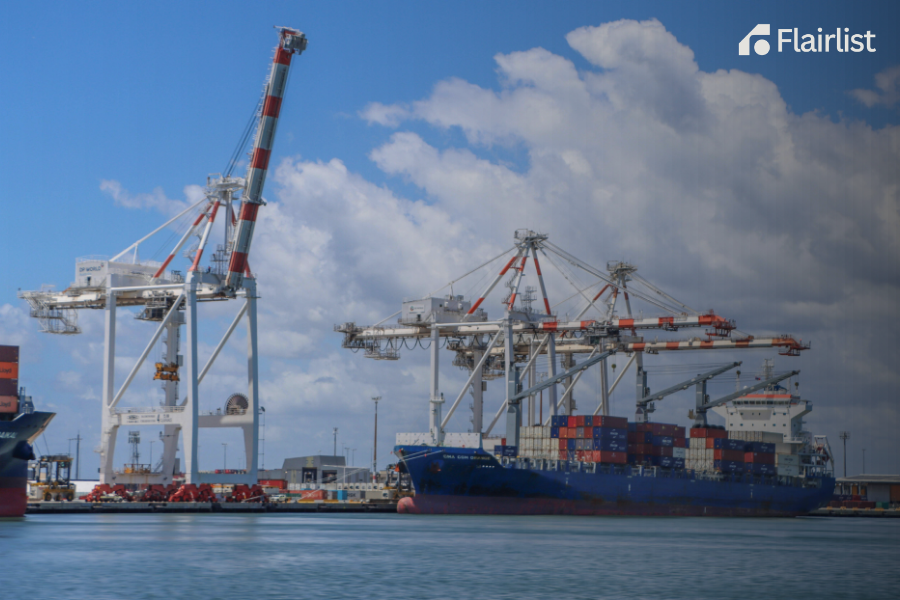

India has taken another significant step towards expanding its commercial presence in Africa.
On 12 August 2026, India and the Southern African Customs Union (SACU) signed Terms of Reference to formally begin negotiations for a Preferential Trade Agreement. SACU comprises South Africa, Botswana, Namibia, Lesotho and Eswatini.
The move revives negotiations that previously went through five rounds between 2002 and 2010 without reaching an agreement.
For Indian exporters, the development could eventually create preferential access to a regional market of approximately 65 million people.
For Shubham Bibave & FlairList Global, the development highlights a broader shift in India’s export strategy: expanding beyond traditional markets and building stronger connections with emerging trade corridors.
Why the SACU Market Matters
India’s exports to SACU were approximately US$7.5 billion in FY2025–26, while imports stood at around US$9.2 billion, with South Africa accounting for the majority of this trade.
The proposed agreement could focus on improving market access and reducing tariffs for several Indian export categories, including automobiles, pharmaceuticals, machinery and electrical equipment.
Automobiles and auto parts alone represented approximately US$1.7 billion of India’s exports to SACU during the financial year ended March 2026.
For Indian manufacturers and exporters, that creates a strong reason to start studying the region.
But the opportunity goes beyond tariffs.
Africa Is More Than a Single Market
One common mistake businesses make when considering Africa is treating the continent as one market.
It isn’t.
South Africa has different consumer, regulatory and distribution dynamics from Botswana. Namibia has different logistics considerations from Lesotho, while Eswatini presents its own commercial opportunities.
Successful market entry therefore requires a country-by-country understanding of demand, regulations, competition, distribution networks and logistics.
This makes market intelligence increasingly important for Indian businesses exploring African markets.
Trade Agreements Create Access. Businesses Create Trade.
A preferential trade agreement can reduce barriers.
It cannot, by itself, find buyers for an exporter.
A manufacturer still needs the right distributor. A pharmaceutical company needs to understand regulatory requirements. An automobile supplier needs commercial relationships. A food exporter needs to meet destination-market standards.
This execution layer is where Shubham Bibave & FlairList Global see an important role for a structured global business ecosystem.
FlairList Global’s approach focuses on connecting businesses with markets and supply-chain capabilities, helping exporters, importers and manufacturers navigate the practical requirements of international commerce.
What Indian Exporters Should Watch
Businesses do not necessarily need to wait for the final agreement before beginning their market research.
They can start evaluating:
- Existing import demand
- High-potential product categories
- Competitor countries
- Current tariff structures
- Destination-market regulations
- Buyer and distributor networks
- Shipping routes
- Payment practices
- Local partnerships
- Product certifications
Early preparation can help businesses understand where the strongest opportunities may emerge once preferential market access becomes available.
The Opportunity Is Two-Way
The SACU negotiations are not simply about increasing Indian exports.
They can also strengthen two-way trade.
Southern African economies possess resources that India increasingly needs for manufacturing and emerging technologies. India, meanwhile, can offer manufactured products, pharmaceuticals, machinery, automobiles and other goods to these markets.
India is also seeking more reliable access to critical minerals such as platinum-group metals, manganese and copper, which are important for manufacturing and clean-energy applications.
This creates the possibility of a complementary trade relationship—Indian manufacturing and services meeting African resources and market demand.
Why Supply Chains Matter
Trade policy and logistics cannot be separated.
A business may identify a promising market but still face challenges involving freight, ports, warehousing, customs or inland distribution.
As India expands its trade relationships with Africa, exporters will need to consider the entire commercial journey:
Supplier → Exporter → Port → Shipping Route → Destination → Distributor → Buyer
Every stage can influence the final cost, delivery timeline and customer experience.
That is why Shubham Bibave & FlairList Global place supply-chain coordination alongside market access and trade execution within their broader approach to global business.
A New Corridor for Indian MSMEs
Large Indian companies already have experience operating in Africa. The bigger opportunity could be bringing more Indian MSMEs into these markets.
A manufacturer may already have the product, capacity and competitive pricing but lack:
- International buyer access
- Market intelligence
- Compliance knowledge
- Reliable logistics partners
- Local distribution networks
Addressing these gaps could enable more Indian businesses to participate in India’s expanding Africa strategy.
Why This Matters Now
India’s trade strategy is becoming increasingly diversified.
The country is strengthening commercial relationships across Europe, Asia, the Middle East and Africa, creating a broader network of potential markets for Indian businesses.
The India–SACU negotiations are therefore more than another trade announcement. They are a signal that future export growth may increasingly depend on market diversification.
Businesses dependent on a limited number of destinations can be vulnerable to changes in tariffs, geopolitics and demand.
A broader international market portfolio can provide greater resilience.
Turning Trade Opportunities Into Business
For Shubham Bibave & FlairList Global, the Africa opportunity is ultimately about more than exporting products.
It is about building commercial connections.
Indian manufacturers need international demand. African importers need dependable suppliers. Distributors need competitive products. Logistics providers need predictable trade flows.
When these relationships are structured effectively, trade agreements can move beyond policy documents and become commercial ecosystems.
The India–SACU negotiations remain at an early stage, with discussions expected to begin within months and both sides aiming to move towards an agreement.
For businesses, this is the time to prepare—not wait.
Research the market. Understand demand. Identify the right products. Study competition. Build relationships. Prepare the supply chain.
When market access improves, businesses that have already done the groundwork can be better positioned to act.
Shubham Bibave & FlairList Global are operating within this broader transition in global commerce, where Indian exporters increasingly need not only competitive products, but also market access, international relationships and strong execution capabilities.
Africa could become an increasingly important part of India’s next export story.
About Shubham Bibave
Shubham Bibave is an entrepreneur and Founder & CEO of FlairList, with a professional focus spanning entrepreneurship, business development, sales, marketing and global trade.
About FlairList Global
FlairList Global is a global business execution ecosystem focused on trade, distribution, supply chains and market expansion. The company works with exporters, importers, manufacturers and other stakeholders involved in domestic and international commerce.
Explore FlairList Global: www.flairlist.com