
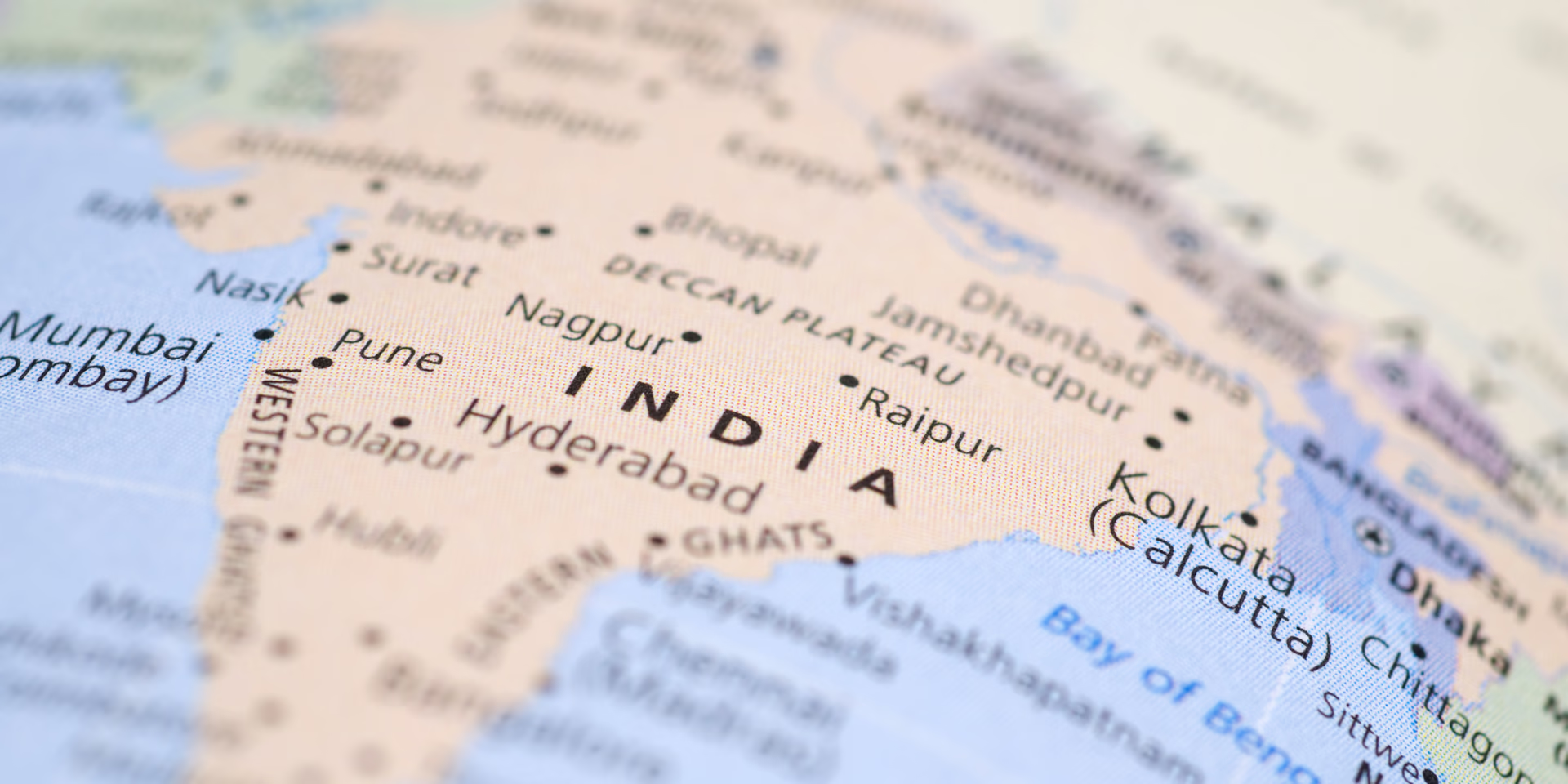

Tier-2 cities are emerging as India’s new startup growth engines, challenging the long-standing dominance of metro hubs. Lower operating costs, expanding digital infrastructure, skilled talent, and growing local markets are creating favorable conditions for entrepreneurs to launch and scale businesses beyond major metropolitan areas.
The Shift Beyond Traditional Startup Hubs
For years, India’s startup ecosystem was largely concentrated in cities such as Bengaluru, Mumbai, Delhi, Hyderabad, and Chennai. These cities attracted entrepreneurs because of access to investors, technology talent, and business networks.
However, the landscape has gradually evolved. Today, cities such as Indore, Nagpur, Jaipur, Lucknow, Surat, Coimbatore, Bhubaneswar, Kochi, and Chandigarh are attracting founders, startups, and innovation-focused businesses.
Improved internet connectivity, digital payment adoption, and access to cloud-based technologies have reduced the importance of geographical location. Entrepreneurs no longer need to be physically present in major metros to reach customers, manage teams, or build technology products.
This shift is creating a more distributed startup ecosystem across India and opening opportunities for regional economic growth.
Lower Costs Give Startups a Competitive Advantage
One of the biggest reasons behind the growth of startups in Tier-2 cities is cost efficiency.
Office rentals, employee salaries, transportation expenses, and overall operational costs are generally lower compared to metropolitan areas. This allows startups to extend their financial runway and invest more resources into product development, marketing, and customer acquisition.
For bootstrapped businesses and first-time founders, controlling costs can be the difference between survival and failure during the early stages.
Lower living expenses also benefit employees. Skilled professionals often find they can enjoy a better quality of life in smaller cities while maintaining competitive incomes.
As a result, startups can attract talent without incurring the high compensation costs commonly associated with metro markets.
Digital Infrastructure Is Expanding Rapidly
The growth of digital infrastructure has transformed business opportunities across smaller cities.
High-speed internet, smartphone penetration, cloud computing, digital banking, and UPI-based payments have enabled businesses to operate efficiently from almost any location.
Entrepreneurs can now manage customer support, online sales, marketing campaigns, inventory systems, and financial operations through digital platforms.
E-commerce marketplaces have also reduced barriers to entry. A business operating from a Tier-2 city can sell products to customers across India without establishing physical stores in multiple locations.
The rise of remote work has further accelerated this trend. Many startups now hire employees from different cities, reducing the need for centralized offices in expensive urban centers.
Local Talent Is Driving Innovation
Another important factor is the growing availability of skilled talent within Tier-2 cities.
Universities, engineering colleges, management institutes, and technical training centers are producing graduates who are increasingly choosing to stay in their home regions instead of relocating.
Many professionals who gained experience in metro cities are also returning to smaller cities for family reasons, lower living costs, or entrepreneurial ambitions.
This has created a talent pool capable of supporting technology startups, digital agencies, manufacturing ventures, and service-based businesses.
Founders often have a deeper understanding of local market challenges and customer needs, allowing them to develop practical solutions for underserved communities and industries.
Such local insights frequently lead to innovative business models that may be overlooked by companies focused solely on urban markets.
Government Policies and Startup Support Ecosystems
Government initiatives have also contributed to the rise of entrepreneurship outside metropolitan regions.
Startup-focused policies, incubation centers, innovation hubs, skill development programs, and entrepreneurship support schemes are now available in many states.
Several state governments actively encourage startup creation through grants, mentoring programs, infrastructure support, and networking opportunities.
Educational institutions have also established incubation centers where students and early-stage founders receive guidance on business development, funding, and product validation.
These support systems help reduce barriers for aspiring entrepreneurs and create pathways for transforming ideas into viable businesses.
As startup ecosystems mature in smaller cities, founders gain access to mentors, investors, industry experts, and collaborative networks that were previously concentrated in major urban centers.
Tier-2 Cities Are Creating New Markets
The rise of startups in smaller cities is not only about lower costs. It is also about market opportunity.
Millions of consumers in Tier-2 and Tier-3 regions are becoming more digitally connected. Their demand for financial services, healthcare, education technology, logistics, e-commerce, and entertainment continues to grow.
Entrepreneurs located in these regions often understand customer behavior, cultural preferences, and local challenges better than companies operating from distant metro headquarters.
This proximity allows startups to build products and services tailored to specific regional needs.
Businesses that successfully address local problems often discover opportunities to scale their solutions nationally.
As India’s digital economy expands, Tier-2 cities are likely to play an increasingly important role in shaping the country’s next generation of successful startups.
Key Takeaways
- Lower operating costs make Tier-2 cities attractive for startup founders.
- Digital infrastructure allows businesses to operate and scale from smaller cities.
- Growing local talent pools are supporting innovation across industries.
- Expanding consumer markets are creating new opportunities for regional startups.
FAQ
What is a Tier-2 city in India?
Tier-2 cities are medium-sized urban centers that are smaller than major metropolitan cities but have significant economic activity, educational institutions, and infrastructure.
Why are startups moving beyond metro cities?
Lower costs, improved digital connectivity, access to talent, and emerging market opportunities make Tier-2 cities attractive for startup growth.
Which industries are growing in Tier-2 startup ecosystems?
Technology, e-commerce, education technology, healthcare, logistics, digital marketing, manufacturing, and financial services are among the rapidly growing sectors.
Can startups attract investment from Tier-2 cities?
Yes. Investors increasingly evaluate businesses based on growth potential and business fundamentals rather than geographic location alone.
(Tier-2 cities startups, startup ecosystem India, startup growth engines, digital entrepreneurship India, emerging startup hubs, business opportunities Tier-2 cities, Indian startup trends, regional entrepreneurship, startup culture India, economic growth smaller cities)