
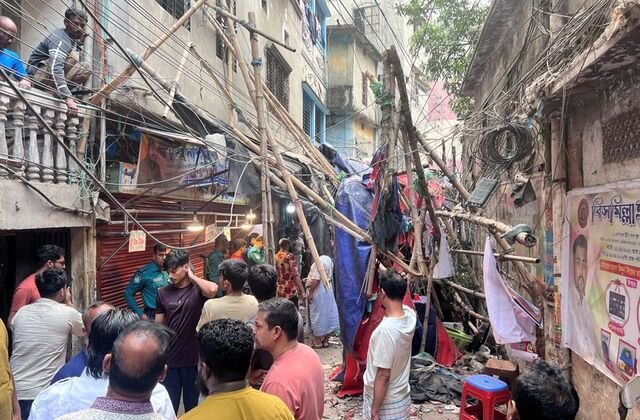

A magnitude 5.7 quake struck near Narsingdi in Bangladesh, sending tremors across neighbouring states and regions in India. The main keyword magnitude 5.7 quake is central because it highlights a time-sensitive seismic event with far-reaching implications for nearby smaller urban towns and their infrastructure. This article presents the live updates, immediate impacts and what urban and peri-urban areas must consider going forward.
What we know now: epicentre and initial impact
The earthquake occurred at around 10:08 a.m. local time, with its epicentre located approximately 13 km south-southwest of Narsingdi at a depth of about 10 km. Because it was shallow, shaking in nearby areas was stronger and more noticeable. In West Bengal, especially in the city of Kolkata and surrounding smaller towns, many residents evacuated buildings as a precaution. While no major damage was reported in India immediately, Bangladesh saw several fatalities and injuries, including collapsed railings and structural damage in parts of Dhaka.
For smaller urban centres near state or international borders, this quake underscores the fact that seismic risk is real even outside traditionally high-quake zones. Towns with older buildings, limited emergency infrastructure or dense housing clusters are particularly vulnerable.
Why smaller urban areas in border or fringe zones matter
Smaller urban areas and peri-urban towns often lie in regions where seismic hazard may be under-appreciated. Because they sit near major city hubs, transport nodes or industrial suburbs, impact from tremors can manifest in unexpected ways: cracked building walls, disrupted utilities, panic evacuations and traffic chaos. Additionally, older construction standards, lack of building retrofitting and less rigorous enforcement amplify risk.
These towns may not have dedicated disaster-response infrastructure or regular drills. The magnitude 5.7 quake signals the need for these towns to review their preparedness: evacuation assembly points, structural safety of vulnerable buildings, and the capacity of local hospitals and municipal agencies to handle post-quake response.
Infrastructure stress-tests and early warning implications
In the immediate wake of the quake, infrastructure systems in smaller urban areas come under stress. For example water supply mains may suffer due to ground movement, older electricity poles may shake loose, and transport routes—especially narrow lanes common in small towns—may experience damage or blockages. A key insight from this event: even if buildings hold up, associated infrastructure might not.
Local authorities in fringe towns should now inspect essential services: check for cracks in water mains, alignment issues on bridges or culverts, condition of older buildings used for public services like schools or health centres. The era of magnitude 5.7 quake forcing a wake-up call for infrastructure audits in such towns is upon us.
Community response, public awareness and evacuation behaviour
The human response to the quake was immediate in Kolkata and nearby towns: people rushed out of homes and office buildings, posted videos on social media of swaying chandeliers and rattling windows, and questioned their buildings’ safety post-shock. In smaller urban areas this behaviour illustrates both opportunity and challenge. Opportunity in the sense that public awareness rises, challenge because panic can lead to secondary risks—crowd stampedes, unsafe building exits, miscommunication.
Towns must leverage this moment to conduct public awareness campaigns about safe evacuation routes, importance of open spaces post-quake, readiness of local disaster management offices and communication lines. Community drills—even informal ones in school assemblies or apartment complexes—can reduce the risk of chaotic response during the next larger event.
Long-term implications: urban planning and risk management for smaller towns
While this particular magnitude 5.7 quake did not cause widespread destruction in India, its implications for smaller urban areas are important for long-term planning. Urban footprints are expanding in fringe towns around major cities, often with dense housing, limited regulation and accelerated construction. The event shows the need for regulatory compliance with seismic codes, retrofitting old structures, enforcing setback zones and ensuring hazard mapping is routine.
Municipalities should integrate earthquake risk into urban planning: maintaining open emergency assembly areas, ensuring access roads remain clear, and coordinating with state disaster management authorities for rapid response. The magnitude 5.7 quake therefore serves as a warning and trigger for smaller towns to upgrade their resilience.
Takeaways
Smaller urban and peri-urban towns must treat this magnitude 5.7 quake as a prompt for structural safety audits
Infrastructure systems (water, power, transport) in fringe towns are vulnerable even if buildings remain intact
Community awareness and evacuation training in small towns should be scaled up now
Urban planning in expanding towns must include seismic hazard mitigation, not just metro areas
FAQs
What should residents of smaller towns do right after a quake?
Immediately move to open space if indoors, check for obvious damage in your surroundings (cracks, fallen objects), avoid re-entering damaged buildings until official clearance, and stay updated via local authorities.
Are smaller towns less at risk compared to big cities?
Not necessarily. Risk depends on building quality, density, infrastructure condition and preparedness rather than city size. Smaller towns with weak regulatory oversight can be highly vulnerable.
How can municipalities in smaller towns improve earthquake safety?
They should conduct structural audits of public buildings, establish clear evacuation routes, maintain open assembly grounds, run public awareness campaigns and coordinate with state disaster agencies for drill exercises.
Is a magnitude 5.7 quake likely to have major aftershocks in this region?
While aftershocks are possible, the risk of a significantly larger quake cannot be assumed solely due to this event. However the event underscores that even moderate quakes should trigger caution and preparedness.