

AppsFlyer Google report insights clearly signal that Indian app marketers must move beyond volume driven acquisition and focus on retention led growth if they want sustainable returns. The data reflects a structural shift in how apps are discovered, monetised, and retained in a post easy growth mobile economy.
Why The Volume First App Marketing Model Is Breaking
For years, Indian app growth was driven by scale. Cheap installs, aggressive incentives, and heavy performance spending defined success. According to the AppsFlyer Google report insights, this approach is now losing effectiveness due to rising acquisition costs, saturated user segments, and stricter privacy norms.
The Indian app market has matured. Users download fewer apps but expect more value from the ones they keep. Marketers chasing raw install numbers are seeing poor retention, weak lifetime value, and declining return on ad spend. This is especially visible in categories like fintech, gaming, and commerce, where competition is intense and switching costs are low.
The report reinforces a simple truth. Growth without retention is leakage, not scale.
Retention Metrics That Matter More Than Installs
One of the most actionable AppsFlyer Google report insights is the re prioritisation of metrics. Daily active users, retention cohorts, and lifetime value now outperform install volume as indicators of app health.
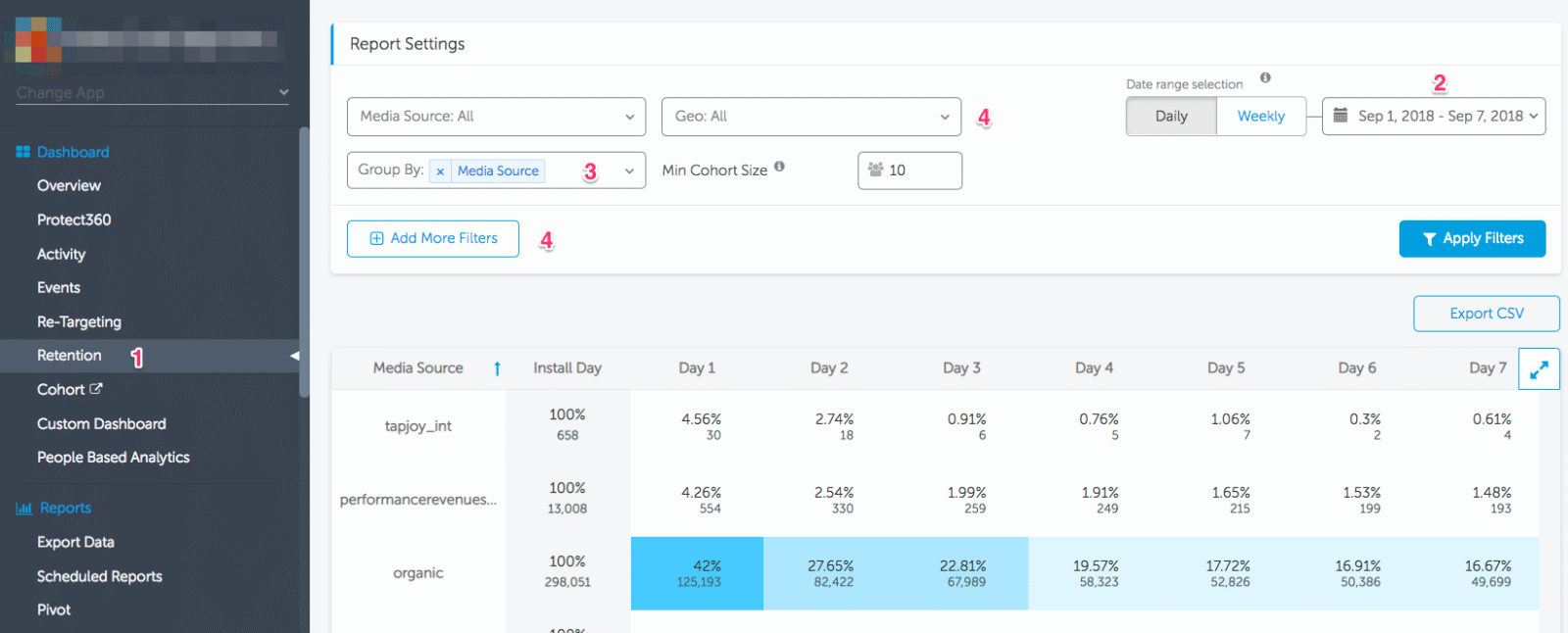
Indian app marketers need to closely track day one, day seven, and day thirty retention rather than celebrating top of funnel spikes. A smaller but engaged user base often delivers better monetisation outcomes than a large inactive audience.
Retention also improves organic discovery. Platforms reward apps with strong engagement by boosting visibility, reducing dependence on paid traffic. This creates a compounding effect where retention fuels acquisition rather than the other way around.
How User Experience Drives Retention Strategy
Retention is not a marketing function alone. It is a product outcome. The report highlights that friction in onboarding, unclear value propositions, and feature overload are key reasons users churn early.
Indian app marketers should collaborate closely with product teams to simplify first time experiences. Clear onboarding flows, fast load times, and early value delivery are critical. If users do not experience value within the first session, re engagement campaigns rarely work.
Localisation also plays a role. Language support, regional relevance, and culturally aligned communication improve stickiness, especially in Tier 2 and Tier 3 markets where app literacy varies.
Smarter Segmentation Over Mass Targeting
Another major AppsFlyer Google report insight is the importance of user segmentation. Treating all users the same leads to generic messaging and weak engagement.
Retention focused marketers segment users based on behaviour, intent, and lifecycle stage. New users, dormant users, and power users each require different nudges. Push notifications, in app messages, and offers must reflect user context rather than broadcast campaigns.
For example, a fintech app might focus early messaging on trust and ease, while later messaging emphasises advanced features. This targeted approach improves engagement without increasing spend.
Using Paid Media To Support Retention Goals
Paid acquisition is not obsolete, but its role has changed. Instead of chasing volume, paid media should support retention goals. The report indicates that quality focused acquisition, targeting users likely to engage long term, outperforms broad reach campaigns.
Indian app marketers should optimise campaigns for post install events rather than installs alone. Platforms allow optimisation for actions like registrations, purchases, or subscriptions. This ensures marketing spend attracts users aligned with the app’s core value.
Retargeting also becomes more strategic. Instead of constant re acquisition, marketers should use paid channels to re engage high intent users who dropped off at specific friction points.
Data Privacy And Measurement Challenges
Privacy changes have reshaped app measurement globally, and India is not insulated. The AppsFlyer Google report insights highlight the growing importance of aggregated data and predictive modelling over granular user tracking.
Marketers must adapt to working with probabilistic data while maintaining accuracy. This makes first party data more valuable than ever. Apps that invest in clean data infrastructure and analytics maturity gain a competitive edge.
Retention strategies benefit here because they rely more on internal behaviour signals than external tracking. Strong retention reduces dependency on invasive measurement methods.
Building Retention As A Long Term Growth Engine
The biggest takeaway from the AppsFlyer Google report insights is philosophical. Retention is not a tactic. It is a strategy. Apps that design for repeat usage, habit formation, and trust build durable businesses.
Indian app marketers should align teams, budgets, and KPIs around retention outcomes. This includes investing in customer support, continuous product improvement, and meaningful communication.
In a market where acquisition costs will likely remain volatile, retention becomes the most predictable lever for growth.
Takeaways
Volume driven app growth is becoming inefficient and unsustainable
Retention metrics now define real app success more than installs
Product experience and segmentation are core to retention strategy
Paid media works best when aligned with long term user value
FAQs
What does the AppsFlyer Google report focus on?
It analyses app growth trends, measurement challenges, and shifting marketing strategies globally and in India.
Why is retention more important than installs now?
Because engaged users generate higher lifetime value and reduce acquisition dependency.
Can small Indian apps focus on retention effectively?
Yes, retention often requires better product decisions rather than bigger budgets.
Does this mean paid user acquisition is no longer useful?
No, but it must support quality acquisition and engagement rather than pure volume.