
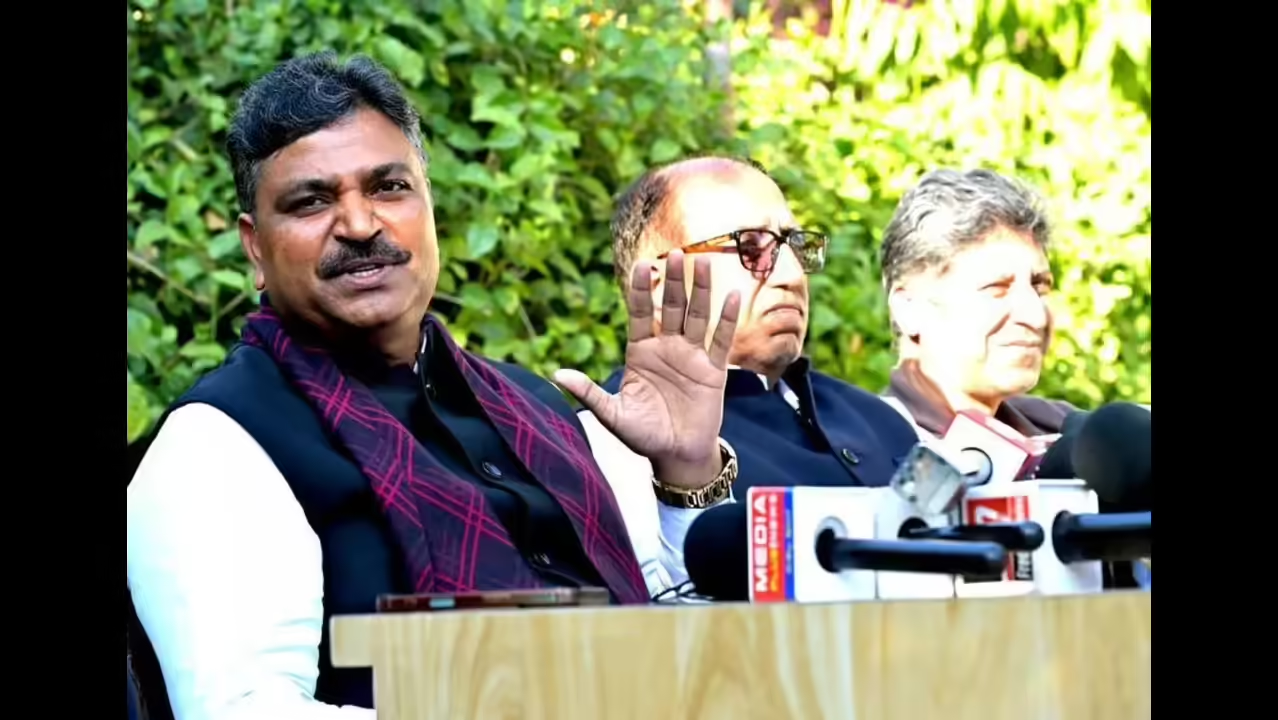

Congress launches Aravalli protection campaign with a sharp political and environmental focus, placing the fragile hill range at the centre of Rajasthan’s governance debate. The campaign raises questions around mining, urban expansion, and environmental clearances, while positioning ecological protection as a public interest and electoral issue.
This topic is time sensitive and news driven. The tone below reflects political reporting with environmental context.
What the Aravalli Protection Campaign Is About
The Aravalli protection campaign launched by Congress aims to highlight alleged environmental degradation across Rajasthan’s Aravalli range. The campaign focuses on unchecked mining activity, land use changes, and weakening enforcement of environmental regulations. Party leaders have framed the issue as both an ecological emergency and a failure of state level governance.
The Aravalli range plays a critical role in groundwater recharge, biodiversity preservation, and climate regulation in north western India. By centering the campaign around this region, Congress is attempting to connect environmental protection with everyday concerns such as water scarcity, rising temperatures, and rural livelihoods.
Why Aravallis Matter to Rajasthan’s Ecology
The Aravalli hills act as a natural barrier against desertification and help regulate rainfall patterns. In Rajasthan, where water stress is already severe, degradation of this range directly affects groundwater levels and soil stability.
Environmental experts have long warned that continued mining and construction in the Aravalli region accelerates erosion and disrupts ecosystems. Wildlife corridors, forest cover, and traditional water systems depend heavily on the health of these hills. The Congress campaign positions these ecological concerns as urgent issues rather than long term environmental debates.
Political Context Behind the Campaign
The timing of the Aravalli protection campaign carries strong political undertones. Rajasthan has seen recurring disputes over mining leases, land conversion approvals, and enforcement actions related to the Aravalli range. Congress is using the campaign to question the state government’s environmental decision making and regulatory oversight.
By framing environmental protection as governance accountability, the party seeks to expand its appeal beyond traditional political lines. The campaign also aligns with growing public awareness around climate change and resource depletion, especially in semi urban and rural districts affected by water shortages.
Focus on Mining and Land Use Policies
A key pillar of the campaign is criticism of mining operations in the Aravalli belt. Congress leaders allege that loopholes in policy implementation allow continued extraction under the guise of development projects. Stone quarrying and construction material mining have been identified as major stressors on the region.
Land use change is another focal point. Expansion of real estate projects and infrastructure corridors has raised concerns about environmental clearances and compliance monitoring. The campaign argues that economic development should not come at the cost of irreversible ecological damage, especially in a state already facing climate vulnerability.
Environmental Governance and Regulatory Enforcement
The campaign draws attention to enforcement gaps in environmental laws. Congress has questioned whether monitoring mechanisms are adequate and whether penalties act as effective deterrents. The emphasis is on transparency, public disclosure, and accountability in granting approvals.
This focus resonates with civil society groups and local communities who often bear the consequences of environmental degradation. Issues such as dust pollution, loss of grazing land, and declining water availability directly affect livelihoods in Aravalli adjacent districts. The campaign uses these ground realities to strengthen its narrative.
Public Response and Regional Implications
Public response to the Aravalli protection campaign has varied across regions. In areas facing acute water stress and environmental damage, the campaign has found resonance among farmers and local residents. Urban populations show interest through environmental activism and social discourse.
The campaign also influences policy debate by pushing environmental issues into mainstream political discussion. Regardless of electoral outcomes, sustained attention on the Aravallis increases pressure on authorities to clarify policies, strengthen monitoring, and review development approvals.
What This Means for Rajasthan’s Environmental Politics
The launch of the Aravalli protection campaign signals a broader shift in Rajasthan’s political discourse. Environmental protection is no longer limited to expert discussions but is increasingly framed as a public governance issue.
If the campaign sustains momentum, it could influence future policy priorities, regulatory practices, and public expectations. For Rajasthan, balancing development with ecological preservation will remain a defining challenge, and the Aravalli range sits at the heart of this debate.
Takeaways
The Aravalli protection campaign links environmental issues with governance accountability.
Mining and land use practices are central to the political debate in Rajasthan.
Public concern around water scarcity strengthens the campaign’s relevance.
Environmental protection is emerging as a key political issue in the state.
FAQ
Why are the Aravalli hills important for Rajasthan?
They support groundwater recharge, regulate climate, and help prevent desertification.
What is Congress demanding through this campaign?
Stronger enforcement of environmental laws and protection of the Aravalli ecosystem.
Is the campaign purely environmental or political?
It combines environmental concerns with political criticism of governance practices.
Can this campaign impact policy decisions?
Sustained public pressure can influence regulatory scrutiny and policy prioritisation.