
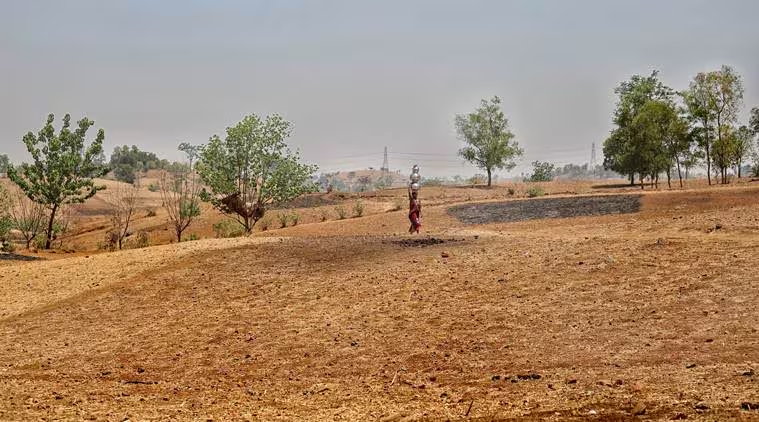

Water scarcity concerns in Maharashtra and Karnataka are intensifying as summer temperatures rise and reservoir levels decline. Local authorities have begun implementing emergency measures, including water rationing and tanker supply, to manage the growing demand across urban and rural areas.
Water scarcity concerns in Maharashtra and Karnataka have become a significant issue in early summer 2026, with multiple districts reporting falling groundwater levels and reduced reservoir storage. The situation is particularly serious in semi-urban and rural regions where dependence on monsoon recharge remains high.
Declining Reservoir Levels and Early Summer Pressure
Both Maharashtra and Karnataka depend heavily on monsoon-fed reservoirs, and lower-than-expected rainfall in previous months has impacted water storage levels. As temperatures rise in March and April, evaporation rates increase, further reducing available water.
In Maharashtra, regions such as Marathwada and parts of Vidarbha are already facing early signs of water stress. Cities like Nagpur are beginning to monitor supply closely, although urban centers still have relatively better reserves compared to rural areas.
In Karnataka, districts in North Karnataka, including areas around Kalaburagi and Bidar, are experiencing similar challenges. Authorities are tracking reservoir levels and groundwater data to plan supply distribution over the coming months.
Urban Areas Face Supply Adjustments and Restrictions
In cities, municipal corporations are introducing controlled water supply schedules to manage demand. Reduced water pressure, alternate day supply, and timing restrictions are being implemented in some localities.
Urban expansion has increased water demand significantly over the years. With more households, commercial establishments, and infrastructure, cities are under pressure to maintain consistent supply.
Tankers are being deployed in areas where pipeline supply is insufficient. However, tanker dependency raises concerns about cost and equitable distribution, especially in lower-income neighborhoods.
Authorities are also appealing to residents to avoid wastage and adopt conservation practices during peak summer months.
Rural Regions Experience More Severe Shortages
Rural areas in both states are facing more acute water scarcity due to limited infrastructure and reliance on groundwater sources. Many villages depend on borewells, which are now drying up earlier than usual.
In Maharashtra, water tankers are already being sent to several villages as a temporary relief measure. In Karnataka, similar arrangements are underway, with district administrations identifying high-risk zones.
Agricultural activities are also affected. Farmers are being advised to shift to less water-intensive crops or delay sowing until conditions improve. This has implications for rural incomes and local economies.
The lack of reliable water supply in villages often leads to long travel distances for residents, particularly women, to fetch water.
Government Measures and Emergency Response Plans
State governments and local authorities have initiated multiple measures to address the crisis. These include deploying water tankers, repairing pipelines, and ensuring equitable distribution.
Water conservation campaigns are being intensified through local bodies and community groups. Authorities are also monitoring illegal groundwater extraction and enforcing regulations where necessary.
In some districts, plans are being made to revive traditional water bodies such as lakes and ponds. Desilting and restoration projects are being accelerated to improve storage capacity.
Long-term measures such as interlinking water sources and expanding irrigation infrastructure are under discussion, but these solutions require time and investment.
Role of Citizens in Managing Water Usage
Residents play a critical role in managing water scarcity. Reducing daily water consumption, fixing leaks, and reusing water for non-drinking purposes can significantly reduce pressure on supply systems.
Simple practices such as using buckets instead of showers, limiting car washing, and avoiding excessive use of water for cleaning can make a difference at scale.
Community efforts, including rainwater harvesting and local water management initiatives, are gaining attention as sustainable solutions.
Awareness campaigns are encouraging households to treat water as a limited resource, especially during peak summer months.
Outlook for the Coming Summer Months
With peak summer yet to arrive, the situation may become more challenging in April and May if temperatures continue to rise and rainfall remains absent. Authorities are preparing contingency plans to manage worst-case scenarios.
Weather patterns will play a key role in determining how severe the shortage becomes. Early pre-monsoon showers could provide temporary relief, but reliance on monsoon rains remains critical.
The current situation highlights the need for better water management systems and long-term planning in both states to prevent recurring crises.
Takeaways
- Water scarcity is increasing in Maharashtra and Karnataka due to low reserves
- Urban areas are facing supply restrictions while rural regions see severe shortages
- Authorities are using tankers and conservation measures to manage demand
- Citizen awareness and responsible usage are crucial during peak summer
FAQs
Q1. Why is water scarcity rising in these states now?
Lower reservoir levels and rising temperatures are increasing demand while reducing available supply.
Q2. Which areas are most affected?
Rural regions and drought-prone districts in Maharashtra and North Karnataka are facing the most severe shortages.
Q3. What measures are governments taking?
Authorities are deploying tankers, restricting supply, and promoting water conservation initiatives.
Q4. How can households help during water shortages?
By reducing consumption, fixing leaks, and adopting water-saving practices.