
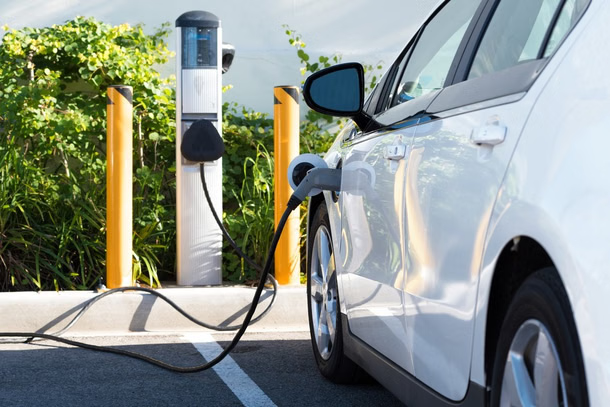

UP and MP EV infrastructure expansion is gaining momentum as both states push to build charging networks beyond major cities. The move aims to support rising electric vehicle adoption in Tier-2 and Tier-3 regions while reducing dependence on traditional fuel.
The governments of Uttar Pradesh and Madhya Pradesh have accelerated efforts to expand EV charging infrastructure in smaller cities. This shift is part of broader state EV policies aligned with national goals to promote clean mobility and reduce emissions. The focus is now moving beyond metros into districts and semi-urban areas where adoption is steadily increasing.
Why EV Infrastructure Expansion Is Moving Beyond Metro Cities
Electric vehicle adoption in India initially concentrated in metros due to better infrastructure and higher awareness. However, rising fuel costs and government incentives are now driving demand in smaller cities.
Tier-2 regions in UP and MP are witnessing increased sales of electric two-wheelers and three-wheelers, especially for daily commuting and commercial use. Without adequate charging infrastructure, this growth would remain limited.
State governments are responding by planning decentralized charging networks. This approach reduces range anxiety and builds confidence among first-time EV users. It also aligns with India’s long-term transition to sustainable transport.
Key EV Charging Network Plans in Uttar Pradesh
Uttar Pradesh has outlined plans to install charging stations across highways, urban clusters, and smaller municipalities. Cities like Kanpur, Varanasi, and Prayagraj are being prioritized along with district-level expansion.
The state’s EV policy encourages private players to set up charging stations through subsidies and simplified approvals. Public charging points are being planned at transport hubs, parking areas, and fuel stations.
The involvement of agencies like Energy Efficiency Services Limited is helping accelerate deployment through public-private partnerships. The focus remains on creating accessible charging points within short distances to support daily usage.
Battery swapping infrastructure is also being explored for e-rickshaws and delivery vehicles, which are widely used in smaller cities.
Madhya Pradesh’s Strategy for EV Infrastructure Growth
Madhya Pradesh is taking a similar approach by expanding EV charging networks across cities like Indore, Bhopal, Gwalior, and Jabalpur, while extending coverage to smaller districts.
The state aims to integrate charging infrastructure with existing urban development projects. Charging stations are being planned in commercial areas, residential complexes, and government premises.
MP’s EV policy includes incentives for both operators and consumers, encouraging faster adoption. The government is also working to improve grid capacity to support increased electricity demand from EV charging.
Focus is being placed on creating a mix of slow and fast charging stations to cater to different types of vehicles and usage patterns.
Impact on Local Economy and Job Creation
The expansion of EV infrastructure in smaller cities is expected to create new economic opportunities. Installation, maintenance, and operation of charging stations will generate local employment.
Small businesses can benefit by setting up charging points in commercial spaces or partnering with EV service providers. Local electricians and technicians may find new demand for EV-related skills.
The shift toward electric mobility also supports growth in related sectors such as battery manufacturing, logistics, and fleet management. In regions with high e-rickshaw usage, improved infrastructure can increase efficiency and earnings for drivers.
This transition is not just about vehicles but about building an entire ecosystem that supports sustainable transport.
Challenges in Expanding Charging Infrastructure
Despite strong policy support, several challenges remain. Land availability and high initial setup costs can slow down deployment in smaller cities.
Power supply consistency is another concern. Reliable electricity is essential for charging stations, especially in rural and semi-urban areas where outages are more common.
Awareness is also a barrier. Many potential users are still unfamiliar with EV charging processes and benefits. This slows adoption even when infrastructure is available.
Coordination between state agencies, private players, and local authorities will be crucial to ensure timely implementation and efficient operation.
What This Means for EV Adoption in Tier-2 India
The expansion of EV infrastructure in UP and MP marks a significant step toward mainstream adoption in non-metro regions. As charging networks grow, more consumers are likely to consider electric vehicles as a practical alternative.
Lower running costs compared to petrol and diesel vehicles make EVs attractive for daily commuters and small businesses. With better infrastructure, the total cost of ownership becomes more favorable.
This shift also supports national goals of reducing carbon emissions and improving air quality. Smaller cities, which are rapidly urbanizing, stand to benefit from cleaner transport solutions.
If executed effectively, these initiatives could set a model for other states to replicate.
Takeaways
• UP and MP are expanding EV charging networks into Tier-2 and Tier-3 cities
• Increased infrastructure will reduce range anxiety and boost EV adoption
• New job opportunities will emerge in installation and maintenance sectors
• Challenges include power supply, awareness, and initial investment costs
FAQs
Q1. Why are UP and MP focusing on EV infrastructure in smaller cities?
To support growing EV adoption and reduce dependence on fuel-based transport in non-metro regions.
Q2. What types of charging stations are being installed?
Both slow and fast charging stations, along with battery swapping options in some areas.
Q3. Will this create job opportunities locally?
Yes, installation, maintenance, and related services will generate employment.
Q4. What are the main challenges in EV infrastructure expansion?
Power supply issues, high setup costs, and lack of awareness among users.