
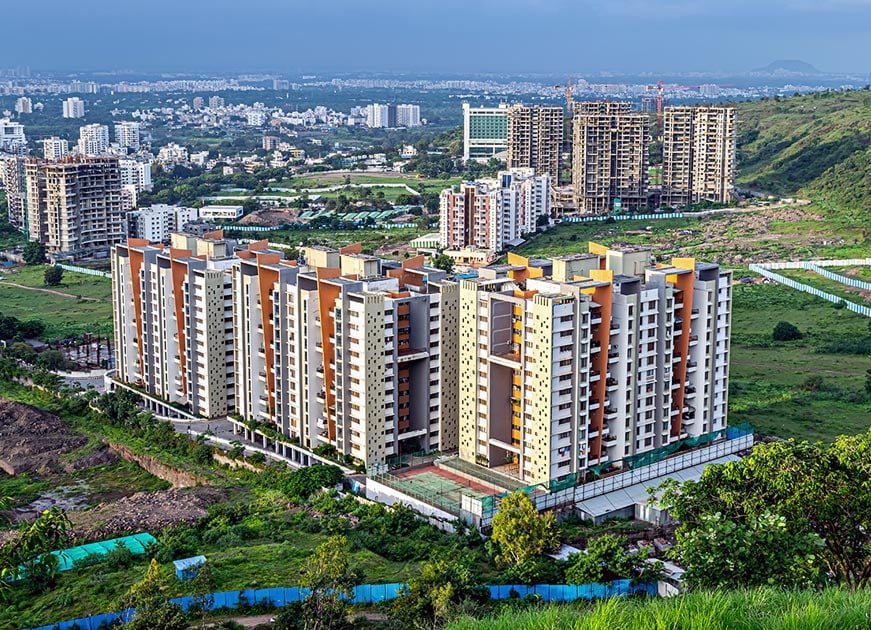

Maharashtra’s Urban Housing Policy 2026 focuses on improving affordable housing supply, faster approvals, and better access for middle-class buyers. The policy aims to address rising property costs in cities while encouraging redevelopment, rental housing, and private sector participation.
Maharashtra Urban Housing Policy 2026 introduces a set of reforms aimed at making housing more accessible for the middle class. With rising demand in cities like Mumbai, Pune, and Nagpur, the policy focuses on increasing supply, reducing approval delays, and supporting affordable housing projects.
Key Objectives of Maharashtra Housing Policy 2026
The primary goal of the policy is to bridge the gap between housing demand and supply, especially for middle-income groups. Over the past decade, property prices in urban Maharashtra have grown faster than income levels, making home ownership difficult for many families.
The policy aims to increase the availability of affordable and mid-range housing units by incentivizing developers and simplifying regulations. It also promotes planned urban expansion to reduce pressure on existing city centers.
Another objective is to encourage redevelopment of old housing societies, particularly in densely populated areas. This is expected to create additional housing stock without requiring new land acquisition.
Boost for Affordable and Mid-Income Housing Segments
A major focus of the Maharashtra Urban Housing Policy 2026 is on affordable and mid-income housing. Developers are being offered incentives such as higher Floor Space Index and faster approvals for projects that include a certain percentage of affordable units.
This approach is expected to increase supply in the price range suitable for middle-class buyers. Cities like Nagpur and Pune are likely to see more projects targeting first-time homebuyers.
The policy also aligns with central schemes like Pradhan Mantri Awas Yojana, which provides interest subsidies for eligible buyers. This reduces the effective cost of home loans and makes purchasing more feasible.
For middle-class families, this combination of incentives and subsidies can improve affordability over the long term.
Faster Approvals and Reduced Regulatory Delays
One of the major challenges in urban housing has been project delays due to lengthy approval processes. The 2026 policy aims to address this by introducing single-window clearance systems and digital approvals.
Faster approvals can reduce project timelines, which in turn helps control costs. Developers are less likely to pass on delay-related expenses to buyers.
Digitization of land records and approvals also increases transparency, reducing disputes and uncertainty for both developers and buyers.
For middle-class buyers, this means a higher chance of timely possession and fewer delays in project completion.
Focus on Redevelopment and Urban Renewal
Redevelopment is a key component of the new policy, particularly in older urban areas. Many housing societies in cities like Mumbai and Pune are aging and require structural upgrades.
The policy encourages redevelopment through incentives such as additional FSI and relaxed norms. This allows developers to rebuild old structures into modern housing complexes with better amenities.
For existing residents, redevelopment offers improved living conditions without relocating far from their current location.
At the same time, it adds new housing units to the market, which can help stabilize prices over time.
Expansion of Rental Housing and Co-Living Options
The policy also recognizes the growing demand for rental housing, especially among young professionals and migrants in urban areas.
Efforts are being made to promote rental housing projects and co-living spaces through policy support and incentives. This is important for cities with a large floating population.
For middle-class buyers, this creates an additional option. Instead of immediately purchasing property, they can choose quality rental housing while planning long-term investments.
The focus on rental housing also reduces pressure on property prices by balancing demand.
Impact on Property Prices and Buyer Decisions
While the policy aims to improve affordability, its impact on property prices will depend on how effectively it is implemented.
Increased supply and faster project completion could help stabilize prices in the medium term. However, in high-demand areas, prices may continue to remain elevated.
Middle-class buyers may benefit from better project choices, improved infrastructure, and access to subsidies.
The policy also encourages buyers to consider emerging areas around cities, where prices are relatively lower and infrastructure is improving.
Challenges and What Buyers Should Watch
Despite its benefits, the policy may face implementation challenges. Land availability, coordination between agencies, and developer participation will play a crucial role.
Buyers should carefully evaluate projects, check developer credibility, and verify approvals before investing.
Understanding eligibility for subsidies and incentives is also important to maximize benefits.
Market conditions, interest rates, and local demand will continue to influence final buying decisions.
Takeaways
- Maharashtra Housing Policy 2026 focuses on affordability and increased housing supply
- Incentives for developers aim to boost mid-income housing projects
- Faster approvals can reduce project delays and costs
- Buyers should evaluate projects carefully despite policy benefits
FAQ
Q1. Who benefits most from the new housing policy?
Middle-income buyers and first-time homebuyers are expected to benefit the most.
Q2. Will property prices decrease due to this policy?
Prices may stabilize with increased supply, but reductions depend on market conditions.
Q3. What is the role of PMAY in this policy?
PMAY provides interest subsidies that complement state-level housing initiatives.
Q4. Is redevelopment mandatory under the policy?
No, redevelopment is encouraged through incentives but not mandatory.