
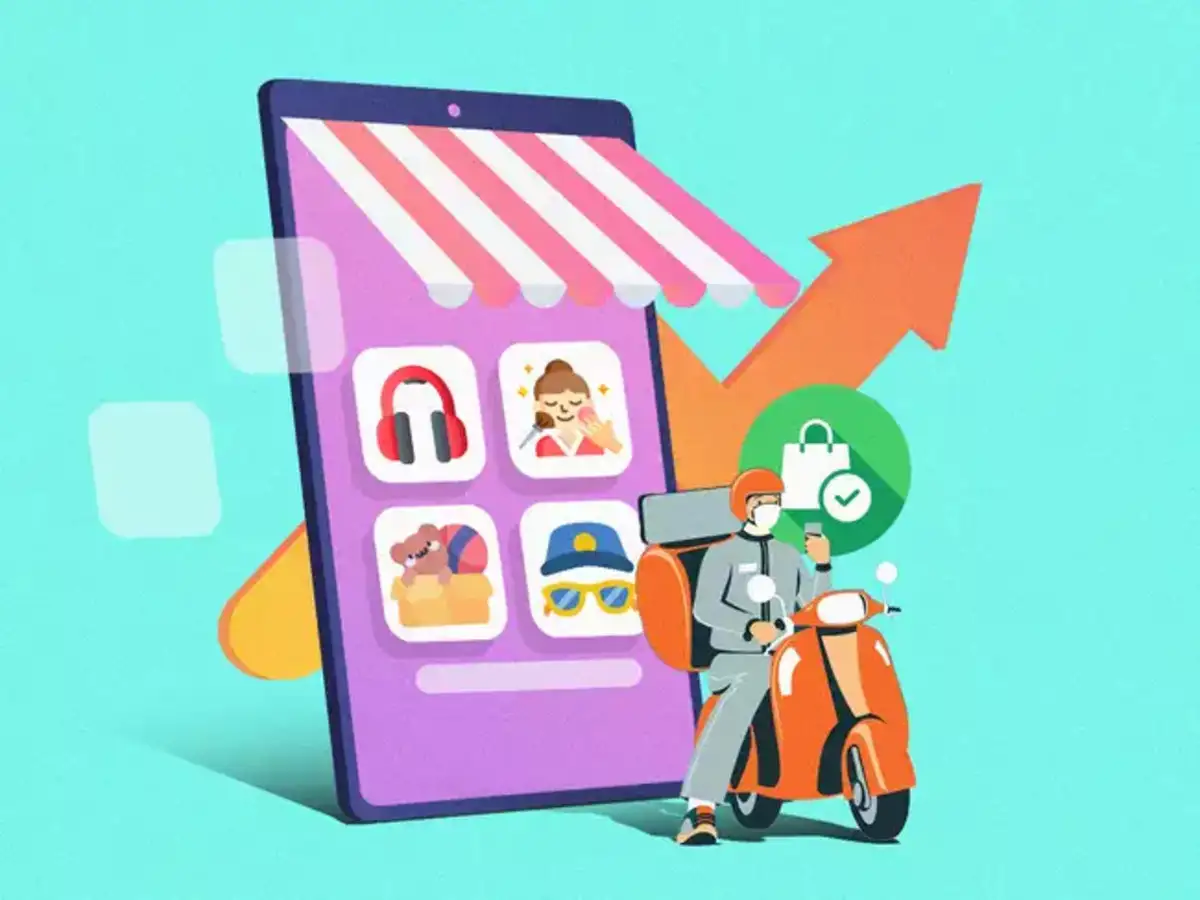

Quick commerce platforms are rapidly expanding into non-metro Indian cities, changing how consumers purchase groceries and household essentials. As companies promise deliveries within minutes, traditional kirana stores are facing growing competition while also exploring new ways to survive in a changing retail market.
Why Quick Commerce Is Growing Beyond Metro Cities
Quick commerce initially gained popularity in major cities like Bengaluru, Mumbai, and Delhi where busy consumers preferred fast deliveries for groceries and daily essentials. However, companies are now targeting Tier-2 and Tier-3 cities because internet usage, smartphone adoption, and digital payments have increased sharply outside metro regions.
Platforms such as Blinkit, Zepto, and Swiggy Instamart are expanding dark stores and delivery operations into smaller urban centers where demand for convenience is growing.
Consumers in cities like Indore, Nagpur, Surat, Jaipur, Lucknow, and Coimbatore are increasingly ordering groceries, snacks, beverages, personal care items, and household products through mobile apps. Fast delivery, discount offers, cashback rewards, and app-based convenience are major reasons behind this shift.
The rise of UPI payments and affordable internet plans has further accelerated online grocery adoption among middle-class households in smaller cities.
How Kirana Stores Are Being Affected
Traditional kirana stores remain deeply rooted in Indian neighborhoods because of personal relationships, credit systems, and familiarity with local customer preferences. However, quick commerce is beginning to affect purchasing patterns in urban and semi-urban areas.
Many consumers now order frequently used products online instead of visiting nearby stores. Products like milk, snacks, cold drinks, instant food items, and toiletries are increasingly purchased through delivery apps during flash discounts and convenience-driven shopping.
Kirana store owners often struggle to match the pricing strategies of large quick commerce platforms backed by heavy investor funding. Online platforms also provide wider product visibility and app-based recommendations that attract younger customers.
At the same time, not all local stores are losing business equally. Kiranas located in residential neighborhoods still benefit from immediate accessibility, flexible payment options, and customer trust built over years.
Retail analysts note that while quick commerce affects impulse and convenience purchases, kirana stores continue holding strong positions in many communities.
How Some Kirana Stores Are Adapting Digitally
Instead of competing directly on speed alone, many kirana stores are adapting to digital retail trends. Some shop owners are using WhatsApp ordering systems, local delivery services, and digital payment apps to retain customers.
Several ecommerce and fintech companies now partner with local kiranas to enable online ordering and inventory support. This hybrid model allows small retailers to serve customers digitally while continuing physical store operations.
Some kirana owners also focus on personalized customer service, local product availability, and flexible home delivery to maintain loyalty. In smaller cities, customers often prefer buying from familiar neighborhood stores for urgent or trusted purchases.
Digital tools such as QR-code payments, billing software, and online inventory systems are becoming more common among modernized kirana shops.
Industry experts believe kirana stores that combine local trust with digital convenience may continue surviving despite growing ecommerce competition.
Why Consumers Prefer Quick Commerce Platforms
Quick commerce platforms appeal strongly to younger consumers and working professionals because they reduce the need for physical shopping trips. Ordering groceries through mobile apps saves time, especially during summer heat, traffic congestion, or busy schedules.
Discount offers and cashback schemes also influence customer behavior significantly. Many platforms aggressively promote first-time discounts, bundled offers, and free delivery to increase app usage.
Product availability is another factor. Consumers can access branded items, imported products, and niche categories that may not always be available in local stores.
Real-time order tracking and digital payment convenience further improve user experience. In some cities, delivery times have reduced to under 15 minutes for selected locations.
However, customer loyalty in quick commerce remains highly price-sensitive. Users often switch between apps depending on discounts and delivery charges.
Challenges Facing Quick Commerce Expansion
Although quick commerce is growing rapidly, the business model faces operational and financial challenges. Maintaining ultra-fast deliveries requires expensive dark store networks, logistics systems, and large delivery workforces.
Profitability remains a concern because companies spend heavily on discounts, advertising, and customer acquisition. Fuel costs, delivery incentives, and warehouse operations increase expenses significantly.
In smaller cities, infrastructure issues such as inconsistent addresses, traffic conditions, and lower population density can affect delivery efficiency.
There are also concerns about the working conditions of delivery riders, including income instability and pressure to complete deliveries quickly.
For consumers, product quality consistency and delivery delays can become issues during peak demand periods or bad weather conditions.
Despite these challenges, investors continue supporting the sector because of India’s growing online grocery market.
Future of Grocery Retail in Non-Metro India
Retail experts believe India’s grocery market is moving toward a hybrid structure where quick commerce and kirana stores coexist rather than completely replace each other.
Quick commerce is likely to dominate convenience-driven purchases, while kirana stores may continue serving customers through personalized service, local familiarity, and immediate accessibility.
Smaller city consumers are becoming increasingly digital, but trust-based neighborhood retail still remains important in many communities.
As technology adoption improves, more kirana stores may integrate digital ordering systems and hyperlocal delivery services to remain competitive.
The future of non-metro grocery retail will likely depend on how traditional stores adapt to changing consumer expectations in an increasingly app-driven economy.
Takeaways
- Quick commerce platforms are expanding rapidly into Tier-2 and Tier-3 Indian cities.
- Kirana stores face pricing and convenience competition from delivery apps.
- Many local shops are adapting through digital payments and local delivery services.
- Quick commerce growth is increasing demand for delivery and logistics operations.
FAQ
What is quick commerce?
Quick commerce refers to ultra-fast delivery services that deliver groceries and essentials within a short time, often under 30 minutes.
Are kirana stores losing customers because of quick commerce?
Some kirana stores are facing reduced foot traffic, especially for convenience purchases, but many still retain loyal neighborhood customers.
Why is quick commerce growing in smaller Indian cities?
Rising smartphone usage, UPI payments, affordable internet, and changing shopping habits are driving growth beyond metro cities.
Can kirana stores compete with delivery apps?
Yes, many kirana stores are adapting through WhatsApp orders, home delivery, digital payments, and personalized customer service.