
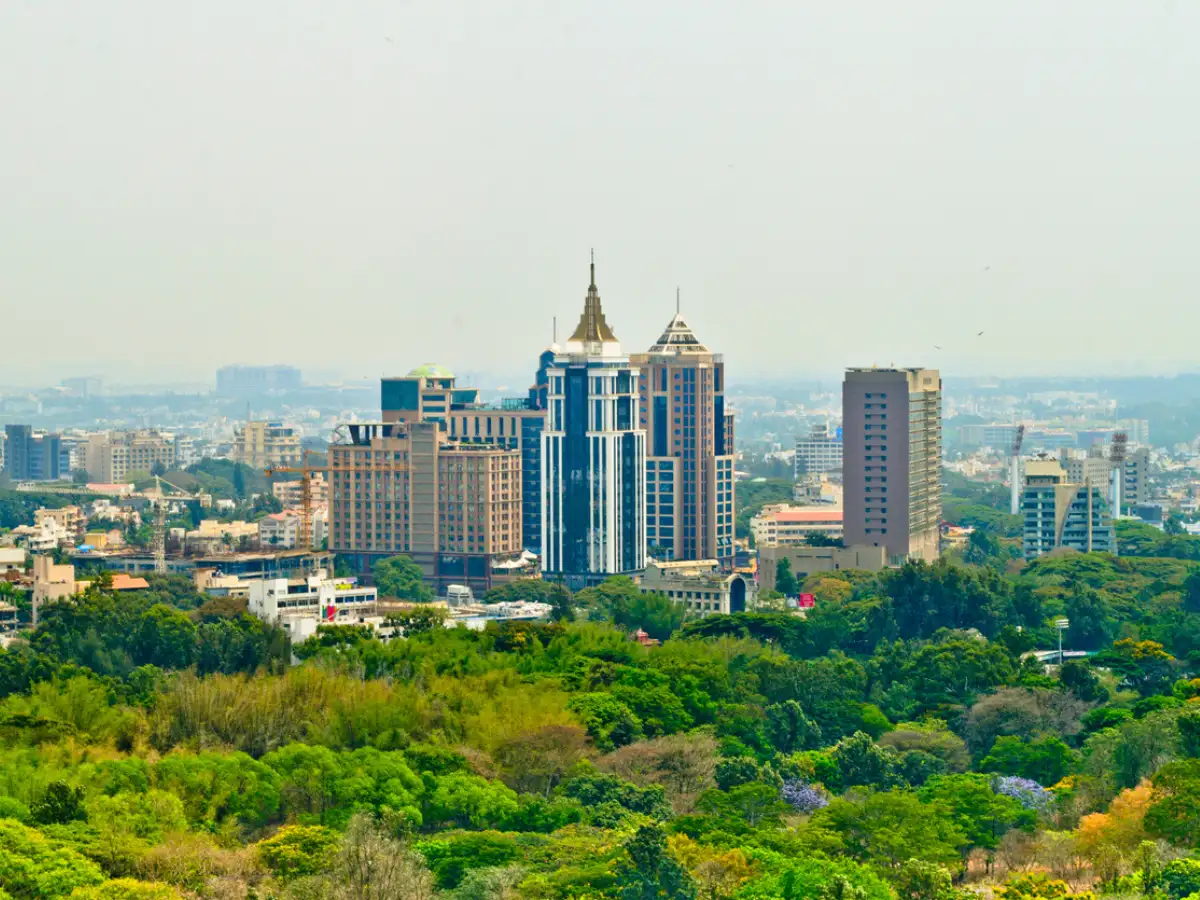

Karnataka’s new technology expansion plans and rising IT investments are expected to reshape economic growth across several Tier-2 cities in the state. As Bengaluru faces increasing pressure from congestion, infrastructure strain, and rising operational costs, both government agencies and private companies are focusing on smaller urban centers for future technology expansion.
Karnataka has long been India’s leading technology hub due to Bengaluru’s dominance in software exports, startup activity, and global IT operations. However, the state is now actively encouraging technology growth beyond the capital city through new investment policies, industrial corridors, and digital infrastructure projects.
Cities such as Mysuru, Hubballi-Dharwad, Mangaluru, Belagavi, Kalaburagi, and Shivamogga are gradually emerging as alternative destinations for IT services, startups, business process outsourcing, and technology-enabled industries.
This shift could significantly influence employment, real estate demand, education, infrastructure development, and migration patterns across Karnataka over the next decade.
Why Karnataka Is Expanding IT Beyond Bengaluru
Bengaluru remains India’s largest technology center, but the city also faces several urban challenges. Traffic congestion, rising office rents, expensive housing, water supply concerns, and infrastructure pressure have increased operational costs for businesses.
As a result, companies are increasingly exploring secondary cities that offer lower expenses and improving digital infrastructure.
The Karnataka government has also introduced technology and innovation policies aimed at decentralizing economic growth. Officials have repeatedly emphasized the importance of creating employment opportunities outside Bengaluru to reduce urban imbalance.
Tier-2 cities provide comparatively affordable land, lower employee living costs, and expanding transportation connectivity. These factors make them attractive for IT parks, data centers, engineering hubs, and remote work operations.
The rise of hybrid work culture after the pandemic has further accelerated this trend. Many companies now operate distributed teams, reducing dependence on a single metropolitan headquarters.
This creates opportunities for smaller cities to participate more actively in India’s technology economy.
Mysuru, Hubballi, and Mangaluru Are Gaining Attention
Among Karnataka’s emerging technology destinations, Mysuru has become one of the strongest contenders for IT expansion.
The city already hosts several educational institutions, engineering colleges, and existing technology operations. Compared to Bengaluru, Mysuru offers lower real estate costs and less congestion while maintaining relatively good urban infrastructure.
Hubballi-Dharwad is also receiving increasing attention due to industrial connectivity, transportation access, and government-backed infrastructure projects. Its strategic location in northern Karnataka makes it important for regional business development.
Mangaluru benefits from its port connectivity, educational ecosystem, and growing startup culture. The city has witnessed increasing interest in fintech, logistics technology, and digital services sectors.
Other cities such as Belagavi and Kalaburagi are also being considered for technology investments as the state attempts to distribute economic opportunities more evenly.
Improved airports, highways, fiber internet expansion, and industrial corridors are strengthening the business appeal of these urban centers.
What New IT Investments Mean for Local Employment
Technology expansion into Tier-2 cities could create significant employment opportunities for local graduates and skilled workers.
Many students from smaller Karnataka cities currently relocate to Bengaluru, Hyderabad, Pune, or Chennai for IT jobs. If more companies establish operations locally, migration pressure could reduce while regional employment improves.
The demand for software developers, customer support professionals, cybersecurity experts, cloud engineers, digital marketers, and data analysts is expected to grow steadily.
Indirect employment could also increase across hospitality, transport, retail, food delivery, coworking spaces, and real estate sectors.
Startups may benefit as well because smaller cities usually offer lower operational expenses compared to metro regions. Entrepreneurs can launch businesses with reduced office rental and staffing costs.
Educational institutions in these cities may also adapt their programs to match changing industry requirements, creating stronger local talent ecosystems.
For many families, this shift could improve work-life balance by allowing professionals to build careers closer to their hometowns.
Real Estate and Infrastructure Could See Major Growth
One major impact of technology investments is rising demand for residential and commercial real estate.
As companies establish offices in Tier-2 cities, demand usually increases for apartments, rental housing, coworking spaces, retail centers, and transportation infrastructure.
Developers are already monitoring emerging technology corridors in Karnataka for future residential projects and mixed-use developments.
Improved employment opportunities often encourage middle-class families to purchase homes locally instead of relocating to expensive metro cities.
Public infrastructure demand may also rise rapidly. Roads, drainage systems, water supply, public transport, healthcare facilities, and schools will require upgrades to support growing urban populations.
Experts caution that urban planning will be critical during this expansion phase. Several Indian cities have previously experienced rapid growth without adequate infrastructure preparation, leading to congestion and civic stress later.
Balanced development policies could determine whether Karnataka’s smaller cities grow sustainably over the long term.
Challenges Karnataka’s Tier-2 Tech Expansion Still Faces
Despite strong growth potential, several challenges remain for smaller technology hubs.
Talent retention continues to be a major issue. Many experienced professionals still prefer larger cities because of higher salaries, broader networking opportunities, and lifestyle advantages.
Public transport systems in many Tier-2 cities are also less developed compared to Bengaluru or Hyderabad. Reliable urban mobility becomes increasingly important as office activity expands.
Internet infrastructure quality varies across regions, especially in suburban and semi-urban areas.
Access to venture capital funding, global corporate exposure, and advanced research ecosystems also remains more concentrated in larger cities.
Another concern involves maintaining environmental sustainability during rapid expansion. Increased construction activity and population growth can create pressure on water resources, green spaces, and waste management systems.
Even with these challenges, Karnataka’s IT decentralization strategy reflects a broader national trend toward expanding economic growth beyond traditional metropolitan centers.
Key Takeaways
- Karnataka is encouraging IT expansion beyond Bengaluru into Tier-2 cities
- Mysuru, Hubballi-Dharwad, and Mangaluru are emerging technology hubs
- New investments could improve local employment and real estate demand
- Infrastructure planning and talent retention remain key challenges
FAQ
Why is Karnataka expanding IT investments beyond Bengaluru?
Rising costs, congestion, and infrastructure pressure in Bengaluru are encouraging technology growth in smaller cities.
Which Tier-2 cities are benefiting from new IT expansion?
Mysuru, Hubballi-Dharwad, Mangaluru, Belagavi, and Kalaburagi are among the cities attracting attention.
How could local employment change due to IT growth?
Technology expansion may create jobs in software services, startups, customer support, retail, and real estate sectors.
What challenges do Tier-2 tech hubs still face?
Talent retention, infrastructure quality, public transport, and funding access remain important concerns.