
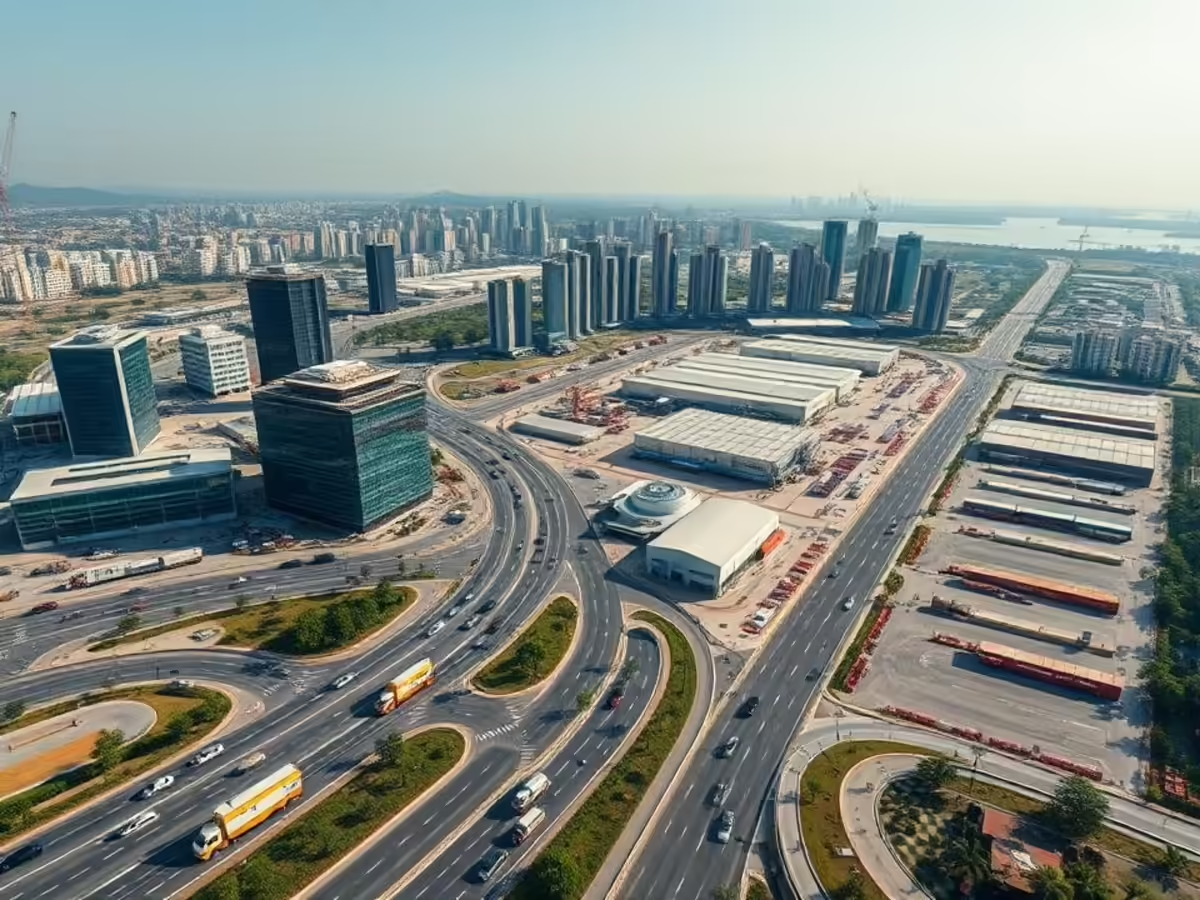

Rising property prices in emerging Indian cities are reshaping how middle-class families approach home buying. In cities such as Nagpur, Indore, Lucknow, and Coimbatore, buyers are becoming more selective as real estate values climb faster than incomes.
Why Property Prices Are Rising in Emerging Cities
For years, tier-2 cities were considered affordable alternatives to India’s expensive metros. That advantage is narrowing.
Several factors are pushing prices higher. Improved infrastructure, new highways, metro projects, IT parks, and industrial investments have increased demand. At the same time, construction costs have risen because of higher prices for cement, steel, labour, and land.
Developers are also focusing on premium projects with amenities such as clubhouses, security, and co-working spaces, which lifts average ticket sizes.
As a result, homebuyers who once expected to purchase a spacious apartment within budget are now reassessing what they can afford.
Buyers Are Taking Longer to Make Decisions
One of the biggest changes is the pace of decision-making.
Previously, many buyers in emerging cities made quick purchases once they identified a suitable property. Today, they are spending more time comparing locations, builders, loan offers, and long-term costs.
Families are asking more practical questions:
- How much will the EMI be if interest rates rise?
- Is the area likely to appreciate?
- What are the maintenance charges?
- How long will the daily commute take?
This more cautious approach reflects the higher financial commitment involved.
Affordable Housing Is Moving to City Outskirts
As central locations become costlier, buyers are shifting to peripheral areas.
In cities like Nagpur and Indore, suburbs and developing corridors are attracting demand because they offer lower prices and larger homes. Buyers are often willing to accept longer commutes in exchange for better value.
Developers are responding by launching townships and gated communities in these outer zones, where land is more affordable.
For first-time buyers, this is often the only way to stay within budget.
Homebuyers Are Choosing Smaller Units
Another visible trend is downsizing.
Instead of stretching finances for a larger apartment, many families are opting for compact two-bedroom homes or smaller layouts.
This helps keep loan amounts manageable and reduces associated costs such as registration charges, interiors, and monthly maintenance.
For young professionals and nuclear families, functionality and location are increasingly more important than extra space.
Ready-to-Move Homes Are Gaining Preference
When prices are rising, buyers become more risk-conscious.
Many now prefer ready-to-move-in properties over under-construction projects. A completed home offers immediate possession and removes uncertainty related to delays.
Buyers can also evaluate the actual construction quality, neighbourhood, and amenities before committing.
Although ready homes may carry a premium, they often feel safer from a financial perspective.
Loan Eligibility Is Influencing Purchase Choices
Higher property prices mean larger home loans, but borrower eligibility has not increased at the same pace.
Banks assess income, existing obligations, and credit scores. If the sanctioned amount falls short, buyers must either increase their down payment or choose a lower-priced property.
This is leading many households to revise expectations regarding size, location, or amenities.
For salaried buyers, affordability is increasingly driven by EMI comfort rather than aspiration alone.
Investors Are Becoming More Selective
Rising prices are also changing investor behaviour.
Earlier, many investors purchased properties in emerging cities primarily for capital appreciation. Today, they are paying closer attention to rental yields, infrastructure timelines, and local job growth.
Cities attracting IT parks, manufacturing units, and educational institutions are seen as stronger long-term bets.
Speculative buying has become less common compared with data-driven investment decisions.
What This Means for Developers
Developers are adapting to a more value-conscious customer.
Projects are being designed with practical layouts, flexible payment plans, and targeted amenities that justify the price. Builders with strong delivery records and transparent practices have a clear advantage.
Marketing alone is no longer enough. Buyers expect tangible value and lower execution risk.
Long-Term Outlook for Emerging City Real Estate
Despite higher prices, demand remains healthy in many tier-2 cities because housing needs continue to grow.
Improving infrastructure and employment opportunities support long-term demand, but buyers are now more disciplined. They are balancing aspiration with affordability.
This shift is creating a more mature market where purchase decisions are based on financial planning rather than fear of missing out.
Takeaways
- Rising property prices are making homebuyers more cautious in emerging cities.
- Many buyers are shifting to suburbs and choosing smaller homes.
- Loan eligibility and EMI affordability are shaping final decisions.
- Ready-to-move properties are becoming increasingly popular.
Frequently Asked Questions
Why are property prices rising in tier-2 cities?
Infrastructure upgrades, growing employment, and higher construction costs are key drivers.
Are emerging cities still affordable for homebuyers?
They remain cheaper than major metros, but affordability is becoming more constrained.
Why are buyers moving to city outskirts?
Peripheral areas offer lower prices and better value for money.
Is it better to buy ready-to-move homes?
Many buyers prefer them because they reduce the risk of project delays.