
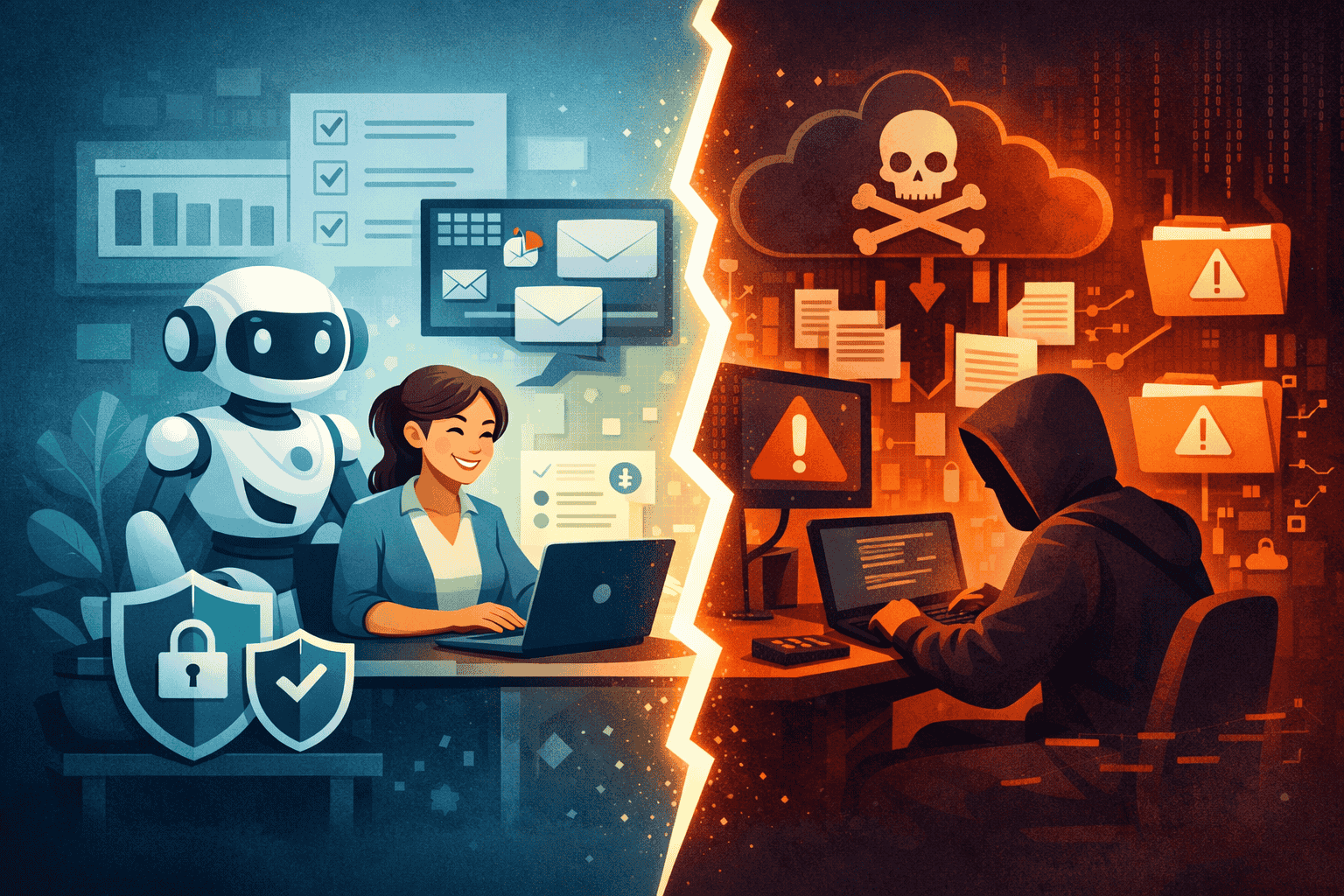

Artificial intelligence is becoming a part of everyday education and business operations in India. From students using AI for assignments to small businesses relying on AI for content creation and customer support, safe usage is essential to protect privacy, maintain accuracy, and avoid costly mistakes.
AI Tools Are Growing Rapidly Across India
The use of AI tools in India has expanded significantly over the last few years. Students use AI for research, note-making, language improvement, and exam preparation. College learners use it for project assistance, coding support, and presentation creation. Small businesses increasingly depend on AI for marketing, social media management, customer communication, and basic data analysis.
While AI offers convenience and productivity benefits, it is not always accurate. AI systems generate responses based on available patterns and data rather than real-world understanding. This means users should treat AI as an assistant rather than a final decision-maker.
Using AI responsibly helps prevent misinformation, protects sensitive information, and ensures better results in academic and business environments.
Protect Personal and Business Data When Using AI
One of the most important AI safety practices is protecting confidential information. Students should avoid uploading personal details such as Aadhaar numbers, passwords, banking information, examination credentials, or private documents into AI platforms.
Similarly, small business owners should never enter customer databases, financial records, employee information, confidential contracts, or proprietary business strategies into public AI tools.
Many AI platforms process user inputs to improve their systems. While providers often implement security measures, users should assume that anything entered into a public AI chatbot could potentially be stored or reviewed under platform policies.
A good practice is to remove names, account numbers, addresses, and confidential details before using AI for assistance.
Verify Information Before Using AI Outputs
Fact-checking AI-generated content is essential for both education and business use. AI tools can occasionally generate incorrect facts, outdated information, inaccurate citations, or misleading explanations.
Students should never submit assignments, research papers, or project reports without verifying the information from textbooks, academic journals, official websites, or trusted educational sources.
For small businesses, incorrect AI-generated information can affect customer trust. Product descriptions, legal statements, pricing details, and marketing claims should always be reviewed by a human before publication.
AI can save time during research and drafting, but final responsibility for accuracy remains with the user.
Ethical Use of AI in Schools and Colleges
Educational institutions worldwide are discussing the role of AI in learning. Using AI for understanding concepts, improving grammar, summarizing notes, or practicing interview questions can support learning.
However, relying entirely on AI to complete assignments, exams, dissertations, or research projects may violate institutional guidelines and academic integrity policies.
Students should use AI as a learning aid rather than a shortcut. Writing assignments in their own words, understanding concepts independently, and properly citing sources remain important academic skills.
Teachers and educational institutions are increasingly introducing AI literacy programs to help students understand both the benefits and limitations of these technologies.
Safe AI Practices for Small Businesses
Small businesses can benefit from AI tools for content creation, customer service, inventory planning, and productivity management. However, business owners should establish clear rules regarding AI usage.
Employees should review AI-generated emails, social media posts, advertisements, and customer communications before publication. Automated outputs can sometimes contain factual errors, inappropriate wording, or misleading recommendations.
Businesses should also evaluate the credibility of AI tools before adoption. Established platforms with transparent privacy policies, security standards, and customer support are generally safer choices than unknown applications.
Training staff on responsible AI usage can reduce risks while maximizing productivity gains.
Recognize AI Limitations and Human Oversight
AI technology continues to improve, but it cannot replace human judgment in many situations. It lacks real-world experience, emotional understanding, ethical reasoning, and contextual awareness that people naturally possess.
For students, teachers, and entrepreneurs, the best approach is a combination of AI assistance and human review. AI can help organize information, generate ideas, and automate repetitive tasks, while humans make final decisions.
Understanding these limitations helps users avoid overreliance on technology and maintain better control over educational and business outcomes.
Key Takeaways
• Never share confidential personal, academic, or business information with public AI tools.
• Verify all AI-generated facts, statistics, and recommendations before using them.
• Use AI as a support tool for learning and productivity rather than a replacement for human judgment.
• Small businesses should implement clear guidelines for responsible and secure AI usage.
FAQ
Q1. Is it safe for students to use AI tools for homework?
Yes, AI can help explain concepts, summarize information, and improve writing. However, students should verify facts and complete academic work using their own understanding.
Q2. Can small businesses use AI for marketing?
Yes. AI can assist with content creation, social media planning, and customer communication, but all outputs should be reviewed before publication.
Q3. What information should never be entered into AI tools?
Users should avoid sharing passwords, banking details, Aadhaar information, confidential business records, customer databases, and sensitive personal data.
Q4. Are AI-generated answers always correct?
No. AI can produce inaccurate or outdated information. Independent verification from trusted sources is necessary before relying on AI-generated content.
(AI tools safety, AI for students India, AI for small business, responsible AI usage, AI privacy protection, AI in education, AI productivity tools, artificial intelligence best practices)