
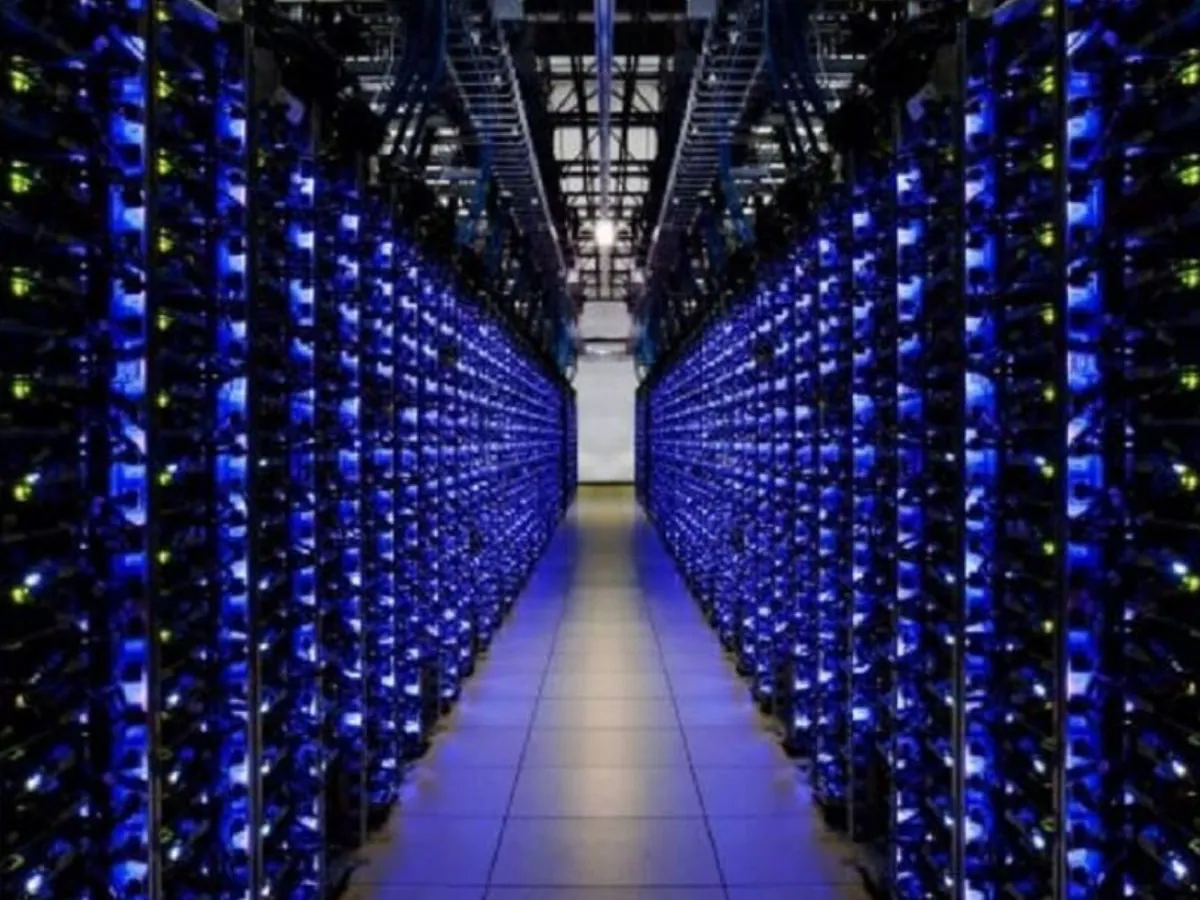

India’s AI data centres are attracting billions in investment as technology companies expand their computing infrastructure. However, proposed projects in areas such as Thane, Maharashtra, and Visakhapatnam, Andhra Pradesh, have triggered public concerns over water consumption, electricity demand, land use, noise and environmental impact. The debate centres on how India can pursue digital growth while protecting local communities and natural resources.
Why AI Data Centres Are Expanding Across India
AI data centres are specialised facilities that house computer servers, networking equipment and storage systems used to process large amounts of digital information. They support artificial intelligence applications, cloud computing, online services and business operations.
Demand for these facilities is increasing as companies develop AI models, offer cloud services and expand their digital products. Unlike ordinary office buildings, large data centres require continuous electricity, reliable cooling systems and strong network connections to operate efficiently.
India is positioning itself as an important destination for this infrastructure because of its growing digital economy, expanding internet usage and demand for cloud-based services. According to the Ministry of Electronics and Information Technology, India’s total data centre capacity increased from approximately 375 megawatts in 2020 to around 1,500 MW by 2025.
Industry estimates published in October 2026 suggest that operational capacity could approach 2 gigawatts by the end of the year. Mumbai and Navi Mumbai remain important markets, while other cities are also attracting investment.
The expansion can support digital services and economic activity, but it also raises questions about how infrastructure requirements will affect the places where these facilities are built.
Why Local Communities Are Opposing AI Data Centre Projects
Public opposition to AI data centres has become more visible in India as residents seek greater transparency about the environmental and social effects of proposed projects.
In Thane, Maharashtra, residents have raised concerns about a proposed large-scale Amazon data centre, questioning its potential effect on water availability, electricity demand, noise levels and nearby residential areas. Similar concerns have emerged around a proposed Google-backed data centre project in Visakhapatnam, Andhra Pradesh.
These disputes reflect a broader challenge: the benefits of a major technology investment may extend across the country, while some of its immediate environmental and infrastructure costs are concentrated in the surrounding neighbourhoods.
Residents want to know whether local infrastructure can support additional demand without affecting households, small businesses and existing public services. They also want clear information about environmental safeguards, land acquisition, employment opportunities and the process through which projects receive approval.
The concerns do not necessarily mean that every data centre will create the same problems. Their actual impact depends on the facility’s size, location, cooling technology, energy sources, water arrangements and regulatory compliance.
Water Consumption: A Major Concern for Residents
Water is one of the most important issues in the debate over AI data centres, particularly in areas that already experience seasonal shortages or depend on limited water supplies.
Some data centres use water-based cooling systems to manage heat generated by servers. The amount required varies considerably according to the facility’s design, operating conditions, cooling technology and local climate. Other systems can reduce direct water use, although they may involve different electricity or equipment requirements.
Residents are concerned that large facilities could compete with households, agriculture and local businesses for limited water resources. This concern becomes more significant when a project is proposed in a water-stressed area or when the source and volume of its water supply are not clearly explained.
In August 2026, the Union government told Parliament that AI data centres do not automatically require environmental clearance solely because they are AI data centres. However, qualifying building and township projects can require prior environmental clearance under the applicable provisions of the Environment Impact Assessment Notification, 2006.
The government also stated that water availability, water-balance assessments and the recycling and reuse of wastewater are considered during the appraisal of qualifying projects.
For local communities, the key questions are practical: Where will the water come from? How much will the facility use? Will treated wastewater be reused? And what safeguards will protect existing users during periods of shortage?
Electricity Demand and Its Possible Impact on Local Areas
AI computing requires substantial electricity, particularly when facilities operate large numbers of high-performance processors. Data centres also need dependable power around the clock because interruptions can affect computing operations and digital services.
Residents may worry that a new facility will place additional pressure on the local electricity network, particularly where demand is already high. The actual effect depends on the size of the project, available grid capacity, planned power infrastructure and the arrangements made with electricity suppliers.
Backup generators are commonly installed to provide emergency power when the main supply fails. Their testing and operation can raise questions about noise and local air quality, depending on the equipment, fuel, operating hours and pollution-control measures.
The environmental effect also depends on how electricity is generated. A facility supplied by a carbon-intensive grid can have a different emissions profile from one supported by additional renewable electricity, although the overall impact depends on how clean power is sourced and delivered.
India’s expanding data centre industry is encouraging investment in renewable energy as companies seek to meet growing power requirements. However, purchasing renewable electricity does not automatically eliminate every environmental impact associated with a data centre.
Local authorities and power utilities need to assess whether planned facilities can be supported without compromising reliable electricity access for existing consumers.
Land Use, Tree Cover and Noise Pollution
Large data centres require land for server buildings, electrical equipment, cooling systems, backup power and supporting infrastructure. Depending on the project, construction may involve changes to existing land use, road access and surrounding development.
Residents may object when construction affects tree cover, open spaces or the character of a residential neighbourhood. In some locations, communities also raise questions about whether the environmental and social consequences were adequately assessed before decisions were made.
Noise is another concern. Cooling equipment, fans, transformers and backup generators can create continuous or intermittent sound. The impact on nearby homes depends on the equipment, distance, operating conditions and the effectiveness of noise barriers and other mitigation measures.
Construction traffic, dust and changes to local roads may also affect residents during the development phase.
These issues require project-specific assessment rather than assumptions that every facility will produce the same level of disruption. Site selection, building design, operating conditions and enforcement of environmental standards can influence the outcome.
Meaningful public consultation can help identify sensitive locations and practical safeguards before construction advances too far.
Will AI Data Centres Create Jobs for Local Residents?
Investment announcements often highlight employment, infrastructure development and economic growth as potential benefits of large data centre projects. These benefits matter to cities and smaller communities seeking new sources of economic activity.
However, the number and type of jobs created need careful examination. Construction can generate temporary work in civil engineering, electrical installation, transport and other supporting activities. Once a facility becomes operational, employment may include technical maintenance, security, facilities management and specialist computing roles.
A highly automated data centre may require fewer permanent employees than a factory or another labour-intensive business of comparable investment value. The number of local jobs will depend on the project’s design, operating model and workforce requirements.
Communities should therefore seek clear information about permanent employment, temporary construction work, skill requirements and opportunities for local suppliers.
Training programmes can help residents qualify for technical and maintenance positions. Partnerships with industrial training institutes, engineering colleges and local businesses could also help ensure that economic benefits reach people living near the project.
Job creation should be assessed through credible employment estimates and actual hiring outcomes, rather than investment figures alone.
What Should Governments and Companies Do?
India does not need to choose between AI infrastructure and environmental protection. The challenge is to ensure that data centre development is planned around the carrying capacity of the location and the needs of existing communities.
First, project developers should disclose relevant information about expected electricity consumption, water sourcing, cooling technology, wastewater management and backup power arrangements. Clear disclosures can help residents understand the likely effects of a proposed facility.
Second, authorities should assess local infrastructure before granting applicable approvals. Water-stressed areas may require stricter scrutiny of supply arrangements, while electricity planning should account for both new demand and the reliability needs of existing consumers.
Third, public consultation should take place early enough to influence project design and mitigation measures. Residents should have access to relevant project documents, a clear channel for raising concerns and information about how those concerns are addressed.
Finally, monitoring should continue after construction. Promised environmental safeguards are meaningful only when compliance can be measured and violations addressed.
India’s data centre expansion will be more sustainable if investment decisions account for local conditions from the beginning. Transparent planning can help reduce conflict while supporting the country’s digital ambitions.
Key Takeaways
- India’s data centre capacity is expanding as demand for AI computing and cloud services increases.
- Communities near proposed projects have raised concerns about water, electricity, land use, noise and environmental safeguards.
- The actual impact varies by project design, location, cooling system and power source.
- Transparent approvals, public consultation, resource planning and ongoing monitoring can help balance technology investment with community interests.
Frequently Asked Questions
1. What is an AI data centre?
An AI data centre is a facility containing servers and related infrastructure used to process, store and manage the computing workloads required for artificial intelligence, cloud computing and other digital services.
2. Why are residents concerned about AI data centres in India?
Residents have raised concerns about water consumption, electricity demand, noise, land use, tree removal and the possible effects on local infrastructure. The severity of these effects depends on the specific project and the safeguards in place.
3. Do AI data centres require environmental clearance in India?
Not every AI data centre automatically requires environmental clearance solely because it supports AI. Under the applicable rules, qualifying building and construction projects or township and area development projects may require prior clearance. Other environmental, land-use and operational requirements may also apply.
4. Can AI data centres benefit smaller Indian cities?
Yes. They can support digital infrastructure investment, construction activity, technical employment and local supply chains. However, the scale of permanent employment and the distribution of economic benefits depend on the project. Communities also need safeguards to address potential pressure on local resources.