
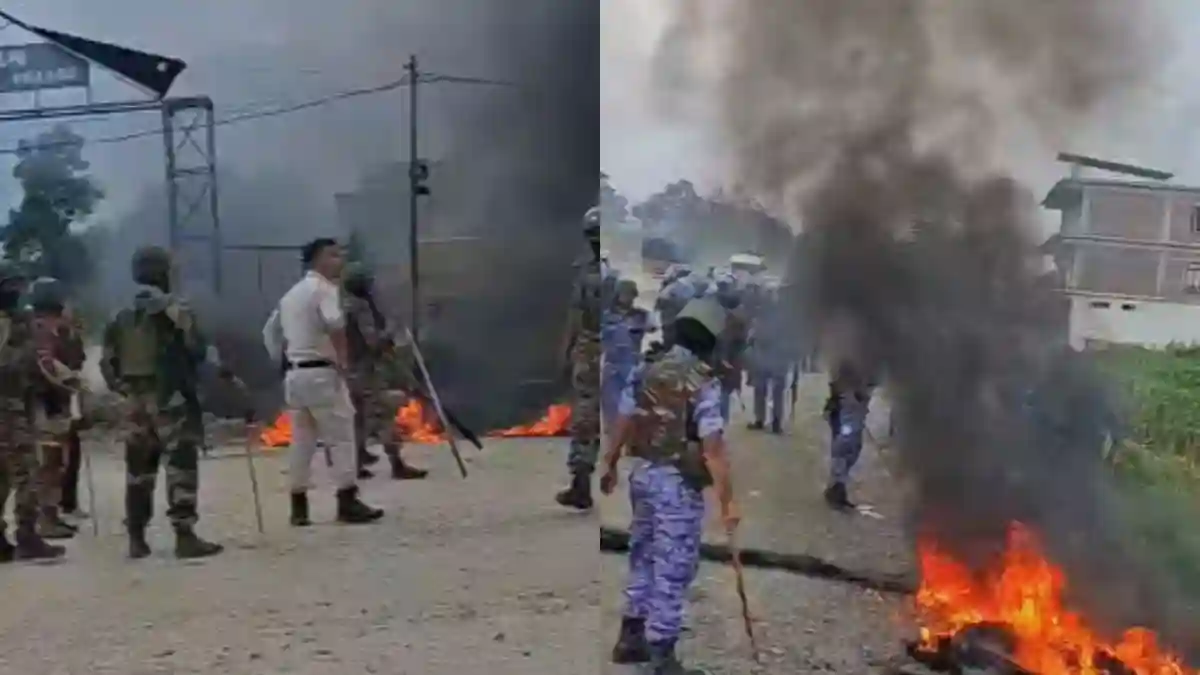

Manipur witnessed widespread disruption on November 16 after a 24-hour statewide general strike was called to protest the killing of four Naga civilians in Ukhrul district. The shutdown affected public transport, markets and educational institutions, while clashes between protesters and security forces added to tensions.
Four Naga Civilians Killed in Ukhrul District
The killing of four Naga civilians in Manipur has triggered fresh protests and renewed concerns about security in the state’s hill districts. The victims were killed on November 13, 2026, when suspected militants allegedly ambushed two vehicles travelling along National Highway 202 in Ukhrul district.
According to police information reported by The Indian Express, the incident took place near New Haven, approximately 10 kilometres southwest of Sangshak Police Station. The victims were travelling towards Imphal in two separate vehicles when armed attackers opened fire.
The four deceased included two women and two men. Among them were a mother and her son, while the other two victims were also reported to be members of the same family. The killings have caused grief among local communities and prompted demands for accountability and stronger civilian protection.
The attack has also intensified existing tensions between communities in Manipur’s hill districts, where violence and security concerns have remained significant challenges.
NPCM Calls 24-Hour Statewide General Strike
Following the killings, the Native People’s Committee, Manipur (NPCM), announced a 24-hour statewide general strike in coordination with various hill and valley civil society organisations.
The shutdown began at midnight on November 15 and continued until midnight on November 16. The committee called for public participation to condemn the killings, demand justice for the victims and pressure the authorities to take action against those responsible.
The strike received support from organisations representing different communities, including groups from Naga-inhabited areas. A parallel shutdown was also observed in Tangkhul Naga-inhabited areas under the Tangkhul Naga Long.
The NPCM appealed to residents across Manipur to observe the shutdown peacefully. It also urged people to maintain communal harmony and avoid actions that could further increase tensions.
The organisation called on the Manipur government and the Central government to take immediate steps to restore peace, protect indigenous communities and ensure that those responsible for the killings face legal action.
Public Transport and Markets Affected Across Manipur
The statewide strike significantly disrupted normal activities across Manipur on November 16. Markets, shops, business establishments and educational institutions remained closed in several areas.
Public transport services were largely suspended, leaving commuters with limited travel options. Private vehicles also faced restrictions in locations where protesters enforced the shutdown through road blockades and demonstrations.
The impact was reported in both the valley districts and Naga-inhabited hill areas. Ukhrul district headquarters also witnessed widespread closures, reflecting the strong response to the killings.
Essential services, including hospitals, ambulances, fire services, electricity, water supply and media operations, were exempted from the shutdown.
For residents who depend on daily transport, the disruption affected routine activities, access to commercial services and movement between different parts of the state.
Clashes Between Protesters and Security Forces in Imphal
Although the shutdown was largely observed across the state, some locations witnessed tense confrontations between protesters and security personnel.
In Imphal’s Chingmeirong locality, bandh supporters attempted to block traffic and enforce the shutdown. Security forces intervened to disperse demonstrators and reopen roads. Police fired tear gas shells after tensions escalated between protesters and personnel deployed in the area.
According to The Indian Express, there were no immediate reports of injuries during the police action. Dingku Road and areas around Chingmeirong also witnessed demonstrations and road obstructions.
Protesters reportedly blocked roads, burned tyres and raised slogans demanding justice for the four civilians. Security personnel were deployed at sensitive locations to prevent further escalation and maintain public order.
The incidents highlighted the difficulties faced by authorities in managing public demonstrations while ensuring that essential transport and emergency services remain accessible.
Civil Society Organisations Demand Accountability
The killings have prompted civil society organisations to raise questions about civilian security and the government’s response to violence in Manipur.
Organisations supporting the shutdown have demanded that the authorities identify and arrest those responsible for the November 13 attack. They have also called for stronger security arrangements in vulnerable areas, particularly along important roads connecting hill districts with the Imphal Valley.
Some Tangkhul civil society organisations have raised additional demands concerning the existing Suspension of Operations (SoO) agreement with armed groups. Their demands include reviewing the agreement and taking action against groups allegedly involved in the attack.
These are demands made by the organisations and should not be treated as established findings about the identity of the attackers.
The investigation and official identification of those responsible remain important steps in establishing the circumstances surrounding the killings.
Manipur’s Continuing Security Challenges
The latest incident comes amid continuing security challenges in Manipur, where tensions between communities have affected several hill districts.
Districts including Ukhrul, Kamjong, Kangpokpi, Tamenglong, Senapati and Noney have experienced violence and security-related incidents during the ongoing period of unrest.
The situation has created difficulties for residents, particularly those living in remote villages who depend on roads for healthcare, education, employment and access to essential supplies.
National Highway 202 is an important road connection between Imphal and Ukhrul. Incidents involving armed attacks on civilian vehicles can therefore have consequences beyond the immediate location, affecting public confidence in road safety and everyday movement.
The latest killings have once again brought attention to the need for stronger security arrangements, effective communication between communities and sustained efforts to prevent retaliatory violence.
Restoring confidence among residents will require more than temporary security deployments. Transparent investigations, accountability and consistent protection of civilians will remain important to any longer-term peace effort.
What Happens Next?
With the 24-hour general strike ending at midnight on November 16, attention has shifted towards the administration’s response and the investigation into the killings.
The authorities face the challenge of identifying those responsible, preventing further violence and ensuring that tensions do not spread to other districts.
The demands raised by civil society organisations also place pressure on both the state and Central governments to address broader security concerns.
For residents, the immediate priorities include the restoration of normal transport services, reopening of businesses and educational institutions, and assurance that daily movement can take place without fear.
The November 13 attack and the subsequent statewide shutdown underline how quickly a targeted incident can trigger wider disruption in a state already dealing with complex security and community tensions.
A credible investigation and timely action against those responsible will be essential in addressing public anger and preventing further unrest.
Key Takeaways
- Four Naga civilians were killed in an alleged militant ambush near New Haven in Manipur’s Ukhrul district on November 13.
- The Native People’s Committee, Manipur, called a 24-hour statewide strike from November 15 midnight to November 16 midnight.
- Markets, educational institutions and public transport services were affected across several parts of the state.
- Protesters and security forces clashed in parts of Imphal, where tear gas shells were used to disperse demonstrators.
Frequently Asked Questions (FAQs)
1. Why was a statewide strike called in Manipur?
The Native People’s Committee, Manipur, called the strike to protest the killing of four Naga civilians in an alleged ambush near New Haven in Ukhrul district on November 13, 2026.
2. Where were the four Naga civilians killed?
The incident occurred near New Haven along National Highway 202 in Manipur’s Ukhrul district, approximately 10 kilometres southwest of Sangshak Police Station.
3. When did the Manipur statewide strike take place?
The 24-hour general strike began at midnight on November 15 and ended at midnight on November 16, 2026.
4. Were essential services affected by the shutdown?
Essential services, including medical facilities, ambulances, fire services, electricity, water supply and media operations, were exempted from the shutdown. However, public transport and commercial activities were significantly disrupted.