
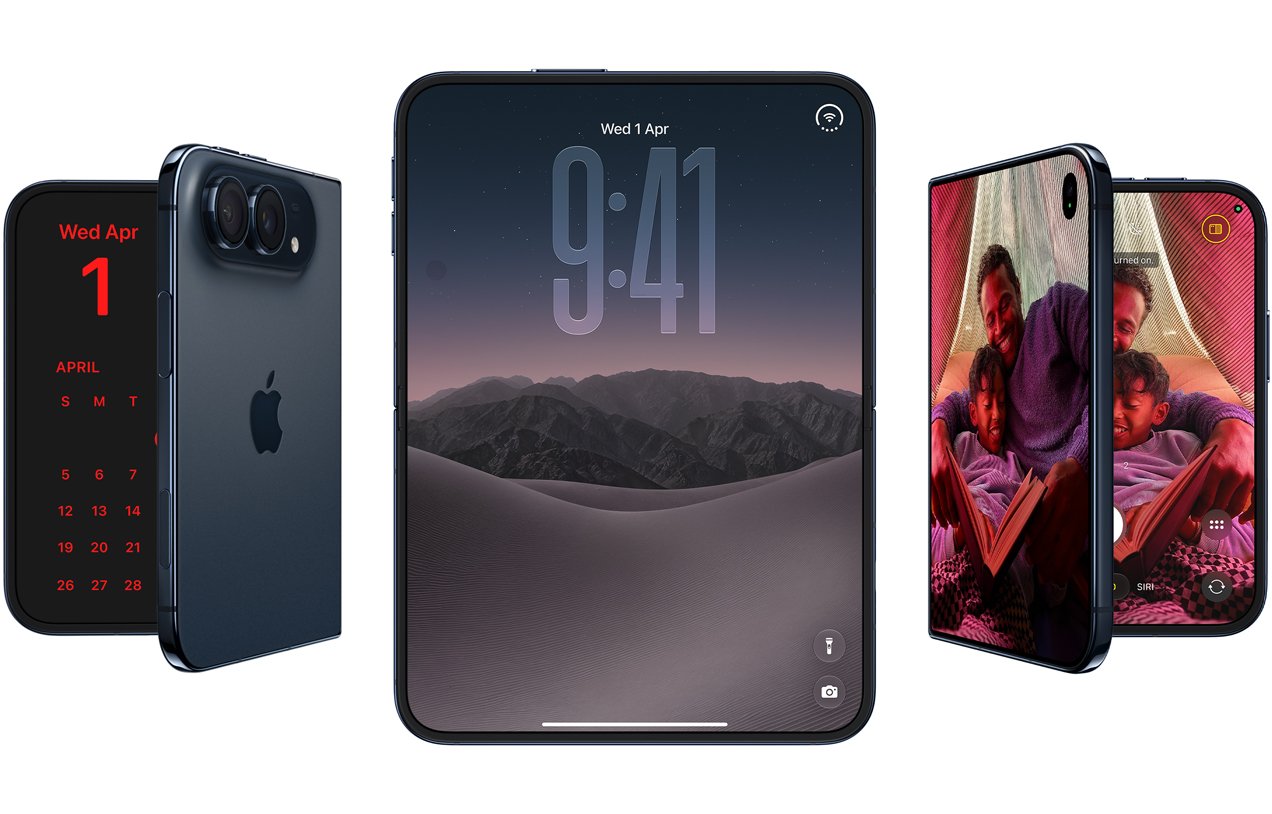

Apple’s first foldable smartphone, the iPhone Duo, has entered India’s ultra-premium market with a starting price of ₹2,99,900. Its arrival could intensify competition with Samsung and reshape consumer expectations around smartphone design, multitasking and premium technology.
Apple’s Entry Into Foldable Smartphones Changes the Market
The launch of Apple’s iPhone Duo marks an important development in India’s premium smartphone market. Introduced in September 2026, the company’s first foldable iPhone brings Apple into a category that Samsung and other smartphone manufacturers have been developing for several years.
Unlike conventional smartphones, foldable devices offer a larger screen that can be opened when users need additional display space and folded into a more compact form for everyday use. This design combines some of the convenience of a smartphone with features traditionally associated with tablets.
Apple’s entry is particularly significant because of its position in India’s premium smartphone segment. The company has built a strong customer base through its iPhone ecosystem, retail expansion and brand recognition. Introducing a foldable model gives existing iPhone users another high-end option while potentially attracting consumers who have been considering foldable Android devices.
However, the bigger question is whether the iPhone Duo can take foldable smartphones beyond a relatively small group of technology enthusiasts and encourage wider adoption among Indian consumers.
iPhone Duo Price in India and Key Features
Apple introduced the iPhone Duo in September 2026, with Indian pre-orders beginning on October 16 and retail availability starting October 23.
The smartphone starts at ₹2,99,900 for the 256GB storage variant. Higher storage configurations are also available, positioning the device firmly in the ultra-premium category.
Some of its major specifications include:
- Inner display: 7.6-inch Super Retina XDR display.
- Outer display: 5.4-inch Super Retina XDR display.
- Processor: Apple’s A20 Pro chip.
- Operating system: iOS 27.1.
- Design: Grade 5 titanium construction with a precision-engineered hinge.
- Battery: Dual-battery architecture.
- Display technology: ProMotion, Always On and up to 3,000 nits peak outdoor brightness.
Apple has also introduced a nano-texture finish designed to reduce glare and reflections on the inner display. The company says this finish also helps minimise the visibility of the screen crease.
The device supports multitasking, gaming and content consumption on its larger display. Apple has also redesigned aspects of iOS to adapt to the folding form factor.
These specifications make the iPhone Duo more than a conventional iPhone with a flexible screen. Its success, however, will depend on how effectively these features improve everyday usage. Apple (IN)+1
India’s Premium Smartphone Market Is Expanding
India’s smartphone market has gradually moved towards higher-value devices, although affordability continues to influence purchasing decisions.
According to Counterpoint Research, smartphones priced above ₹30,000 accounted for more than one in every five devices shipped in India during 2025. Apple recorded a 28% value share of the Indian smartphone market that year, highlighting its strong position in the premium segment.
The research also reported that Samsung led India’s foldable smartphone segment in 2025 with an 88% volume share. This indicates that foldable devices already have an established market, even though they remain a specialised category compared with conventional smartphones.
Another important development is the growing role of financing. Counterpoint reported that nearly two-thirds of purchases in India’s premium smartphone segment were financed through options such as EMIs.
This trend matters because expensive smartphones are increasingly being purchased through monthly payment plans rather than full upfront payments.
For Apple, India’s premiumisation trend creates an opportunity. However, a ₹2.99 lakh starting price places the iPhone Duo considerably above the price range of most premium smartphones, making its potential customer base narrower than that of conventional flagship iPhones. Counterpoint Research
Samsung Faces a New Competitor in the Foldable Segment
Samsung has played a major role in developing India’s foldable smartphone market. Its Galaxy Z Fold and Galaxy Z Flip series have helped introduce consumers to devices that combine flexible displays with premium hardware.
Apple’s entry creates a more direct competition between two major smartphone ecosystems. Samsung has the advantage of years of experience with foldable designs, while Apple brings its established iOS ecosystem and loyal customer base.
The price difference is also significant. Apple’s iPhone Duo starts at ₹2,99,900, while Samsung’s Galaxy Z Fold8 has a reported starting price of ₹1,79,999 in India.
This difference gives Samsung an opportunity to appeal to consumers who want a large foldable display without spending close to ₹3 lakh.
For Apple, the challenge will be to convince buyers that its software experience, hardware design, camera capabilities and ecosystem integration justify the additional expense.
The competition may also encourage manufacturers to improve hinge mechanisms, screen durability, battery performance and multitasking features.
According to market analysis published by Moneycontrol, Apple’s entry could expand India’s foldable smartphone market rather than simply transfer customers from Samsung to Apple. Moneycontrol+1
Can Foldable Phones Change Everyday Smartphone Usage?
The biggest advantage of foldable smartphones is their ability to offer a larger working area without requiring consumers to carry a separate tablet.
For professionals, this can be useful when reviewing documents, attending video meetings, managing emails or switching between multiple applications. Students may find larger displays convenient for reading digital textbooks, taking notes and watching educational content.
Content creators could also benefit from additional screen space when editing photographs, reviewing videos and managing social media applications.
In India’s growing digital economy, where smartphones are used for banking, communication, entertainment, education and business, these features could become increasingly relevant.
However, a larger display does not automatically make a device more productive. Applications must be properly optimised for different screen sizes, and switching between folded and unfolded modes should feel natural.
Apple’s software integration will therefore be an important factor in determining whether the iPhone Duo delivers practical benefits beyond its unusual design.
High Prices Remain the Biggest Challenge for Indian Buyers
Despite growing demand for premium smartphones, price remains one of the biggest barriers to foldable phone adoption in India.
At ₹2,99,900, the iPhone Duo costs significantly more than most flagship smartphones available in the country. Even consumers who regularly purchase premium iPhones may hesitate before spending this amount on a first-generation foldable device.
The purchase decision also involves additional expenses. Apple’s iPhone Duo case starts at ₹8,900, while the iPhone Duo Folio with Kickstand is priced at ₹14,900.
For buyers in Tier-2 and Tier-3 cities, such as Nagpur, Nashik, Indore, Jaipur and Lucknow, the price may make the device more of a specialised purchase than a mainstream upgrade.
EMI facilities, exchange programmes and bank offers could make the smartphone accessible to a wider group of affluent consumers. However, monthly instalments should not hide the overall cost of ownership.
Consumers will also need to consider repair expenses, insurance, accessories and the availability of authorised service support before purchasing an expensive foldable device.
Durability and Repair Costs Could Influence Consumer Confidence
Durability is another major factor that will determine the future of foldable smartphones.
Traditional smartphones have rigid displays protected by glass, while foldable devices rely on flexible screen technology and mechanical hinge systems. These components introduce different maintenance and reliability considerations.
Consumers may have questions about screen creases, hinge performance, dust exposure, accidental damage and long-term display reliability.
Apple says the iPhone Duo uses a precision-engineered hinge and a titanium-based design. Its inner display also features a special finish intended to minimise visible creasing. However, manufacturer claims should be evaluated alongside independent long-term usage tests and repair data.
Repair costs are particularly important in India, where consumers often keep smartphones for several years.
A premium device becomes less attractive if screen replacement or hinge repairs are prohibitively expensive. Warranty coverage, AppleCare availability and authorised service arrangements could therefore influence purchasing decisions.
As more foldable devices enter the market, manufacturers will need to demonstrate that these products can deliver dependable performance over extended periods.
Will India’s Tier-2 and Tier-3 Cities Adopt Foldable Smartphones?
India’s premium smartphone market is no longer limited to consumers in Mumbai, Delhi, Bengaluru and other major metropolitan cities.
Digital payments, online shopping, growing professional opportunities and wider availability of premium electronics have expanded the potential customer base in smaller cities.
Cities such as Nagpur, Surat, Coimbatore, Bhopal, Chandigarh and Bhubaneswar have consumers who are increasingly exposed to premium technology through online platforms and retail outlets.
However, the adoption of foldable smartphones will depend on more than brand popularity.
Potential buyers are likely to evaluate whether the larger display offers meaningful advantages for their work and entertainment needs. Camera quality, battery life, software support, resale value and repair costs will remain important considerations.
Retail demonstrations could also influence purchasing decisions. Foldable smartphones are easier to understand when customers can physically open and close the device, compare screen sizes and test multitasking features.
For now, the category is more likely to attract business professionals, technology enthusiasts, content creators and high-income consumers than ordinary smartphone buyers.
What Apple’s Foldable Strategy Means for the Smartphone Industry
Apple’s entry could influence how other smartphone manufacturers approach the premium foldable segment.
Competition may encourage improvements in display technology, hinge engineering, software optimisation and battery efficiency. It could also push brands to introduce more affordable foldable models to attract consumers who cannot spend several lakh rupees on a smartphone.
Another important possibility is increased investment in applications designed specifically for foldable displays.
If more developers optimise their applications for larger screens, foldable devices could become more useful for productivity, entertainment and everyday communication.
However, the success of the category will depend on sustained consumer demand rather than initial launch interest.
Counterpoint Research’s findings show that India’s overall smartphone market continues to face affordability pressures, even as the premium segment grows. This means manufacturers must balance technological innovation with practical pricing.
Apple’s iPhone Duo could strengthen the visibility of foldable smartphones in India, but its long-term influence will depend on customer experience, reliability and whether future generations become more accessible.
Key Takeaways
- Apple’s iPhone Duo is the company’s first foldable smartphone, starting at ₹2,99,900 in India.
- Samsung remains an established competitor in India’s foldable smartphone segment, creating fresh competition for Apple.
- The larger display offers potential benefits for multitasking, gaming, entertainment and professional use.
- High prices, durability concerns and repair costs could limit wider adoption, particularly among middle-income consumers.
Frequently Asked Questions (FAQs)
1. What is the price of Apple’s iPhone Duo in India?
The iPhone Duo starts at ₹2,99,900 for the 256GB variant. Apple also offers higher storage configurations, including 512GB, 1TB and 2TB.
2. When did the iPhone Duo launch in India?
Apple introduced the device in September 2026. Pre-orders in India began on October 16, with availability starting October 23, 2026.
3. Is Apple’s iPhone Duo better than Samsung’s Galaxy Z Fold8?
Both devices offer foldable designs but operate on different software ecosystems. Apple’s iPhone Duo offers iOS integration, while Samsung provides an established Android foldable experience. The better choice depends on budget, software preference, productivity requirements and personal usage.
4. Will foldable smartphones become popular in India?
Foldable smartphones have growth potential as premium consumers seek larger displays and new smartphone experiences. However, high prices, durability concerns and repair expenses may slow mass adoption.