
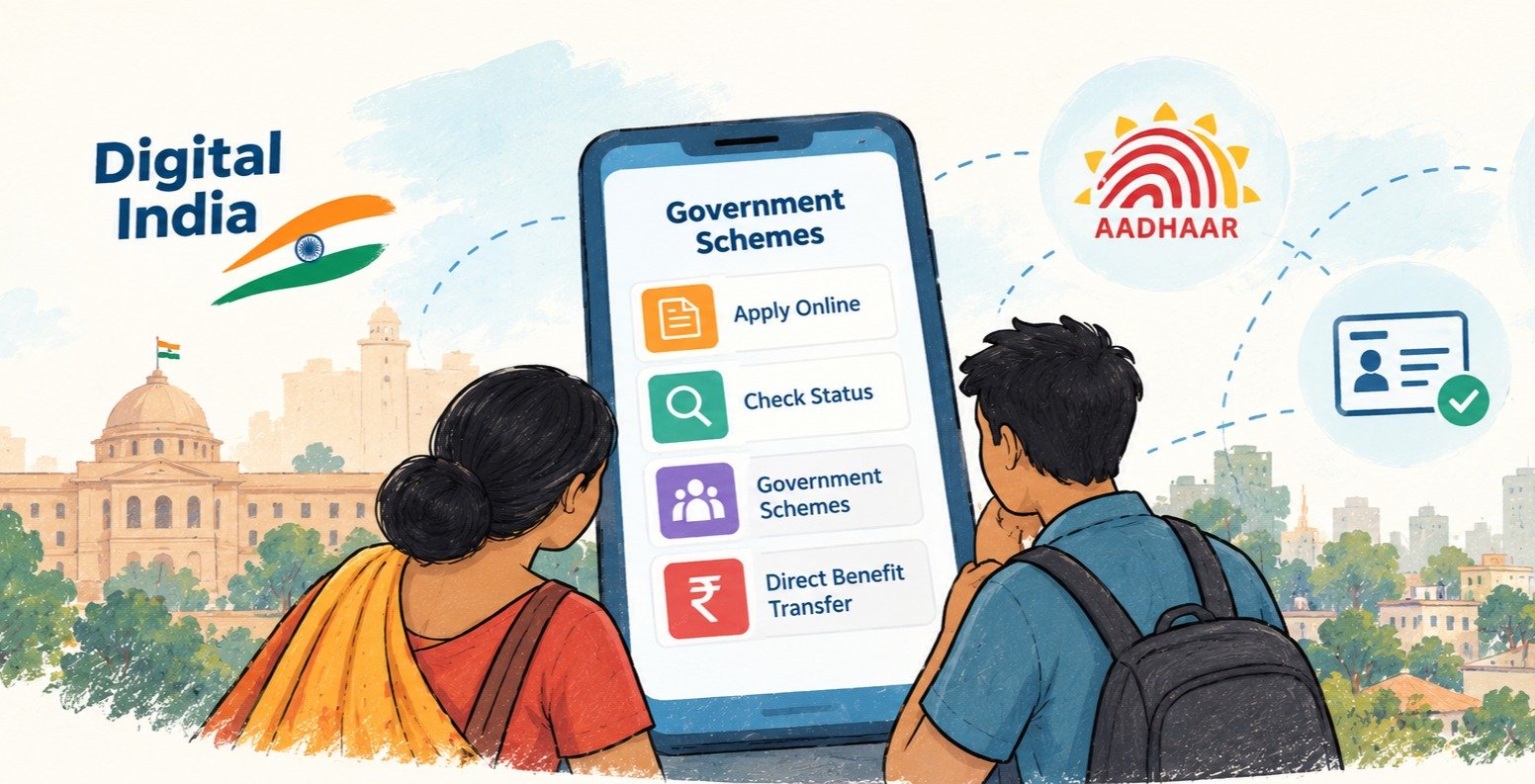

Millions of Indians can access government assistance through welfare schemes covering education, healthcare, housing, agriculture, employment and financial support. Official government websites make it easier to discover these programmes, check eligibility, understand application requirements and track benefits without depending on unofficial agents.
Why Checking Government Schemes Online Is Important
Government schemes are designed to support different sections of society, including farmers, students, women, senior citizens, entrepreneurs, workers and economically weaker households.
However, many eligible citizens do not apply because they are unaware of available benefits or find government application procedures difficult to understand.
Earlier, people often had to visit multiple government offices to collect information about eligibility, documents and application deadlines. Digital platforms have made much of this information accessible online.
The Government of India’s myScheme portal is one such initiative. It brings information about Central and State Government schemes together on a single platform.
Citizens can search for schemes based on their personal details, including age, income, location and social category. They can also review the benefits offered and understand how to apply through the concerned department.
Checking official websites is particularly useful for residents of smaller cities and rural areas who may otherwise have limited access to information about welfare programmes.
1. Use the myScheme Portal to Find Government Benefits
The myScheme portal is one of the most useful starting points for people looking for government assistance.
Developed and managed by the National e-Governance Division under the Ministry of Electronics and Information Technology, the platform provides information about schemes offered by Central and State Governments.
Website: myscheme.gov.in
Citizens can use the portal to discover schemes across categories such as agriculture, education, healthcare, business, employment, housing, social welfare and financial assistance.
How to use myScheme:
- Visit the official website, myscheme.gov.in.
- Select the Find Schemes for You option.
- Enter basic information such as age, gender, state and other relevant details.
- Provide additional information about income, employment, residence and social category when requested.
- Review the schemes suggested by the platform.
- Open individual scheme pages to understand eligibility, benefits and application requirements.
The platform uses the information provided by users to identify potentially relevant schemes.
One important point is that myScheme is primarily a discovery and information platform. It directs applicants to the respective ministry or department’s application portal rather than processing every application directly.
2. Check Government Schemes Through India.gov.in
The National Portal of India is another official platform where citizens can find information about government programmes and public services.
Website: india.gov.in
The portal provides access to information about Central and State Government initiatives, public welfare programmes and government departments.
Users can explore schemes according to different categories and access information about their purpose, eligibility requirements and application procedures.
Steps to find schemes:
- Open india.gov.in.
- Navigate to the My Government section.
- Select Government Schemes.
- Browse schemes according to relevant categories.
- Use the search feature to find a particular programme.
- Read the eligibility conditions and application instructions.
This platform is useful for people who want to understand government initiatives without searching through several departmental websites individually.
For example, someone looking for educational assistance can explore scholarship-related programmes, while a small business owner can search for schemes supporting entrepreneurship.
3. Use the UMANG App for Government Services
UMANG, which stands for Unified Mobile Application for New-age Governance, provides access to various government services through a single digital platform.
It is an initiative of the Ministry of Electronics and Information Technology and is developed and operated by the National e-Governance Division.
Website: umang.gov.in
The platform brings together services from Central and State Government departments. Citizens can access supported services through its website or mobile application.
Some services available through UMANG relate to pensions, employee benefits, public services, government schemes and digital documentation.
How to use UMANG:
- Visit the official UMANG website or download its application.
- Register or sign in using the available authentication options.
- Search for the relevant government department or service.
- Select the service you want to access.
- Follow the instructions displayed on the platform.
- Complete the required verification or application steps.
The services available depend on the participating government department.
For people who regularly use smartphones, UMANG can reduce the need to visit different websites for separate government services.
4. Check State Government Schemes Separately
Not all government benefits are available across India. Several welfare programmes are introduced by individual state governments according to regional requirements.
For example, Maharashtra, Uttar Pradesh, Madhya Pradesh, Rajasthan, Bihar and other states operate their own welfare programmes for farmers, women, students, senior citizens and economically weaker families.
Citizens should therefore check both Central Government and State Government schemes.
For Maharashtra residents, the official Maharashtra Government website and concerned departmental portals are useful starting points.
How to find state-specific schemes:
- Visit the official website of your state government.
- Look for sections such as Government Schemes, Welfare Programmes or Citizen Services.
- Identify the department responsible for the scheme.
- Check eligibility conditions and application dates.
- Follow the application link provided by the department.
- Save the application reference number for future tracking.
State portals are particularly important for benefits related to local agriculture programmes, scholarships, women’s welfare, housing assistance and social security.
Applicants should also check district administration websites for local announcements and implementation updates.
5. Check Direct Benefit Transfer and Payment Status
Finding a government scheme is only the first step. Applicants who have already registered should also know how to check whether their benefits have been approved or transferred.
The Direct Benefit Transfer (DBT) system enables eligible beneficiaries to receive government payments directly into their bank accounts through supported payment systems.
The official DBT Bharat portal provides information about government benefit transfers and related banking facilities.
Website: dbtbharat.gov.in
The portal’s Citizen Corner includes facilities for checking certain DBT payment statuses, bank-related information and Aadhaar linking status.
How to check DBT-related information:
- Visit the official DBT Bharat website.
- Open the Citizen Corner section.
- Select the relevant payment or bank-related service.
- Follow the instructions displayed on the concerned service page.
- Check the available transaction or linking information.
The portal specifies that its DBT payment status facility covers schemes processed through the Public Financial Management System (PFMS).
Citizens should remember that different schemes may have separate beneficiary status portals. For example, applicants may need to visit the concerned department’s website to check the status of a scholarship, pension or housing application.
If a payment is delayed, they should verify the application status and bank details before assuming that the benefit has been rejected.
6. Keep Important Documents Ready Before Applying
Most government welfare schemes require applicants to submit documents to establish their identity, address, income, educational qualifications or other eligibility conditions.
The exact requirements differ from one scheme to another.
However, some commonly requested documents include:
- Aadhaar card, wherever required under the scheme.
- PAN card, where applicable.
- Bank account details and passbook.
- Income certificate.
- Address or residence proof.
- Caste certificate, if applicable.
- Educational certificates and mark sheets.
- Passport-sized photographs.
- Mobile number and email address.
For agricultural programmes, applicants may also need land-related records or farmer registration details.
Students applying for scholarships may need admission records, fee receipts and academic certificates.
Before uploading any document, read the scheme guidelines carefully. Do not assume that every programme requires the same documents.
Applicants should also ensure that uploaded documents are clear, readable and valid.
7. How to Identify Fake Government Scheme Websites
As more government services move online, fraudulent websites and messages can create confusion among citizens.
Scammers sometimes use government logos, fake application forms and misleading advertisements to convince people that they can arrange guaranteed benefits.
Some fraudsters demand registration fees, processing charges or personal banking information in exchange for promised government assistance.
Citizens should follow these precautions:
Check the website address: Government websites commonly use official domains such as gov.in and nic.in. However, the domain alone should not replace verification of the concerned department and service.
Avoid unknown payment links: Do not transfer money to personal UPI IDs or private bank accounts claiming to represent a government department.
Never share OTPs: Government scheme applications should not require applicants to reveal banking OTPs, passwords or ATM PINs to an unknown caller.
Verify announcements: Check scheme details through the concerned ministry, state department or official government portal.
Avoid guaranteed benefit claims: No private agent can legitimately guarantee approval of a government benefit simply in exchange for money.
If a website requests unnecessary personal or financial information, stop the process and verify its authenticity before proceeding.
8. What to Do If Your Government Scheme Application Is Rejected
An application rejection does not always mean that a person can never receive the benefit. Sometimes applications are rejected because of incomplete documents, incorrect information, eligibility mismatches or verification problems.
The first step is to understand the reason for rejection.
Applicants should visit the concerned scheme portal and check whether a rejection reason or clarification is available.
If a document is missing or incorrect, they should follow the department’s instructions for correction or resubmission, if permitted.
If the application appears to have been rejected incorrectly, applicants can contact the responsible department or designated grievance officer.
For eligible public service grievances involving Central Government ministries and State Government departments, citizens can also use the Centralised Public Grievance Redress and Monitoring System (CPGRAMS).
Website: pgportal.gov.in
The portal allows citizens to register grievances, track their status using a registration number and access an appeal facility when they are dissatisfied with the response.
Applicants should keep copies of their application number, rejection message and supporting documents when raising a complaint.
Key Takeaways
- Use myScheme.gov.in to discover Central and State Government schemes based on personal eligibility details.
- Check India.gov.in and UMANG for official scheme information and government services.
- Use DBT Bharat and the relevant department’s portal to check supported payment and beneficiary information.
- Verify website authenticity, eligibility requirements and application procedures before sharing personal documents or making payments.
Frequently Asked Questions
1. Which is the official website to check all government schemes in India?
The myScheme portal, available at myscheme.gov.in, is a national platform that helps citizens discover Central and State Government schemes based on their personal details and eligibility.
2. Can I check government scheme eligibility using my Aadhaar card?
Some schemes use Aadhaar for identity verification or beneficiary authentication. However, eligibility is determined by the specific scheme’s rules, not simply by possession of an Aadhaar card. Check the official guidelines before applying.
3. How can I check whether government scheme money has been credited to my bank account?
You can use the DBT Bharat portal for supported payment information. Some schemes also provide separate beneficiary status facilities through their respective departmental websites. You can additionally check your bank statement or contact your bank.
4. How can I complain if my government scheme application is not processed?
First contact the concerned scheme department through its official grievance mechanism. You can also register an eligible public service grievance through the CPGRAMS portal at pgportal.gov.in and track it using the registration number.
(Internal keyword suggestions: government schemes in India, how to check government scheme eligibility, official government websites India, myScheme portal, UMANG government services, DBT payment status check, government benefits for citizens, state government welfare schemes, government scheme application status, how to avoid government scheme fraud)