
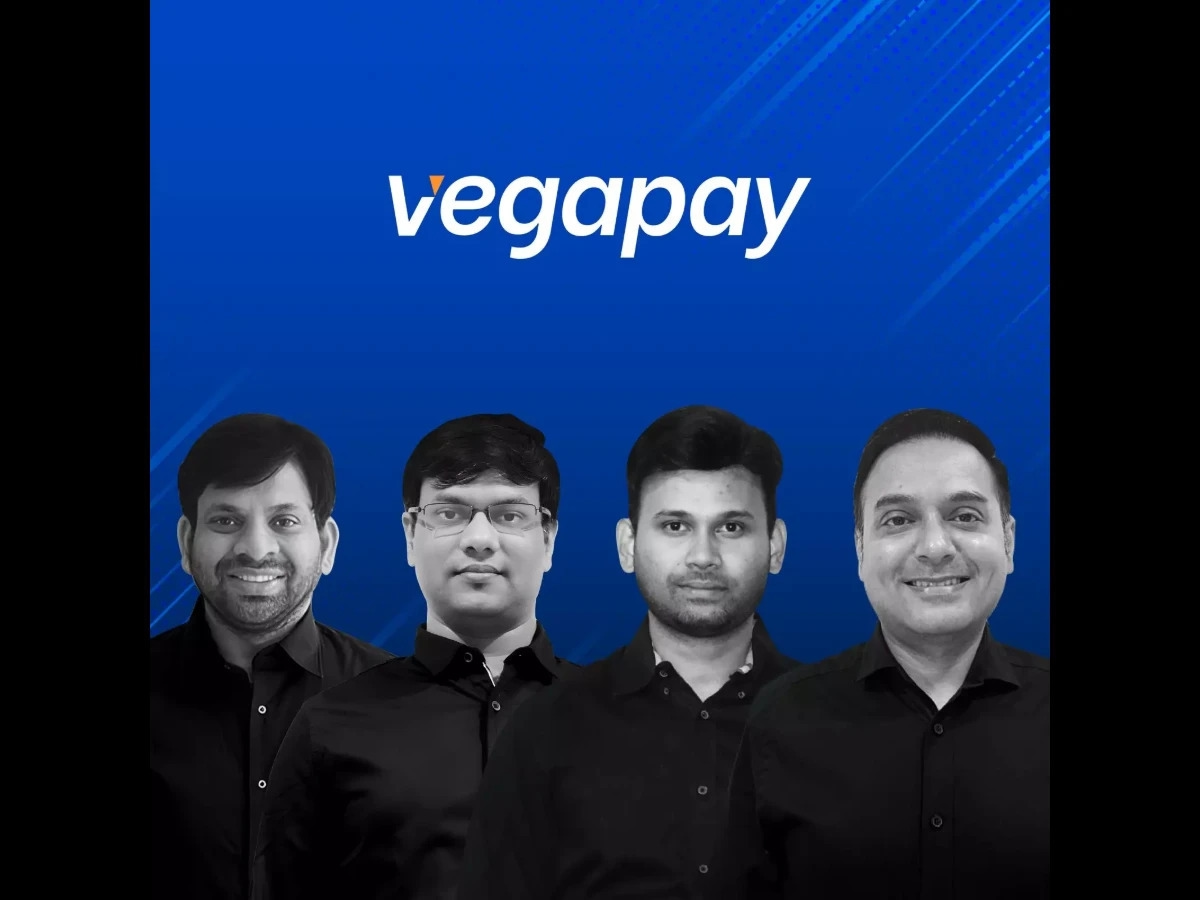

Mumbai-based fintech startup Vegapay has raised $10 million in Series A funding to expand its Credit Line on UPI infrastructure and help banks introduce digital lending products. The investment highlights growing interest in combining India’s UPI payment network with formal credit services.
Vegapay Raises $10 Million in Series A Funding
Vegapay announced its $10 million Series A funding round on November 26, 2026. The investment was co-led by Vertex Ventures Southeast Asia and India and Prosus, with existing investors Elevation Capital and Eximius Ventures also participating.
The funding is valued at approximately ₹92.3 crore.
The round includes both primary and secondary transactions. More than 40 employees have received an opportunity to sell a portion of their vested Employee Stock Ownership Plans (ESOPs).
This distinction is important because the entire $10 million is not necessarily fresh capital going directly into the company’s operations. A secondary transaction allows existing shareholders or employees to sell part of their holdings, while a primary investment provides new capital to the company.
Vegapay plans to use the fresh capital to expand its banking partnerships, strengthen its Credit Line on UPI platform and develop additional financial products.
The investment comes as Indian fintech companies increasingly focus on the infrastructure required to connect digital payments with formal lending services. Inc42 Media+2
What Is Vegapay and What Does the Fintech Startup Do?
Founded in 2022, Vegapay is a Mumbai-based financial technology company that provides banking infrastructure to banks and financial institutions.
The company was founded by Gaurav Mittal, Himanshu Agrawal and Puneet Sharma. Its technology helps financial institutions launch, manage and operate digital credit products without having to build every component of the technology infrastructure themselves.
Its services cover several areas of financial technology, including:
- Credit Line on UPI infrastructure.
- Credit card issuance and management.
- Prepaid card programmes.
- Forex card programmes.
- Digital lending and credit management systems.
Vegapay operates primarily as a technology provider rather than a direct lender. Banks and regulated financial institutions remain responsible for providing credit and managing the associated lending relationships.
Its platform also allows banks to operate multiple co-branded credit programmes with separate limits, pricing structures and operating rules.
Another feature is the ability to deploy its technology on a bank’s own cloud infrastructure or on-premises systems.
This approach is relevant for financial institutions that want to introduce new digital credit products while retaining control over their banking operations and customer relationships. Inc42 Media+2
What Is Credit Line on UPI and How Does It Work?
One of the major opportunities behind Vegapay’s business model is Credit Line on UPI, commonly referred to as CLOU.
Traditionally, UPI payments are made using money available in a linked bank account. Credit Line on UPI introduces another payment option by allowing eligible customers to use a pre-sanctioned credit facility provided by a bank.
For example, suppose a bank approves a credit line of ₹50,000 for a customer.
Instead of transferring money into a savings account before making a purchase, the customer can use the approved credit facility to make eligible payments by scanning a merchant’s UPI QR code through a supported payment application.
The amount spent is charged against the available credit limit and must be repaid according to the bank’s terms.
The facility was enabled by the Reserve Bank of India in September 2023, subject to the customer’s prior consent and the applicable regulatory conditions.
Banks determine eligibility, credit limits, interest rates and repayment terms according to their lending policies.
This facility does not mean that every UPI user automatically receives access to credit. Customers must first be approved by a participating bank.
For consumers, the feature provides another way to make digital payments. For banks, it creates an additional channel to distribute formal credit through India’s existing UPI infrastructure. Finance Checks+1
Why Are Banks Expanding Credit Through UPI?
UPI has changed how Indians make everyday payments. From small grocery purchases to online shopping and utility bills, digital payments have become a regular part of consumer activity.
The integration of credit into UPI represents another development in this financial ecosystem.
For banks, Credit Line on UPI offers an opportunity to distribute pre-approved credit through payment applications that customers already use. This may reduce the need to develop separate customer-facing payment platforms for every credit product.
For consumers, the facility could make short-term credit more accessible at participating merchants.
There are several reasons why banks may be interested in this model:
Wider digital reach: Banks can connect credit products with an established digital payment network.
Existing merchant infrastructure: Customers can make eligible payments at supported UPI QR-code merchants without requiring a separate physical credit card.
Product flexibility: Financial institutions can design different credit limits, repayment conditions and pricing structures.
Technology integration: Banking infrastructure companies such as Vegapay can help institutions launch these products without independently developing every technology component.
However, wider availability does not automatically mean easier access for every borrower. Banks must still evaluate creditworthiness and follow applicable lending regulations.
How Vegapay Plans to Use Its Fresh Funding
Vegapay plans to use its new Series A capital to expand its operations across four major areas.
1. Onboarding More Banks for Credit Line on UPI
One of the company’s primary objectives is to bring additional banks onto its Credit Line on UPI platform.
More banking partnerships could increase the number of financial institutions offering credit-linked UPI payment facilities.
The company is positioning its technology as an infrastructure layer that helps banks introduce these products without building the entire system independently.
2. Introducing Secured Credit Lines
Vegapay also plans to introduce secured credit facilities backed by financial assets such as:
- Fixed deposits
- Gold
- Mutual funds
Secured credit products use eligible assets as collateral, subject to the lending institution’s terms and conditions.
Such products could create additional borrowing options for customers who have financial assets but may not qualify for certain unsecured credit facilities.
However, borrowers must understand the associated interest costs, repayment conditions and risks of providing assets as security.
3. Expanding Credit, Prepaid and Forex Card Programmes
The company intends to strengthen its existing card technology offerings.
This includes credit cards, prepaid cards and forex cards.
These products serve different purposes. Credit cards provide access to a revolving credit facility, prepaid cards use money loaded in advance, while forex cards are designed for foreign currency transactions.
Expanding these programmes could help Vegapay work with more banks and financial service providers.
4. Strengthening Engineering and Risk Management Teams
The company also plans to invest in its engineering and risk teams.
As more banks introduce digital credit products, the underlying technology must handle transaction processing, account management, credit limits, security and compliance requirements.
Risk management is equally important because digital lending involves potential defaults, fraud and unauthorised transactions.
Investing in these teams could help Vegapay support additional banking partnerships and manage larger transaction volumes. Inc42 Media+1
Which Banks and Fintech Platforms Already Work With Vegapay?
Vegapay’s technology is already being used by several banking and consumer-facing financial platforms.
According to the company’s funding announcement reported by Inc42, its platform is live with:
- YES BANK
- Unity Small Finance Bank
- Suryoday Small Finance Bank
- BOBCARD
The company also powers credit programmes associated with consumer-facing platforms and fintech businesses, including:
- Paytm
- BharatPe
- Kiwi UPI
- Scapia
- EbixCash World Money
These partnerships indicate that Vegapay is building a business around providing technology to financial institutions and platforms rather than depending entirely on a single consumer application.
The company claims to hold a majority share of India’s Credit Line on UPI market as of November 2026. This is a company-reported market position and should not be treated as an independently established market-share figure.
Its growing network of banking and fintech partnerships is central to its expansion strategy. Inc42 Media+1
What Does Vegapay’s Funding Mean for India’s Fintech Startup Ecosystem?
Vegapay’s latest funding round reflects investor interest in the infrastructure supporting India’s digital financial services.
While UPI has already established itself as a widely used payment system, the integration of lending products creates another potential business opportunity for fintech companies.
Instead of competing only to build consumer payment applications, startups are increasingly developing the technology that allows banks to introduce and manage financial products.
This includes payment processing, credit management, card issuance, loan administration and risk monitoring.
For smaller banks and financial institutions, working with specialised technology providers may reduce the time and resources required to launch new products.
It could also create opportunities for fintech startups that specialise in banking software rather than direct lending.
However, the sector faces important challenges. Credit products must be offered responsibly, interest rates and charges must be clearly disclosed, and customer information must be protected.
Banks also need effective systems to identify fraudulent transactions and manage defaults.
The long-term success of Credit Line on UPI will depend on whether financial institutions can expand access to credit without encouraging excessive borrowing.
Risks and Challenges of Credit-Based UPI Payments
Although Credit Line on UPI offers new opportunities, it also introduces risks that banks, fintech companies and customers need to consider.
Risk of excessive borrowing: Easy access to credit may encourage some consumers to spend beyond their repayment capacity.
Interest and additional charges: Unlike ordinary UPI payments from a bank account, credit-linked transactions may involve interest, fees or other charges depending on the bank’s terms.
Digital fraud: The expansion of credit-linked payments could create additional opportunities for phishing, account misuse and payment-related fraud.
Credit defaults: Banks must assess borrowers carefully and maintain effective systems to manage repayment risks.
Data protection: Financial technology platforms must protect sensitive customer and transaction information.
For consumers, the most important point is that Credit Line on UPI is borrowed money, not free money. Customers should understand repayment deadlines, applicable interest rates and charges before using the facility.
What Comes Next for Vegapay?
Vegapay’s $10 million Series A funding gives the company additional resources to expand its banking technology business.
Its immediate priorities include onboarding more banks, introducing secured credit products and expanding card-related services.
The company’s growth will also depend on how quickly banks adopt Credit Line on UPI and whether customers use these products regularly.
The broader opportunity lies in connecting India’s established digital payment infrastructure with regulated lending services.
If adoption increases, technology providers such as Vegapay could become important partners for banks looking to expand their digital credit offerings.
However, funding alone does not guarantee market success. Product adoption, regulatory compliance, responsible lending and the ability to manage financial risks will determine how this segment develops.
Key Takeaways
- Mumbai-based Vegapay raised $10 million in a Series A funding round co-led by Prosus and Vertex Ventures.
- The startup provides technology that helps banks launch and manage Credit Line on UPI and other digital credit products.
- The company plans to onboard more banks, introduce secured credit backed by fixed deposits, gold and mutual funds, and expand card programmes.
- The development reflects growing interest in combining India’s UPI infrastructure with formal credit services.
Frequently Asked Questions (FAQs)
1. How much funding has Vegapay raised in November 2026?
Vegapay raised $10 million, approximately ₹92.3 crore, in a Series A funding round co-led by Vertex Ventures Southeast Asia and India and Prosus.
2. What does Vegapay do?
Vegapay is a fintech infrastructure company that provides technology to banks and financial institutions for launching and managing credit lines on UPI, credit cards, prepaid cards and other digital financial products.
3. What is Credit Line on UPI?
Credit Line on UPI allows eligible customers to make payments using a pre-approved credit facility provided by a participating bank. Customers can use supported UPI applications to pay at eligible merchant QR codes and repay the borrowed amount according to the bank’s terms.
4. Which investors participated in Vegapay’s Series A funding?
The funding round was co-led by Vertex Ventures Southeast Asia and India and Prosus. Existing investors Elevation Capital and Eximius Ventures also participated.