
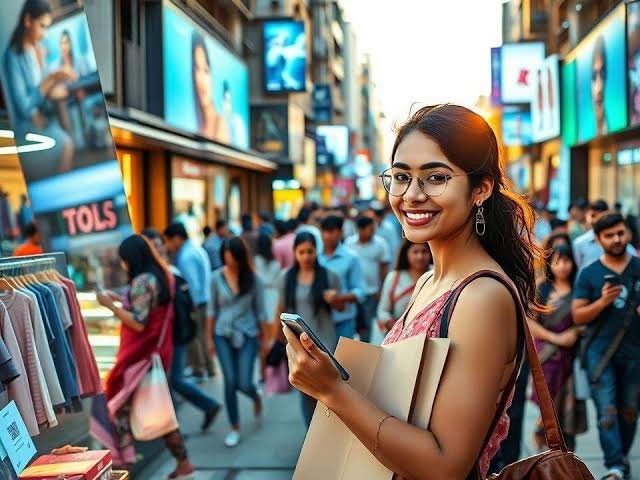

Young Indians outside metropolitan cities are reshaping the country’s consumer market through online shopping, UPI payments, social media discovery and changing lifestyle preferences. Their spending reflects a combination of rising aspirations, digital convenience and careful decisions about affordability.
Young Indians Beyond Metro Cities Are Reshaping Consumer Spending
India’s consumer market is no longer driven exclusively by shoppers in Mumbai, Delhi, Bengaluru and other major metropolitan centres. Young consumers in Tier-2, Tier-3 and smaller cities are becoming increasingly important to retail, e-commerce and lifestyle brands. Their shopping habits combine digital discovery with traditional preferences, creating a consumer market that is more diverse than before.
According to the Rural Barometer Report 2026 by WPP Media and Kantar, rural Gen Z consumers aged 18 to 29 purchase across an average of 19.1 product categories every month, compared with 17 categories in February 2025. The report also found that 39.4% of rural Gen Z consumers shop online, compared with 29.6% of rural consumers overall.
These findings indicate that younger consumers are exploring a wider range of products and using digital platforms more actively. However, their spending decisions are not simply about buying more. Price, product quality, convenience and personal priorities continue to influence what they choose.
Online Shopping Is Expanding Beyond India’s Metropolitan Markets
Access to products has traditionally been a challenge for consumers living outside major cities. Local stores may not always stock the latest fashion collections, electronics, beauty products or specialised household items.
E-commerce platforms have changed this situation by giving consumers access to brands and product categories that may not be available in nearby markets.
A PwC India report on online shopping found that approximately 12.5 crore consumers had entered India’s online shopping market for the first time in recent years. Many of these new shoppers came from Tier-2, Tier-3 and Tier-4 cities.
The report also highlighted that order volumes in Tier-2 and Tier-3 cities had expanded by more than 60% compared with previous years.
For young shoppers, this means they can compare prices, explore different brands and order products without depending entirely on local retail availability.
A student in a smaller city can purchase the same fashion accessories or electronic products available to a customer in a metro. This wider choice is changing expectations about convenience and product availability.
Gen Z Is Expanding Its Shopping Basket Across Categories
One important change in young consumers’ spending habits is the expansion of their product choices.
The Rural Barometer Report 2026 found that rural Gen Z consumers purchase across an average of 19.1 product categories monthly. Their spending growth is particularly visible in convenience food, health and wellness, and personal grooming.
The report identified several category-level changes:
- Convenience-food purchases among rural Gen Z expanded by 27%, reaching an average of 5.9 categories.
- Their health and wellness basket grew by 36%.
- Personal grooming purchases increased by 9%, even as the category remained flat across rural consumers overall.
This suggests that younger shoppers are increasingly exploring products beyond basic household necessities.
Ready-to-eat food, packaged snacks, personal care products and wellness-related items are becoming part of a broader consumption basket. The trend also creates opportunities for brands that can offer accessible products at different price points.
However, a wider shopping basket does not necessarily mean every consumer has a higher disposable income. Product discovery, changing preferences and access to online marketplaces can increase the number of categories people explore without guaranteeing that they spend more on every purchase.
Instagram, YouTube and Influencers Are Changing Brand Discovery
Social media has become an important part of how young Indians discover products.
Instagram Reels, YouTube reviews, creator collaborations and short-form videos allow brands to reach consumers who may not encounter their products through traditional advertising or local retail stores.
The Rural Barometer Report 2026 found that 40.9% of rural Gen Z consumers followed online influencers, compared with 32.3% of rural adults overall.
Among rural influencer followers, 77.3% said they trusted creator recommendations. However, this trust did not always result in an immediate purchase. Many consumers continued researching products or discussing recommendations with family and friends.
This behaviour shows that social media often works as the starting point of the buying journey rather than its final stage.
For example, a young consumer may discover a skincare brand through an influencer’s video, check product ingredients, compare prices and read customer reviews before placing an order.
Regional-language creators also have an important role because they can communicate product information in familiar languages and reflect local lifestyles.
Brands targeting smaller cities therefore need to understand the audiences they are reaching rather than simply using the same influencer strategy across every market.
UPI and Digital Payments Are Becoming Everyday Spending Habits
The expansion of digital shopping is closely connected to the growing use of digital payments.
UPI has made it easier for consumers to pay at local shops, restaurants, online stores and service providers without carrying cash. QR-code payments have also become familiar across smaller cities and towns.
According to the super.money superSpends 2.0 report, which analysed millions of digital transactions between January and June 2026, UPI spending continued to expand across travel, entertainment and lifestyle categories.
The report also identified growth in café spending in smaller towns. Average spending per café bill in these locations increased by 7.9% over six months, highlighting changing consumption patterns beyond major cities.
The How Urban India Pays 2026 report, published by Pahlé India Foundation in collaboration with Amazon Pay, found that UPI was the most-used payment method across several spending categories. These included e-commerce, eating out, travel, fuel, medical expenses and groceries.
Digital payments are therefore becoming more than an online shopping facility. They are part of everyday transactions, from buying groceries to booking travel.
At the same time, cash continues to play a role in certain transactions. Consumers may use different payment methods depending on convenience, merchant availability and personal preferences.
Young Consumers Are Spending More on Experiences and Lifestyle
Shopping habits are also changing in terms of what young Indians consider worth spending money on.
Travel, cinema, cafés, entertainment subscriptions and lifestyle experiences are becoming visible parts of the consumer market. The superSpends 2.0 report identified travel as one of the strong discretionary spending categories during the first half of 2026.
Tier-2 and Tier-3 cities, including Madurai, Faridabad and Surat, recorded average travel spending growth of more than two times in the report’s analysis.
Café spending in smaller towns also showed growth. The report highlighted Kothamangalam and Allahabad among locations contributing to this trend.
These patterns suggest that consumers outside metropolitan cities are also spending on experiences beyond routine household purchases.
A weekend café visit, a movie outing or a short road trip can become part of a young consumer’s lifestyle choices. Such spending does not necessarily indicate luxury consumption. Many consumers continue to balance entertainment with affordability by comparing prices, using offers and planning expenses.
For businesses, this creates opportunities in food services, travel, entertainment and local leisure markets.
Are Young Indians Becoming More Brand Conscious?
Access to online marketplaces and social media has increased exposure to national and international brands. Young consumers can compare product designs, customer reviews, specifications and prices before making a purchase.
This has made brand discovery easier, but it has also increased competition.
A local clothing retailer may now compete with online fashion brands. A small electronics store may face comparison with products available on national e-commerce platforms. Beauty and personal care businesses must also compete with direct-to-consumer brands promoted through digital channels.
PwC’s research on Indian online shopping found that 62% of surveyed respondents had tried new brands after seeing them on social media. The report also found that 45% looked at ratings and reviews before shopping.
These findings highlight the importance of product information and consumer feedback.
For young shoppers, brand loyalty can coexist with experimentation. They may continue purchasing from familiar brands while trying new products when the price, reviews or features appear attractive.
Businesses that offer consistent quality, clear product information and reliable customer service are better placed to build repeat purchases.
Spending Is Growing, but Affordability Still Matters
The expansion of consumer choices should not be confused with unlimited spending power.
The Rural Barometer Report 2026 also highlighted financial pressure among rural households. The share of rural adults reporting an increase in monthly household income over the previous six months declined to approximately 14% in June 2026, from 29% in the 2025 study.
This suggests that consumers can be interested in more products while remaining careful about their budgets.
Young shoppers may prioritise affordable fashion, compare prices across platforms, wait for discounts or choose smaller product packs. They may also spend on selected experiences while cutting back in other categories.
This balance is particularly important for brands targeting Tier-2 and Tier-3 markets. A product’s popularity on social media does not automatically mean consumers will pay a premium for it.
Businesses need to understand local purchasing power, household spending patterns and the price points that customers consider reasonable.
Why Tier-2 and Tier-3 Cities Matter to India’s Retail Industry
The changing behaviour of young consumers is creating opportunities for companies across retail, e-commerce, food, beauty, travel and financial services.
A Deloitte-FICCI report published in August 2025 projected that India’s retail sector could grow from approximately $1.06 trillion in 2024 to $1.93 trillion by 2030. It also highlighted the growing contribution of Tier-2 and Tier-3 cities to e-commerce activity.
For businesses, these markets offer access to consumers who are increasingly connected to digital platforms but still have distinct local requirements.
Retailers may need to offer smaller and more affordable product formats. Food brands may need to adapt flavours to regional preferences. Fashion companies may benefit from understanding local occasions, weather conditions and cultural choices.
E-commerce platforms also need dependable delivery networks, accessible customer support and payment options that work across different locations.
The companies that understand these differences can build stronger relationships with consumers outside metropolitan markets.
What Brands Must Understand About India’s New-Age Consumers
The biggest opportunity is not simply to sell more products in smaller cities. It is to understand how young consumers evaluate value, convenience and quality.
A successful strategy needs to combine digital visibility with local relevance. Influencer marketing can introduce a product, but transparent information and positive customer experiences help establish confidence.
Brands should also avoid treating Tier-2, Tier-3 and rural consumers as one uniform audience. A young professional in Indore, a college student in Coimbatore and a rural Gen Z shopper in Uttar Pradesh may have very different spending priorities.
Their income, occupation, access to retail stores and household responsibilities can influence purchasing decisions.
The next phase of India’s consumer growth will depend on understanding these differences. Young Indians beyond metro cities are not simply copying metropolitan shopping habits. They are combining digital convenience with regional preferences, practical spending decisions and changing lifestyle aspirations.
Key Takeaways
- Young consumers in smaller Indian markets are exploring more product categories, particularly convenience food, wellness and personal grooming.
- Instagram, YouTube and online creators are influencing product discovery, while reviews and personal research remain important.
- UPI and e-commerce are becoming part of everyday shopping and spending across smaller cities.
- Affordability, local preferences and reliable product quality will determine which brands succeed beyond metropolitan markets.
FAQs
1. How are young Indians in Tier-2 and Tier-3 cities changing their shopping habits?
They are increasingly using e-commerce platforms, social media and digital payments while exploring more product categories. Their purchases include fashion, convenience food, personal care, wellness and lifestyle experiences.
2. What do young consumers in smaller Indian cities spend money on?
Spending varies by income and location, but growing categories include convenience food, health and wellness products, personal grooming, travel, entertainment and cafés.
3. Is UPI influencing shopping habits in smaller Indian cities?
Yes. UPI has made digital payments convenient across online shopping and everyday retail transactions. Research from super.money and Pahlé India Foundation highlights its growing role in spending categories such as groceries, travel, food and e-commerce.
4. Why are Tier-2 and Tier-3 cities important for India’s retail market?
These markets have a growing base of digitally connected consumers, increasing access to e-commerce and changing lifestyle preferences. They offer opportunities for brands to expand beyond metropolitan markets with products and pricing suited to local demand.