
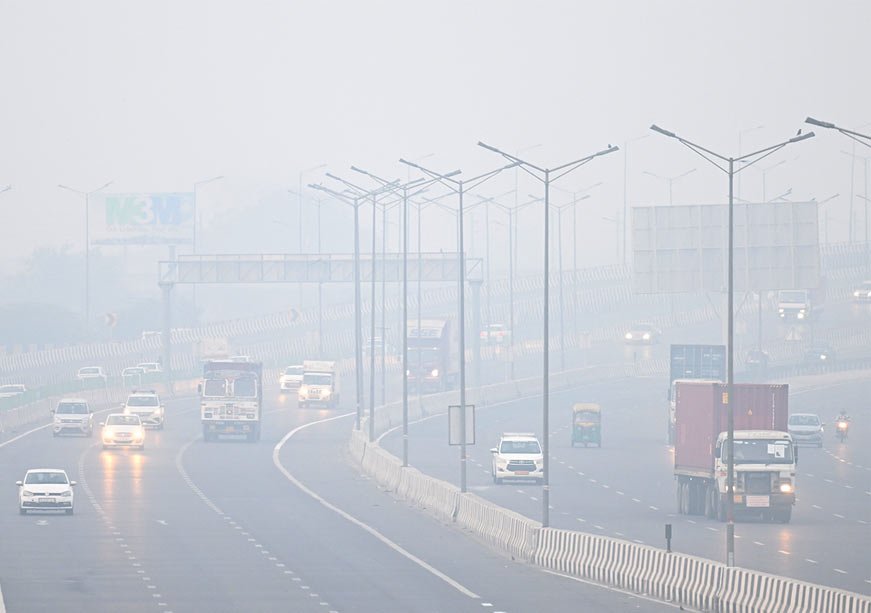

Reporting air pollution incidents has become a critical civic action in Delhi NCR and other urban regions as air quality frequently drops to unhealthy levels. Knowing how to report air pollution incidents correctly helps authorities respond faster, enforce rules, and prevent repeat violations.
Air pollution complaints usually involve open waste burning, industrial smoke, construction dust, generator emissions, or traffic related smoke. Most citizens are unaware that multiple government channels and apps exist to log complaints, track action, and escalate unresolved cases.
This guide explains the official process to report air pollution incidents, which authorities handle complaints, and how escalation works if action is delayed.
Understanding What Qualifies as a Reportable Air Pollution Incident
Air pollution incidents are specific and observable violations that directly degrade air quality. These include garbage burning in residential areas, construction sites operating without dust control, diesel generators used without permission, factories emitting dark smoke, and large scale fire incidents.
In Delhi NCR, authorities treat visible smoke, strong chemical smells, and repeated violations as actionable complaints. Similar rules apply in other major cities, though the reporting platforms may differ slightly.
It is important to report incidents that are ongoing or recurring. Past incidents without evidence are harder to act upon. Clear location details and timing improve response accuracy.
Government Authorities Responsible for Pollution Complaints
Different agencies handle air pollution depending on the source. Municipal corporations respond to garbage burning and local construction dust. Pollution control boards handle industrial emissions and factory violations. Traffic police and transport departments address vehicular pollution.
In Delhi NCR, coordination happens under the Graded Response Action Plan during severe pollution phases. This allows quicker enforcement such as site shutdowns, fines, or seizure of equipment.
Knowing which authority handles the issue helps avoid misdirected complaints and delays.
Step by Step Process to Report Air Pollution Using Government Apps
The most commonly used platform in Delhi NCR is the Green Delhi mobile app. Users can upload photos or videos, select the type of pollution, and mark the location. Complaints are automatically forwarded to the relevant department.
Other cities use state pollution control board portals or municipal grievance apps. Most platforms allow tracking complaint status using a reference number.
While filing a complaint, include exact address, nearby landmarks, time of occurrence, and visual evidence if safe to capture. Avoid confronting violators directly as enforcement is the responsibility of authorities.
How to Escalate Unresolved Air Pollution Complaints
If no action is taken within the expected timeframe, complaints can be escalated through higher authority dashboards or grievance redressal systems. Many apps provide an escalation option after a set number of days.
Citizens can also escalate through central grievance platforms that route complaints to senior officials. Repeated violations at the same location should be reported again with updated evidence to strengthen enforcement.
In severe cases involving health risks, district magistrate offices and environmental monitoring cells can intervene directly. Escalation works best when documentation is consistent and factual.
Reporting Air Pollution Outside Delhi NCR
Cities outside Delhi NCR follow similar structures but use different platforms. Most states have pollution control board complaint systems linked to district administrations.
Municipal helplines remain effective for local burning and dust complaints in Tier 2 and Tier 3 cities. Increasingly, state governments are integrating air pollution reporting into unified civic apps for water, roads, and sanitation.
Residents should check their city corporation website or state pollution control board portal for the correct channel.
Best Practices for Effective Pollution Reporting
Effective reporting focuses on accuracy, not volume. One detailed complaint with evidence is more useful than multiple vague submissions.
Avoid sharing unverified information or exaggerating the issue. Authorities act faster on clearly defined violations. Reporting during active pollution hours increases chances of on ground inspection.
Community awareness also helps. When multiple residents report the same incident independently, enforcement priority increases.
Takeaways
- Air pollution incidents can be reported using official government apps and portals
- Accurate location details and evidence improve response speed
- Different authorities handle garbage burning, construction dust, and industrial smoke
- Escalation is possible if complaints remain unresolved
FAQs
Can I report air pollution anonymously?
Most government apps allow complaints without displaying personal details publicly, though basic registration may be required.
How long does it take for authorities to act on a complaint?
Response time varies from a few hours to a few days depending on severity and department workload.
What if pollution continues after action is taken?
Repeat the complaint with updated evidence. Recurrent violations often lead to stricter penalties.
Can air pollution complaints be filed outside major cities?
Yes. State pollution control boards and municipal bodies accept complaints across districts.