
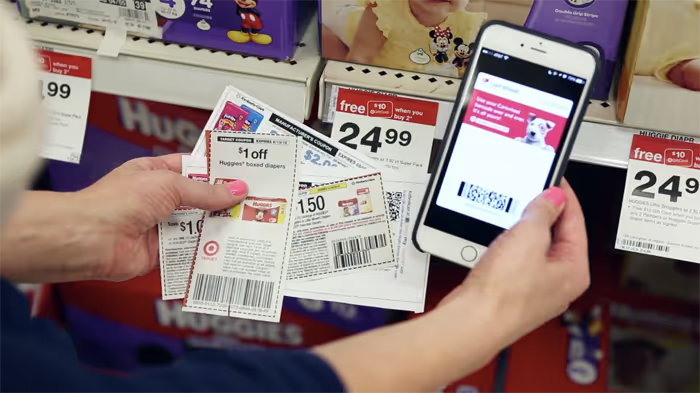

Fake coupon codes can turn an attractive online discount into a phishing or shopping scam. Before using any coupon, shoppers should verify the website, offer terms, seller details and payment page. These simple checks can help consumers avoid suspicious links, counterfeit websites and attempts to steal personal or financial information.
Why Fake Coupon Codes Are Becoming a Shopping Risk
Fake coupon codes are often designed to make shoppers believe they have found an unusually large discount. The code may appear in a social media post, search result, messaging app, email or an unfamiliar coupon website.
Not every expired or invalid coupon is a scam. Sometimes a legitimate code simply has a limited validity period, applies only to selected products or has already reached its usage limit.
The bigger concern is when a supposed discount is used to redirect shoppers to a fake website or persuade them to provide sensitive information.
The Indian Computer Emergency Response Team, or CERT-In, has warned users about phishing and fake websites that imitate trusted organisations and can be used to capture personal information. Its online shopping guidance also recommends avoiding suspicious discount links and offers that appear too good to be true.
Check Where the Coupon Code Came From
The first step in checking a coupon code is identifying its source.
A coupon shared directly through an e-commerce company’s official website or app is generally easier to verify than a code received through an unknown WhatsApp message or social media account.
Be particularly careful with messages claiming that you have received a huge discount, cashback reward or exclusive shopping voucher. CERT-In specifically advises users to be cautious with emails and webpages offering special rewards, cashback and similar promotions.
For example, a message saying “Get ₹5,000 off today, click here to claim” deserves more scrutiny than a discount displayed inside the official shopping app.
The source does not automatically prove whether a coupon is genuine, but it gives you an important starting point for verification.
Verify the Website Before Entering Details
A legitimate-looking coupon can still lead to a dangerous website.
Before entering your mobile number, email address, password, card details or other information, inspect the website address carefully. Look for unusual spellings, extra words, unfamiliar domains or addresses designed to resemble a well-known shopping platform.
The National Consumer Helpline advises consumers to research unfamiliar online sellers and warns that fraudulent or counterfeit websites can use official-sounding domain names and copied layouts.
CERT-In also recommends checking the authenticity of websites and looking for basic security indicators such as HTTPS before making online purchases. However, HTTPS alone does not prove that a website is legitimate.
If a coupon link takes you to an unfamiliar website, close the page and manually open the shopping company’s official website or app instead.
Compare the Discount With the Official Offer
One of the simplest ways to spot a fake coupon is to compare it with the offer available directly from the retailer.
Suppose an unfamiliar website claims that a shopping platform is offering 80% off on a product, while the retailer’s own website shows only 15% off. That difference should prompt further checking.
The National Consumer Helpline advises shoppers to compare prices and be cautious when an offer appears significantly cheaper than comparable products elsewhere. It also recommends researching sellers before purchasing from them.
Check the retailer’s:
- Official website
- Official mobile application
- Verified social media accounts
- Promotional emails
- Published terms and conditions
A genuine coupon should have identifiable conditions. An offer with no expiry date, no product restrictions and an unusually large discount deserves additional scrutiny.
Read the Coupon’s Terms and Conditions
A coupon code can be genuine but still misleading if shoppers do not read its conditions.
Common restrictions include minimum order values, selected products, specific sellers, first-time customers, particular payment methods and limited redemption periods.
For example, a coupon may advertise ₹1,000 off but require a minimum purchase of ₹5,000. Another may work only on products sold directly by the platform rather than products supplied by marketplace sellers.
The National Consumer Helpline recommends reading the fine print before completing online transactions and checking shipping, warranty and return policies.
Therefore, do not judge a coupon only by its headline discount. Check what you actually need to spend and whether the products in your cart qualify.
Never Give Sensitive Information to Unlock a Coupon
A coupon code should not normally require you to disclose your banking password, card PIN, CVV, UPI PIN or other highly sensitive credentials.
A suspicious website may use the promise of a discount to collect personal or financial information.
CERT-In advises users not to submit personal information to unknown or unfamiliar websites and warns about phishing pages designed to capture credentials.
Be especially careful if a coupon page asks you to:
- Enter your UPI PIN
- Share an OTP with another person
- Provide your banking password
- Install an unknown application
- Download an unfamiliar browser extension
- Enter complete card information on an unrelated website
The same rule applies when the offer arrives through WhatsApp, Telegram, SMS or social media.
Be Careful With Coupon Links on Social Media
Social media can spread genuine deals quickly, but it can also make misleading offers look credible.
A post may use a retailer’s logo, product photographs and brand name to create the impression that it is an official promotion. A large number of comments or shares does not independently establish that the offer is genuine.
CERT-In’s recent guidance specifically warns users about AI-generated phishing content, fake websites and social engineering attempts that can imitate trusted individuals or organisations. It also advises caution with unsolicited links and offers that seem too good to be true.
If you see a coupon on Instagram, Facebook, Telegram or another platform, search for the same offer directly on the retailer’s official website before clicking the promotional link.
This extra step can prevent a fake coupon from becoming a security problem.
Check the Final Price Before Paying
Sometimes the coupon itself is legitimate, but the final price does not provide the saving you expected.
Add the product to the shopping cart and apply the coupon through the retailer’s official checkout page. Then check the original price, discount amount, delivery charges, taxes and final payable amount.
Do not assume that a coupon’s advertised percentage represents the final saving.
For example, a “50% off” coupon may have a maximum discount of ₹300. If you are buying a ₹5,000 product, the actual saving is ₹300 rather than ₹2,500.
Checking the final order summary gives you a clearer picture of the actual benefit.
It also helps identify unexpected charges before the payment is completed.
Avoid Unknown Browser Extensions and Downloads
Some fake coupon offers may ask users to install browser extensions or applications to unlock a discount.
This can create additional security risks.
The Indian Cyber Crime Coordination Centre’s online safety material advises users to avoid third-party browser extensions, plugins and add-ons because they may track activity or expose personal information. It also recommends using familiar websites for online shopping rather than relying on potentially misleading search results.
A coupon is not worth installing unknown software on your phone or computer.
If a discount requires an unfamiliar application, extension or file before you can use it, leave the page and verify the offer through the retailer’s official channels.
What to Do If You Have Already Used a Fake Coupon
If you have entered personal information on a suspicious website, take action quickly.
Change passwords that may have been exposed and monitor your bank and payment accounts for unusual activity. If financial information has been compromised or money has been lost through an online financial fraud, India’s National Cyber Crime Reporting Portal advises victims to report the incident through the portal or call the 1930 cybercrime helpline.
If the problem involves an online shopping transaction, consumers can also approach the National Consumer Helpline. The government helpline provides assistance through its portal, app and other channels, including the toll-free number 1915.
Keep screenshots, order confirmations, payment records, messages and website details. Such records can be useful when reporting a complaint.
A Simple Coupon Safety Checklist
Before using any coupon code, take a minute to answer five questions.
Is the coupon available through an official or trustworthy source?
Does the link lead to the retailer’s genuine website or app?
Are the discount conditions, expiry date and minimum purchase requirements clearly stated?
Does the final checkout price actually reflect the advertised discount?
Is anyone asking for sensitive information, an OTP, UPI PIN, banking credentials or an unfamiliar software download?
If the answer to the last question is yes, stop the transaction and verify the offer independently.
Online discounts can be useful, but a large percentage discount should never replace basic verification.
Key Takeaways
- Verify coupon codes through the retailer’s official website or app before using them.
- Check the website address carefully and avoid suspicious links shared through unsolicited messages.
- Read minimum-order requirements, expiry dates, product restrictions and maximum discount limits.
- Never share your UPI PIN, banking password, OTP or other sensitive credentials to unlock a coupon.
FAQ
How can I tell if a coupon code is genuine?
Check whether the same offer appears on the retailer’s official website or app. Also verify the coupon’s terms, expiry date, eligible products and minimum purchase requirements.
Can fake coupon websites steal personal information?
Yes. Fraudulent websites can be designed to imitate trusted brands and collect personal or financial information. CERT-In advises users to verify website authenticity and avoid entering sensitive information on unfamiliar websites.
Should I click coupon links received on WhatsApp or social media?
It is safer to avoid directly clicking suspicious promotional links. Instead, open the retailer’s official website or app yourself and check whether the same offer is listed there.
What should I do if I lose money through a fake coupon scam?
For cyber financial fraud in India, report the incident immediately through the National Cyber Crime Reporting Portal or call 1930. For consumer-related shopping complaints, the National Consumer Helpline can be contacted through its official channels, including 1915.