
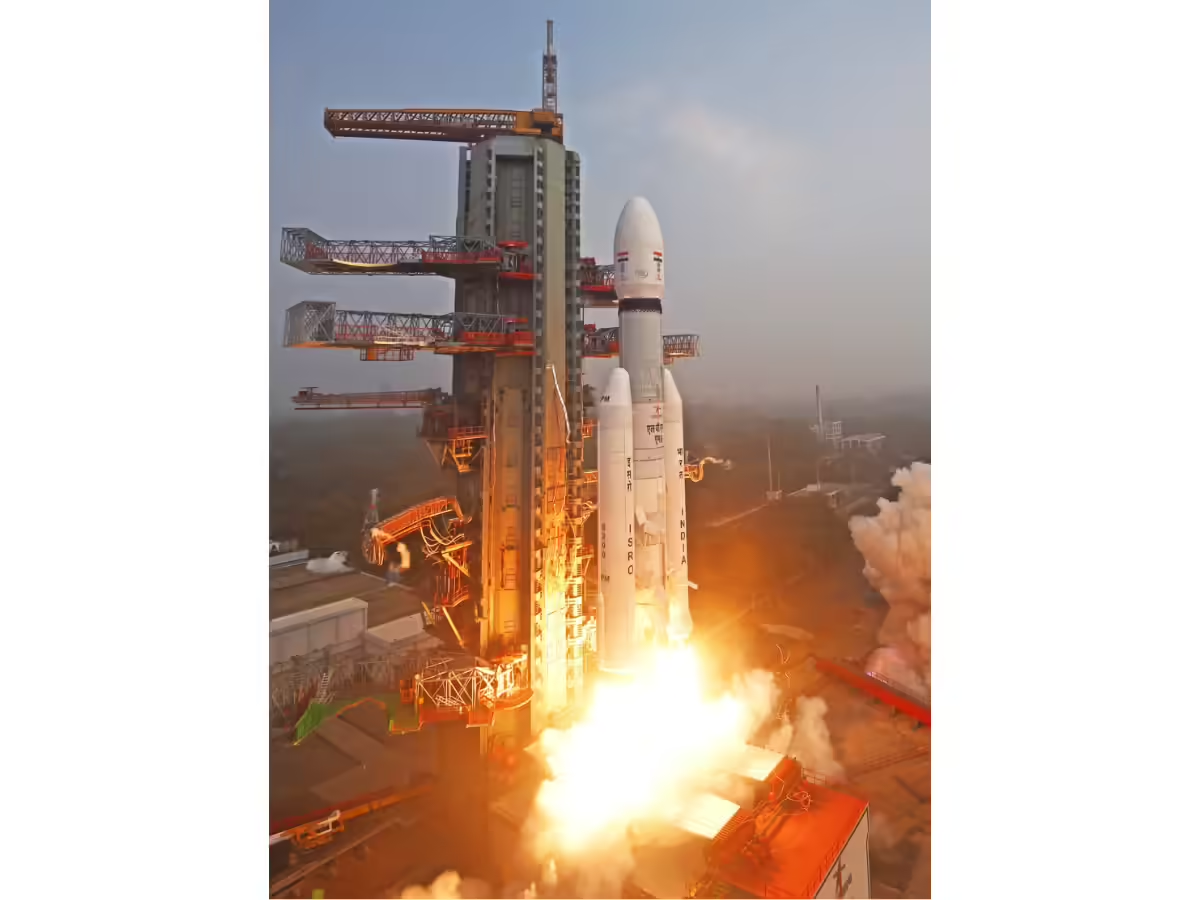

LVM3-M6 BlueBird-2 ISRO mission data has drawn strong attention from students, educators, and space enthusiasts because it involves a heavy lift launch vehicle and an advanced satellite mission. This tutorial explains how to track LVM3-M6 BlueBird-2 mission data step by step and why this mission matters for students studying science, engineering, and space technology.
The LVM3-M6 BlueBird-2 mission is time sensitive in nature, as it relates to an active ISRO launch window, real time mission phases, and post launch orbital operations. The tone here follows a news informed and educational approach.
Understanding the LVM3-M6 BlueBird-2 Mission Goals
The LVM3-M6 BlueBird-2 mission uses ISRO’s LVM3 launch vehicle, also known as Gaganyaan-class rocket, designed to carry heavy payloads to low Earth orbit and beyond. The mission’s primary objective is to deploy the BlueBird-2 satellite into its intended orbit with precise accuracy while validating mission specific subsystems.
BlueBird-2 is designed as a technology and application satellite with objectives that include advanced communication payload testing, orbital stability validation, and data relay experiments. For ISRO, this mission contributes to improving launch reliability, payload handling, and mission sequencing for future heavy lift operations.
For students, the mission demonstrates how launch vehicles, satellites, and ground systems work together. It offers a real world example of orbital mechanics, propulsion stages, telemetry flow, and mission control coordination.
Key Mission Phases Students Should Track
Tracking LVM3-M6 BlueBird-2 mission data becomes easier when students understand its mission phases. The launch sequence begins with ignition of the solid strap on motors, followed by core stage burn, stage separation, and cryogenic upper stage ignition.
Each phase generates specific telemetry data such as altitude, velocity, fuel consumption, and trajectory corrections. After payload separation, satellite health checks begin, including power system activation, antenna deployment, and communication link confirmation.
Students following the mission should note the timing of these phases, as each stage reflects concepts taught in physics and aerospace engineering. The precision involved highlights why mission planning and simulations are critical to spaceflight success.
How to Access Live ISRO Mission Data
ISRO provides multiple official channels for tracking live mission data. During launch windows, ISRO broadcasts live telemetry visualizations through its official webcast platforms. These streams include real time altitude graphs, velocity indicators, mission timers, and stage status updates.
Students can also track mission updates through ISRO’s mission specific web pages, which provide timelines, launch profiles, and post launch status reports. After launch, satellite orbit details are published, allowing users to follow parameters such as inclination, apogee, and perigee.
Mobile users should rely on official ISRO digital platforms and verified public dashboards rather than third party trackers to avoid inaccurate or delayed data. Refreshing official feeds during key mission milestones ensures accurate understanding of mission progress.
Interpreting Telemetry and Orbit Data Correctly
Raw mission data can appear complex, but basic interpretation skills make it accessible. Altitude indicates how high the vehicle or satellite is above Earth, while velocity shows how fast it is traveling relative to Earth’s surface. Sudden changes often correspond to stage separation or engine cutoff events.
Orbit parameters published after launch define how the satellite moves around Earth. Inclination shows the tilt of the orbit relative to the equator, while apogee and perigee indicate the farthest and closest points from Earth.
Students should focus on trends rather than isolated numbers. For example, steady velocity increase during powered flight confirms nominal performance, while stable orbit values post insertion indicate mission success.
Why the LVM3-M6 Mission Matters for Students
The LVM3-M6 BlueBird-2 mission serves as a live classroom for students. Physics students see Newton’s laws in action. Engineering students observe systems integration, redundancy planning, and risk management. Computer science students can relate to telemetry processing and real time data visualization.
For aspirants preparing for competitive exams or careers in space science, following the mission builds conceptual clarity. It also exposes students to Indian space capabilities beyond satellite launches, including heavy lift rockets and complex mission planning.
The mission also reinforces the importance of indigenous technology development, showing how long term research translates into operational capability.
Using Mission Data for Projects and Learning
Students can use publicly available mission data for academic projects. Examples include plotting altitude versus time graphs, analyzing velocity profiles, or explaining stage separation logic. Teachers can assign case studies based on mission timelines to explain real world application of textbook concepts.
Students should document data accurately and avoid assumptions not supported by official information. Comparing expected mission profiles with actual performance helps develop analytical thinking.
Following post launch updates also teaches patience and process awareness, as satellite commissioning can take days or weeks.
Takeaways
LVM3-M6 BlueBird-2 mission data provides real time learning opportunities for students
Understanding mission phases makes tracking telemetry easier and meaningful
Official ISRO platforms offer the most accurate live and post launch data
The mission connects classroom theory with real world space operations
FAQs
Is LVM3-M6 BlueBird-2 a human spaceflight mission
No, this mission focuses on satellite deployment and technology validation using the LVM3 launch vehicle.
Can students access live mission data without technical tools
Yes, ISRO provides visual dashboards and live streams that explain mission progress in a simplified format.
What should students focus on while tracking the mission
Students should track mission phases, altitude and velocity trends, and post launch orbit confirmation.
Is mission data useful after the launch is completed
Yes, post launch data helps students understand satellite commissioning and long term orbital operations.