
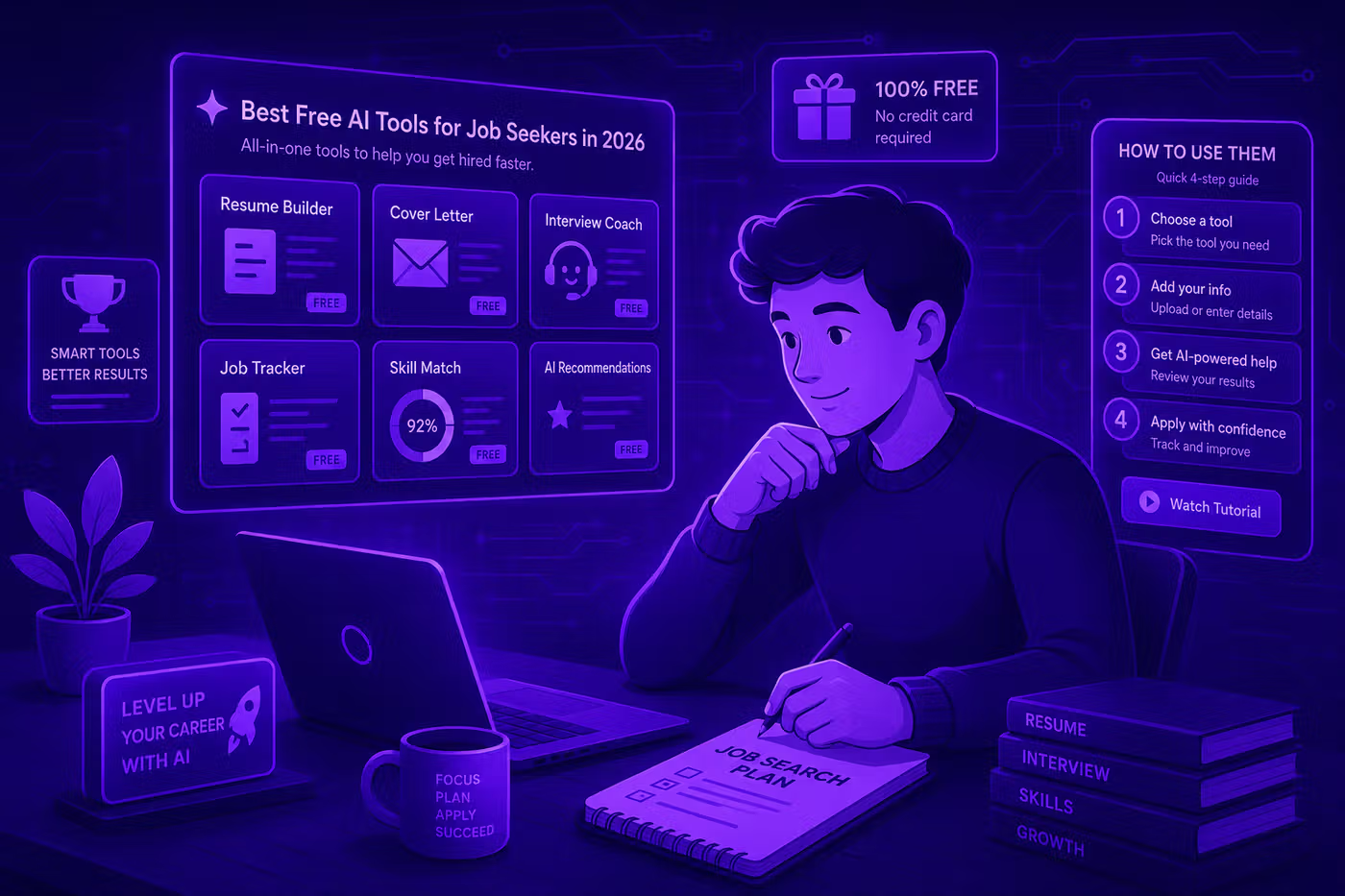

AI tools can reduce the time spent searching for jobs, tailoring resumes and preparing applications. Used carefully, they can help candidates organise their job search and improve application quality without replacing the need for accurate information and human review.
Why AI Job Applications Are Growing in 2026
AI tools are becoming a practical part of the job search, especially for candidates applying to multiple roles. In 2026, applicants can use AI for tasks such as resume tailoring, job-description analysis, cover-letter drafting, interview preparation and organising application records.
The biggest benefit is not simply writing an application faster. It is reducing repetitive work while allowing candidates to spend more time on decisions that require human judgment.
For example, a candidate applying for five marketing positions may repeatedly need to compare job descriptions, identify relevant skills and adjust their resume. AI can help with those repetitive steps, provided the candidate checks the final information.
The approach is particularly useful for fresh graduates and professionals applying across multiple companies, but speed should not come at the expense of accuracy.
Use AI to Find Better-Matched Job Opportunities
The first step is identifying jobs that genuinely match your skills and experience.
Instead of asking an AI tool to simply find any available job, give it a structured description of your background. Include your education, work experience, technical skills, preferred location, industry and type of role you want.
AI can then help you create a job-search checklist or classify vacancies based on factors such as experience requirements, skills and location.
Candidates can also use AI to analyse a job description before applying. Ask the tool to identify the main responsibilities, required qualifications, technical skills and frequently mentioned keywords.
This can make a large job description easier to understand.
However, candidates should verify the actual vacancy on the employer’s official careers page or a trusted job platform before submitting an application.
How AI Can Tailor Your Resume
One of the most useful applications of AI in recruitment is resume tailoring.
A single generic resume may not highlight the experience most relevant to every position. AI can compare your existing resume with a job description and suggest which genuine skills or experiences deserve greater visibility.
For example, suppose a job description for a content specialist repeatedly mentions SEO, content management, analytics and social media. If your resume already contains legitimate experience in these areas, AI can help reorganise the information so those qualifications are easier for a recruiter to notice.
The important word is legitimate.
Never ask an AI tool to invent experience, certifications, job responsibilities or achievements. The resulting resume may look stronger, but false information can create serious problems during interviews or background verification.
AI should improve the presentation of your real experience, not manufacture a new professional history.
Use AI to Improve Resume Keywords
Many employers use applicant tracking systems, commonly called ATS, to help organise and screen applications.
This has created interest in ATS-friendly resumes, but candidates should avoid treating keyword matching as a game where the same phrase is repeated unnecessarily.
Instead, compare your resume with the job description and identify relevant terminology.
For instance, if the employer specifically asks for “content management systems,” and your experience genuinely includes working with CMS platforms, using the appropriate terminology can make your resume clearer.
AI can identify missing terms and suggest where relevant skills might fit naturally.
It should not recommend adding skills you do not possess merely because they appear in the vacancy.
A useful final check is to read the resume yourself. If the wording sounds unnatural or does not accurately describe your experience, rewrite it.
How AI Can Speed Up Cover Letters
Writing a different cover letter for every application can take significant time.
AI can create a first draft using information from your resume and the job description. You can then edit it to reflect your actual experience and motivation.
A strong prompt should provide the role, company, relevant experience and specific reason the position interests you. Instead of asking for a generic cover letter, ask the tool to focus on two or three qualifications that directly connect your background to the vacancy.
Candidates should also avoid submitting an AI-generated letter without reading it.
Generic phrases, exaggerated claims or incorrect statements about a company can make an application look careless.
The final version should sound like the applicant and contain details they can confidently discuss during an interview.
Use AI for Application Tracking
Applying for several jobs can quickly become difficult to manage.
Candidates can use spreadsheets or job-search management tools to record the company, position, application date, job link, recruiter contact, interview status and follow-up date.
AI can help organise this information and identify which applications require action.
For example, you can ask an AI assistant to turn your application notes into a structured tracker or create a follow-up checklist.
This can be particularly helpful when applying to companies with different recruitment processes.
The important rule is to avoid entering sensitive personal information into AI tools unnecessarily. Do not upload passwords, banking details, Aadhaar information, identity documents or confidential employer information simply to organise a job search.
AI Interview Preparation for Job Seekers
AI can also help candidates prepare after submitting an application.
Give the tool the job description and ask it to generate realistic interview questions based on the responsibilities listed by the employer.
You can then practise answering questions about your experience, skills and previous projects.
For behavioural questions, candidates can use a structured approach such as Situation, Task, Action and Result, commonly known as STAR.
AI can review an answer for clarity, structure and relevance. It can also act as a mock interviewer by asking follow-up questions.
But candidates should not memorise AI-generated answers word for word.
Interviewers may ask unexpected questions, and overly rehearsed responses can sound unnatural. The goal is to improve preparation, not replace genuine communication.
Check Every AI-Generated Application Before Sending
Speed is useful only when the final application remains accurate.
Before submitting an AI-assisted application, check the company name, job title, employment dates, education details, skills and contact information.
Also verify that every achievement mentioned in the application is something you can support.
AI systems can sometimes produce incorrect information or misunderstand context. A tool may interpret a responsibility as an achievement or turn a general skill into a specific claim that was never part of your experience.
A five-minute human review can prevent those mistakes.
Candidates should also check whether an employer has specific instructions about AI-generated application materials. If an organisation asks applicants to disclose AI use or prohibits certain forms of assistance, follow those instructions.
Protect Your Personal Data While Using AI
Job seekers often handle sensitive information, including resumes, addresses, phone numbers, employment records and educational details.
Before uploading a resume to an AI service, understand what information the service requires and what data controls are available.
Remove unnecessary sensitive information when it is not needed for the task.
For example, an AI tool usually does not need your Aadhaar number, PAN details, bank information or account passwords to help improve a resume.
Be particularly cautious about AI tools advertised through social media that promise guaranteed jobs, recruiter connections or instant placement in exchange for personal documents or payments.
Use established services and verify job opportunities independently.
A Faster AI-Assisted Job Application Workflow
A practical workflow can look like this:
Start by finding a relevant vacancy through a trusted source. Read the complete job description yourself. Use AI to summarise the responsibilities and identify the most relevant skills.
Next, compare the requirements with your actual experience. Ask AI to suggest improvements to your resume using only information already present in it.
Create a tailored cover letter if one is required. Then review the entire application manually.
After submitting it, record the application in your tracker and note any follow-up date.
Finally, use AI to practise interview questions based on the specific role.
This process saves time without handing the entire job search to an automated system.
Key Takeaways
- AI can speed up resume tailoring, job-description analysis and interview preparation.
- Never allow AI to invent qualifications, experience, certifications or achievements.
- Review every AI-assisted application before submitting it to an employer.
- Protect personal information and verify job listings through trusted sources.
FAQs
Can AI write my entire job application?
AI can help draft resumes, cover letters and other application materials, but candidates should review and personalise everything before submission. The information must accurately represent their real experience.
Can AI improve my resume for ATS systems?
Yes. AI can compare a resume with a job description and identify relevant keywords or skills. However, candidates should only include keywords that accurately describe their actual qualifications.
Is it safe to upload my resume to an AI tool?
It depends on the service and its data practices. Before uploading a resume, check the tool’s privacy and data-handling policies and remove unnecessary sensitive information.
Can AI help with job interviews?
Yes. AI can generate role-specific interview questions, conduct mock interviews and provide feedback on the structure and clarity of answers. Candidates should use it for practice rather than memorising scripted responses.