
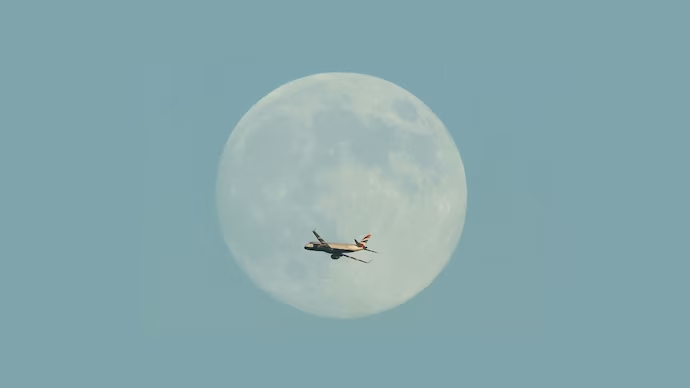

The Wolf Supermoon across India is drawing attention from skywatchers and beginners because it combines a full moon with a near Earth orbital position, making it appear larger and brighter. This seasonal celestial event is time sensitive and requires correct timing, location planning, and basic gear preparation to experience it properly.
The intent of this topic is time sensitive and informational. The tone below follows an explanatory news style while remaining practical and beginner friendly.
What the Wolf Supermoon Is and Why It Matters
The Wolf Supermoon occurs when a full moon coincides with the moon’s perigee, which is the point when it is closest to Earth. This makes the moon appear noticeably bigger and brighter than an average full moon. The term Wolf Moon traditionally refers to the first full moon of the year, named after seasonal folklore associated with winter nights.
For Indian viewers, the Wolf Supermoon is significant because it is clearly visible across most regions without specialized equipment. Compared to regular full moons, the supermoon offers better visibility, stronger contrast, and improved photographic results, especially for beginners using basic cameras or smartphones.
This event also attracts interest from students, amateur astronomers, and photography enthusiasts who want to capture a rare but accessible night sky moment.
Best Time to Watch the Wolf Supermoon Across India
Timing is the most important factor when watching the Wolf Supermoon in India. The moonrise time varies slightly by location, but it generally becomes visible soon after sunset. The best viewing window is usually within one to two hours after moonrise when the moon appears low on the horizon.
A low moon position creates a visual illusion that makes the moon appear even larger. This is known as the moon illusion effect and works well for photography too. Late evening and early night hours offer clearer skies in many regions, especially outside major cities.
Viewers should check local moonrise timings using reliable astronomy apps or weather platforms. Cloud cover and air pollution can affect visibility, so planning based on local weather conditions is essential.
Choosing the Right Location for Clear Viewing
Location plays a major role in how well you can see and photograph the Wolf Supermoon. Urban areas often suffer from light pollution, which reduces contrast and detail. If possible, move to open spaces such as rooftops, fields, lakesides, or outskirts of towns.
In Tier 2 and Tier 3 cities, viewers often have an advantage due to relatively lower light pollution. Elevated locations like hills or terraces provide unobstructed views of the horizon, which is ideal during moonrise.
Avoid areas with tall buildings or dense trees blocking the eastern horizon. A clear line of sight significantly improves both viewing and photography outcomes.
Basic Gear Needed for Beginners
One of the advantages of the Wolf Supermoon is that it does not require expensive equipment. Beginners can start with what they already have. A smartphone with manual camera controls is sufficient for basic moon photography. Enable night mode cautiously, as overexposure can wash out details.
For camera users, a DSLR or mirrorless camera with a zoom lens between 200mm and 300mm works well. A tripod is highly recommended to avoid camera shake, especially at higher zoom levels.
Optional accessories include a remote shutter or timer mode to reduce vibrations. Binoculars can enhance visual experience but are not required.
Camera Settings for Photographing the Supermoon
Beginners often make the mistake of treating the moon like a night scene. In reality, the moon is bright and needs controlled exposure. Start with low ISO settings such as ISO 100 or 200. Use a fast shutter speed like 1 by 125 or 1 by 250 seconds depending on brightness.
Aperture settings between f8 and f11 help maintain sharpness. Manual focus is preferable as autofocus may struggle in low contrast conditions. Focus until the moon’s edges appear crisp.
For smartphones, tap to focus on the moon and reduce exposure manually if possible. Avoid digital zoom, as it reduces image quality.
Composition Tips for Better Moon Photos
Good moon photos are not just about zooming in. Including foreground elements like trees, buildings, temples, or hills adds scale and context. This works especially well during moonrise when the moon is closer to the horizon.
Framing the moon with landmarks creates a sense of place and makes the image more engaging. Experiment with horizontal and vertical compositions depending on foreground placement.
Patience is key. The moon moves faster than it appears, so adjust framing frequently.
Common Mistakes to Avoid
Avoid shooting handheld at high zoom levels. Camera shake ruins sharpness. Do not overexpose the moon, as details disappear quickly. Avoid relying solely on automatic modes, which often misjudge brightness.
Another mistake is waiting too late at night. While the moon is still visible, it loses the illusion of size and context when high in the sky.
Takeaways
- The Wolf Supermoon is a seasonal event visible across India
- Moonrise hours offer the best viewing and photography conditions
- Basic gear and simple settings are enough for beginners
- Foreground elements improve visual impact and scale
FAQs
Can the Wolf Supermoon be seen without equipment
Yes, it is clearly visible to the naked eye under clear skies.
Is a smartphone enough for moon photography
Yes, smartphones with manual exposure control can capture decent results.
Which direction should I look to see the supermoon
Look towards the eastern horizon around moonrise time.
Does weather affect supermoon visibility
Yes, clouds, haze, and pollution can reduce clarity and brightness.