
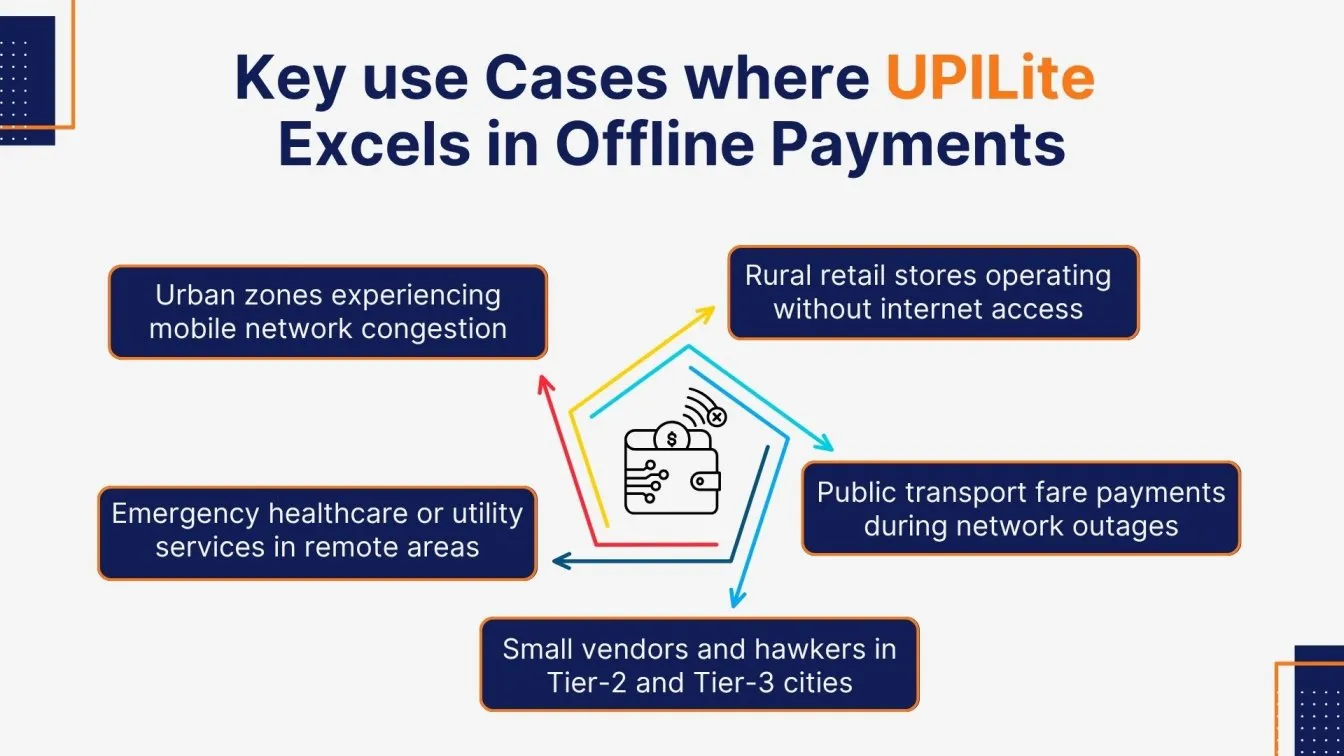

UPI Lite is becoming an important digital payment solution for people living in areas with unstable internet connectivity. With support for low-value transactions and faster processing, it is helping shopkeepers, students, and daily users in smaller Indian towns continue cashless payments even during weak network conditions.
India’s digital payment ecosystem has expanded rapidly, but weak internet connectivity still affects many Tier-2 and Tier-3 regions. This is where UPI Lite and offline payment systems are making a noticeable difference. The feature, launched by the National Payments Corporation of India, is designed for small-value payments without depending heavily on real-time bank processing.
For users in small towns, crowded markets, railway stations, villages, and semi-urban areas, payment failures due to poor mobile signals are common. UPI Lite aims to reduce this problem by allowing quicker low-value payments directly from a stored balance inside the app.
What Is UPI Lite and How Does It Work?
UPI Lite is a simplified version of the Unified Payments Interface system. Instead of processing every small transaction directly through a bank server, the feature stores a limited balance inside the app wallet itself. This allows transactions to happen faster and with fewer network interruptions.
Most major payment apps in India now support UPI Lite, including PhonePe, Google Pay, and Paytm.
Users can add money from their bank account into the UPI Lite balance. Once loaded, small transactions can be completed even when internet signals are weak. These payments are usually meant for low-value purchases such as tea stalls, grocery shops, bus tickets, medical stores, and local vendors.
The Reserve Bank of India and NPCI have gradually expanded digital payment features to improve financial inclusion, especially in regions where banking infrastructure and internet quality remain inconsistent.
Why Offline Payments Matter in Smaller Indian Cities
Digital payments have become common even in villages and smaller towns. However, many users still face network drops during peak hours, electricity outages, or while travelling through rural areas.
Offline payments reduce dependence on stable internet access. This is especially useful in states where mobile connectivity fluctuates due to terrain or infrastructure limitations.
For example, a customer buying vegetables in a local market may struggle to complete a standard UPI transaction because the app keeps loading. With UPI Lite, smaller payments can often process faster because the balance is already stored in the application.
This system also benefits small shopkeepers who lose sales when online payment systems fail. In many Tier-2 cities, vendors now display separate QR codes specifically for UPI Lite-enabled apps to encourage smoother transactions.
The push for offline digital payments also supports India’s broader goal of reducing cash dependency while increasing digital financial access.
Steps to Activate UPI Lite on Your Phone
Setting up UPI Lite is relatively simple and does not require additional documentation if your UPI account is already active.
First, open a supported UPI application on your smartphone. Inside the app settings or payment section, users can find the UPI Lite option. After selecting it, the app will ask for bank account verification and a one-time setup approval.
Once activated, users can transfer a small amount into the UPI Lite balance. Different apps may have different limits, but the system is generally designed for low-value daily transactions.
After loading money, payments can be made by scanning QR codes normally. The difference is that the payment is deducted from the Lite balance instead of contacting the bank server every time.
This process makes transactions quicker in areas where internet speed is slow or unstable.
Safety Features and Transaction Limits
UPI Lite is designed mainly for convenience and small purchases, not large transfers. Because of this, transaction limits remain lower than regular UPI payments.
One major advantage is that smaller transactions often do not require entering a UPI PIN repeatedly, making the process faster during daily use.
However, users should still follow safety precautions. Phones should remain locked with passwords or biometric protection. People should avoid sharing OTPs or clicking unknown payment links.
Cyber fraud involving fake payment screenshots and scam QR codes has increased across India. Experts recommend verifying successful payment notifications before handing over products or services.
Users should also regularly check their payment history inside the app to track all transactions.
Growing Adoption of Offline Digital Payments in India
India’s digital payment sector continues to evolve rapidly. Features like UPI Lite, NFC tap payments, and offline wallet systems show how fintech companies are adapting to real-world connectivity problems.
In smaller towns, digital adoption is no longer limited to younger users. Local grocery stores, pharmacies, auto drivers, and street vendors increasingly depend on QR-based transactions.
Government-backed digital infrastructure, cheaper smartphones, and wider banking access have accelerated this shift. Even with connectivity challenges, offline-friendly payment systems are helping digital transactions become more practical for everyday users.
As mobile internet improves across India, experts believe UPI Lite could become a standard backup payment option for millions of users who frequently experience network instability.
Key Takeaways
- UPI Lite helps users make small payments during weak internet connectivity
- The feature stores a limited balance inside supported payment apps
- Small-town vendors and customers benefit from faster low-value transactions
- Users should still follow digital payment safety precautions to avoid scams
FAQ
What is the main benefit of UPI Lite?
UPI Lite allows faster low-value digital payments with reduced dependence on stable internet connectivity.
Can UPI Lite work completely without internet?
Some offline-friendly features work during weak connectivity, but basic app access and setup may still require internet support depending on the platform.
Which apps support UPI Lite in India?
Several major apps including PhonePe, Google Pay, and Paytm currently support UPI Lite functionality.
Is UPI Lite safe to use?
Yes, it includes security protections similar to standard UPI systems, but users should still avoid scams, fake QR codes, and suspicious payment requests.