
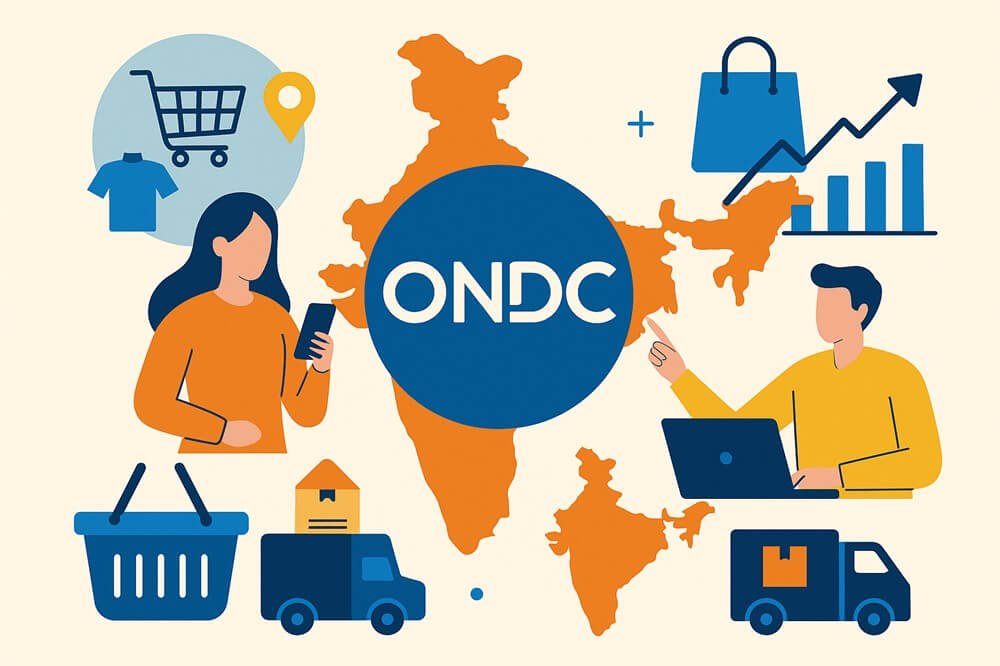

Small manufacturers are shifting to ONDC as a way to reduce dependence on large e-commerce marketplaces and avoid high commission fees. The main keyword is small manufacturers. By listing products directly on the open digital commerce network, businesses are seeking more control over pricing, customer data, and profit margins in Tier 2 and Tier 3 markets.
Many small and mid-scale manufacturers producing garments, footwear, packaged foods, home goods, handicrafts, and electronics accessories previously relied heavily on platforms like Amazon and Flipkart. While these platforms offered visibility, sellers often faced commission charges, logistics fees, return penalties, and promotional budget expectations that reduced actual earnings. ONDC (Open Network for Digital Commerce) is being adopted as an alternative route where sellers can directly connect with buyers through participating buyer apps.
Why Manufacturers Are Choosing ONDC
ONDC allows sellers to list products through any seller-side application that is part of the network. Customers purchase through a buyer-side app, but the transaction and visibility are not controlled by a single marketplace. This reduces dependency on platform algorithms and seller rankings. Manufacturers avoid high commission slabs that sometimes reach double-digit percentages on organized marketplaces. Instead, ONDC charges lower service fees depending on the linked logistics partner and payment gateway. For producers working with smaller margins, even a few percentage points saved significantly affect profitability. The network also enables price transparency and competitive positioning without requiring constant participation in costly discount events.
How ONDC Changes The Selling Workflow
Instead of maintaining separate product listings on different marketplaces, manufacturers upload product catalogs to one ONDC-compatible platform. These listings become accessible across multiple buyer-side apps. Pricing, inventory, and product descriptions are controlled directly by the seller. Manufacturers can also choose logistics partners for shipping instead of relying on default marketplace-operated delivery systems. This flexibility helps manage shipping costs and service levels. In cities where local delivery partners operate efficiently, same-day or next-day delivery is feasible without marketplace mediation. Tracking, payments, and customer communication still occur digitally, maintaining convenience for both buyer and seller.
Impact On Tier 2 And Tier 3 Business Expansion
Manufacturers located in Tier 2 clusters like Surat, Jaipur, Ludhiana, Panipat, Indore, Kanpur, Rajkot, and Coimbatore often produce large volumes but face limited brand visibility. ONDC enables them to reach customers across the country without investing in marketplace ad campaigns. Listing is based on product relevance rather than algorithmic bidding competition. For customers in smaller cities, pricing often becomes more favorable because fewer layers of commission and promotional overhead are included. Shopkeepers and wholesalers in Tier 3 towns are also starting to use ONDC to source stock directly from manufacturers, reducing middlemen dependency.
Control Over Branding And Catalog Presentation
On traditional marketplaces, sellers often compete in crowded categories with similar product thumbnails and discount messaging. ONDC allows manufacturers to design product pages, naming formats, and brand position more clearly. They can highlight material quality, production process, or local craftsmanship without being forced into price-comparison layouts. For example, a linen shirt manufacturer in Bhilwara can emphasize fabric purity and tailoring rather than compete purely on discounting. This control strengthens brand relationships with customers rather than transactional one-time purchases.
Challenges In ONDC Adoption
ONDC is still in scaling phase, and small manufacturers face onboarding challenges. Many businesses require training in product listing standards, catalog photography, GST-linked invoicing, and logistics selection. Returns and replacement processes also differ from marketplace managed systems and require direct coordination. Without proper documentation and packaging consistency, customer experience may vary. Payment cycles are transparent but require reconciliation discipline. Manufacturers who lack internal digital literacy or basic ERP systems may find the transition slow unless they adopt partner support agencies or onboarding consultants.
Role Of Local Business Associations And Government Support
District-level industrial associations, MSME development centers, and startup incubators are starting to organize workshops to help local factories and home-based producers join ONDC. Some state governments offer onboarding credit, catalog assistance, and photography support. Co-working warehouses and shared fulfillment hubs are emerging in industrial towns to streamline shipping. As ONDC receives broader policy support, manufacturers expect smoother integration with banking, retailer networks, and supply chain systems.
Which Product Categories Are Seeing Early Momentum
Packaged food brands focusing on millet snacks, cold-pressed oils, and local spice blends are gaining stable repeat orders because they appeal to regional taste preferences. Clothing and home furnishings from textile clusters are also performing well because ONDC reduces price distortion caused by marketplace discount practices. Handicraft and artisan products benefit from storytelling-based branding. Electronics accessories see moderate traction as customers compare price-value ratios directly.
Takeaways
• Small manufacturers are adopting ONDC to reduce reliance on commission-heavy marketplaces.
• ONDC provides pricing control, customer access, and multi-app visibility without platform lock-in.
• Tier 2 and Tier 3 producers benefit from wider reach and lower operational costs.
• Training and operational discipline are needed to scale smoothly on ONDC.
FAQs
Is ONDC free for sellers to use?
No. ONDC reduces commission layers but still involves platform fees, logistics charges, and payment processing fees. However, total costs are usually lower than large marketplaces.
Do sellers need to build their own app to join ONDC?
No. Sellers join through ONDC-supported seller platforms that provide catalog upload and order management tools.
Can ONDC replace Amazon and Flipkart for all sellers?
Not immediately. Many sellers will continue using both channels. ONDC helps diversify and reduce dependency.
How do customers discover products on ONDC?
Customers use participating buyer apps such as Paytm, Pincode, or PhonePe to browse and purchase ONDC-listed products.
(