

Mumbai’s recent water shortage concerns, triggered by delayed monsoon rainfall and declining reservoir levels, have highlighted a growing challenge facing urban India. As climate variability increases and cities continue to expand, experts say water security can no longer depend solely on seasonal rainfall. The situation offers important lessons for both major metros and rapidly growing Tier-2 cities.
Mumbai’s Water Crisis Highlights a National Urban Challenge
Water shortages and rain delays have become recurring concerns across several Indian cities, but Mumbai’s experience in 2026 drew particular attention because of the city’s heavy dependence on monsoon-fed reservoirs.
Before monsoon rains intensified, reservoir levels supplying water to Mumbai had dropped significantly, prompting authorities to closely monitor consumption and prepare contingency measures. While rainfall eventually improved the situation, the episode exposed how vulnerable even India’s financial capital remains to changing weather patterns.
The issue is not unique to Mumbai. Cities such as Bengaluru, Hyderabad, Pune, Nagpur, Indore, Jaipur, and several urban centres across Maharashtra, Karnataka, and Rajasthan have faced varying degrees of water stress in recent years. Rapid urbanization, population growth, groundwater depletion, and changing rainfall patterns are increasing pressure on existing water infrastructure.
Delayed Monsoons Are Becoming a Major Risk Factor
One of the biggest lessons from Mumbai’s situation is the growing impact of monsoon uncertainty. Traditionally, city planners have relied on predictable rainfall cycles to replenish reservoirs and lakes.
However, climate scientists have observed increasing variability in rainfall distribution. In many cases, cities experience longer dry spells followed by short periods of intense rainfall. While heavy rain may boost total seasonal precipitation, it does not always translate into effective water storage.
Delayed monsoons can quickly reduce reservoir reserves, forcing local authorities to consider water rationing, tanker supply arrangements, or restrictions on non-essential water use.
For Tier-2 cities with fewer backup resources than major metros, such delays can create even greater challenges. Municipal bodies must therefore prepare for extended dry periods rather than assuming that seasonal rains will arrive on schedule.
Why Urban Water Infrastructure Needs an Upgrade
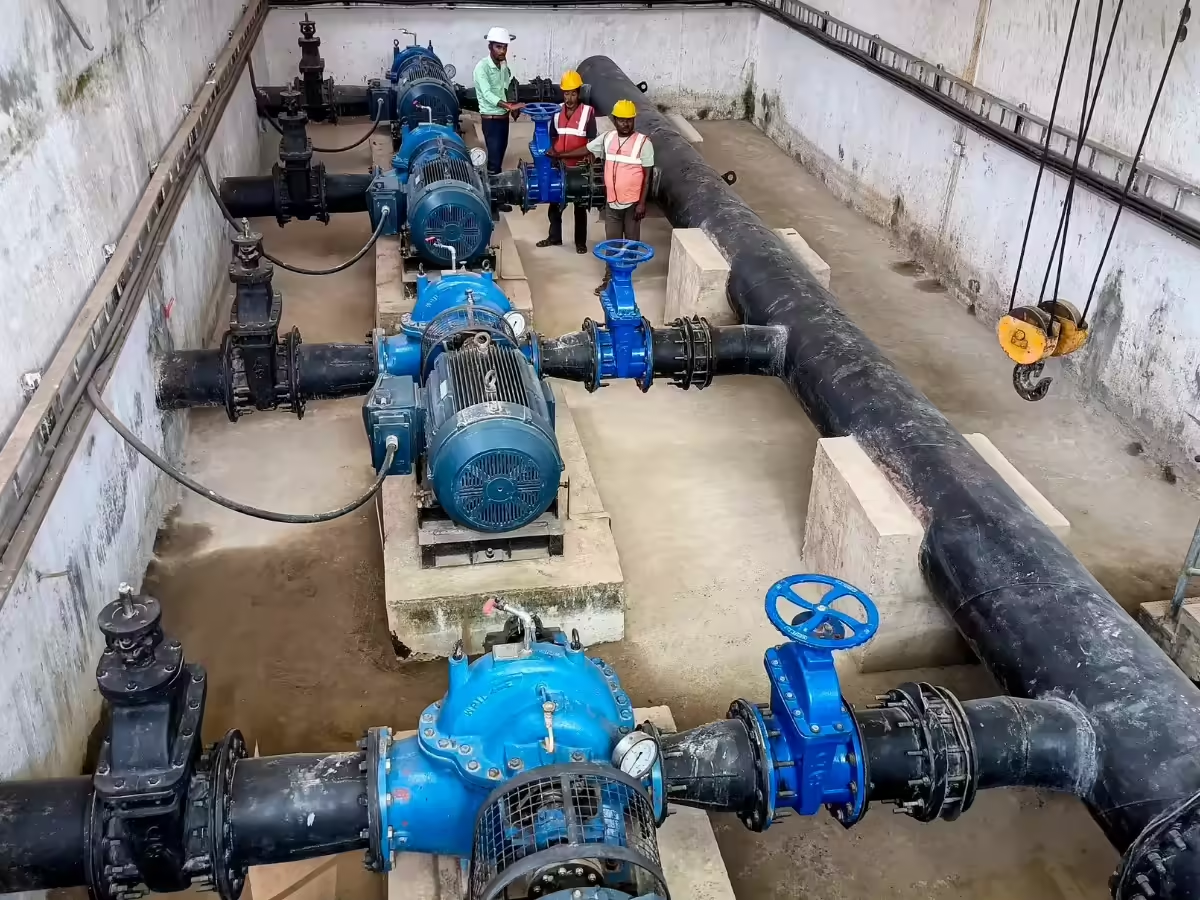
Mumbai’s experience also highlights the importance of modern water infrastructure. Many Indian cities continue to lose substantial amounts of treated water through pipeline leakages, aging distribution networks, and inefficient supply systems.
According to various urban water studies, non-revenue water losses remain a major issue in many municipalities. This means water is produced and treated but never reaches consumers due to leaks or unauthorized usage.
Investment in smart water management systems can help cities monitor supply, detect leakages early, and improve distribution efficiency.
Cities such as Nagpur have already experimented with 24×7 water supply projects and technology-driven monitoring systems. Similar models can help urban administrations improve long-term water security while reducing wastage.
Rainwater Harvesting and Local Storage Must Become a Priority
Another key lesson from Mumbai’s situation is the need to diversify water sources. Depending primarily on distant reservoirs can leave cities vulnerable when rainfall patterns shift.
Rainwater harvesting offers a practical solution for both residential and commercial areas. Capturing rainwater during peak monsoon months can reduce pressure on municipal systems and help recharge groundwater reserves.
Several Indian states have introduced regulations requiring rainwater harvesting structures in new buildings. However, implementation remains inconsistent.
Cities can also develop local storage systems, rejuvenate lakes, restore wetlands, and improve stormwater management infrastructure. These measures not only improve water availability but also reduce urban flooding during periods of heavy rainfall.
The combination of water conservation and local storage can create greater resilience against future rainfall disruptions.
Managing Population Growth and Water Demand
India’s urban population continues to grow rapidly, especially in Tier-2 and Tier-3 cities. As more people move into urban areas, demand for drinking water, sanitation, industrial use, and public services increases.
Mumbai’s situation demonstrates that expanding supply alone may not solve future challenges. Demand-side management is equally important.
Cities can promote water-efficient appliances, encourage responsible consumption, reduce wastage in public systems, and improve awareness among residents.
Industrial users and commercial establishments can also play a significant role through wastewater recycling and reuse programs. Several modern urban developments already incorporate treated wastewater for landscaping and non-potable applications.
As cities expand, sustainable water planning must become a core component of urban development strategies.
Climate Resilience Must Guide Future Urban Planning
Perhaps the most important lesson from Mumbai’s water concerns is that climate resilience can no longer be treated as a long-term goal. It has become an immediate necessity.
Urban planners increasingly face a dual challenge: managing water scarcity during dry periods and handling flooding during intense rainfall events. The same city may experience both problems within a single season.
Building resilience requires coordinated action across multiple sectors, including water management, infrastructure development, environmental conservation, and climate adaptation planning.
Cities that invest today in sustainable water systems, reservoir management, groundwater recharge, and efficient distribution networks will be better positioned to handle future weather uncertainties.
Key Takeaways
- Delayed monsoon rains can significantly affect reservoir-dependent cities like Mumbai.
- Water security requires better infrastructure, reduced leakage, and efficient distribution systems.
- Rainwater harvesting and local water storage can strengthen urban resilience.
- Climate change and urban growth make long-term water planning increasingly important.
FAQ
Q1. Why did Mumbai face water shortage concerns in 2026?
Mumbai experienced concerns over declining reservoir levels due to delayed monsoon rainfall before precipitation improved water storage conditions.
Q2. Are other Indian cities vulnerable to similar water shortages?
Yes. Several cities including Bengaluru, Hyderabad, Pune, Nagpur, and Jaipur face varying levels of water stress due to population growth, groundwater depletion, and changing rainfall patterns.
Q3. How can cities reduce dependence on monsoon rainfall?
Cities can invest in rainwater harvesting, groundwater recharge, wastewater recycling, reservoir management, and efficient water distribution systems.
Q4. What role does climate change play in urban water shortages?
Climate change contributes to irregular rainfall patterns, longer dry periods, and extreme weather events, making water resource management more challenging for urban areas.
(Internal Keyword Suggestions: Mumbai Water Crisis, Water Shortage India, Delayed Monsoon Impact, Urban Water Management, Rainwater Harvesting India, Climate Change and Water Scarcity, Reservoir Levels Mumbai, Water Conservation Cities, Urban Infrastructure India, Tier 2 City Water Challenges)