
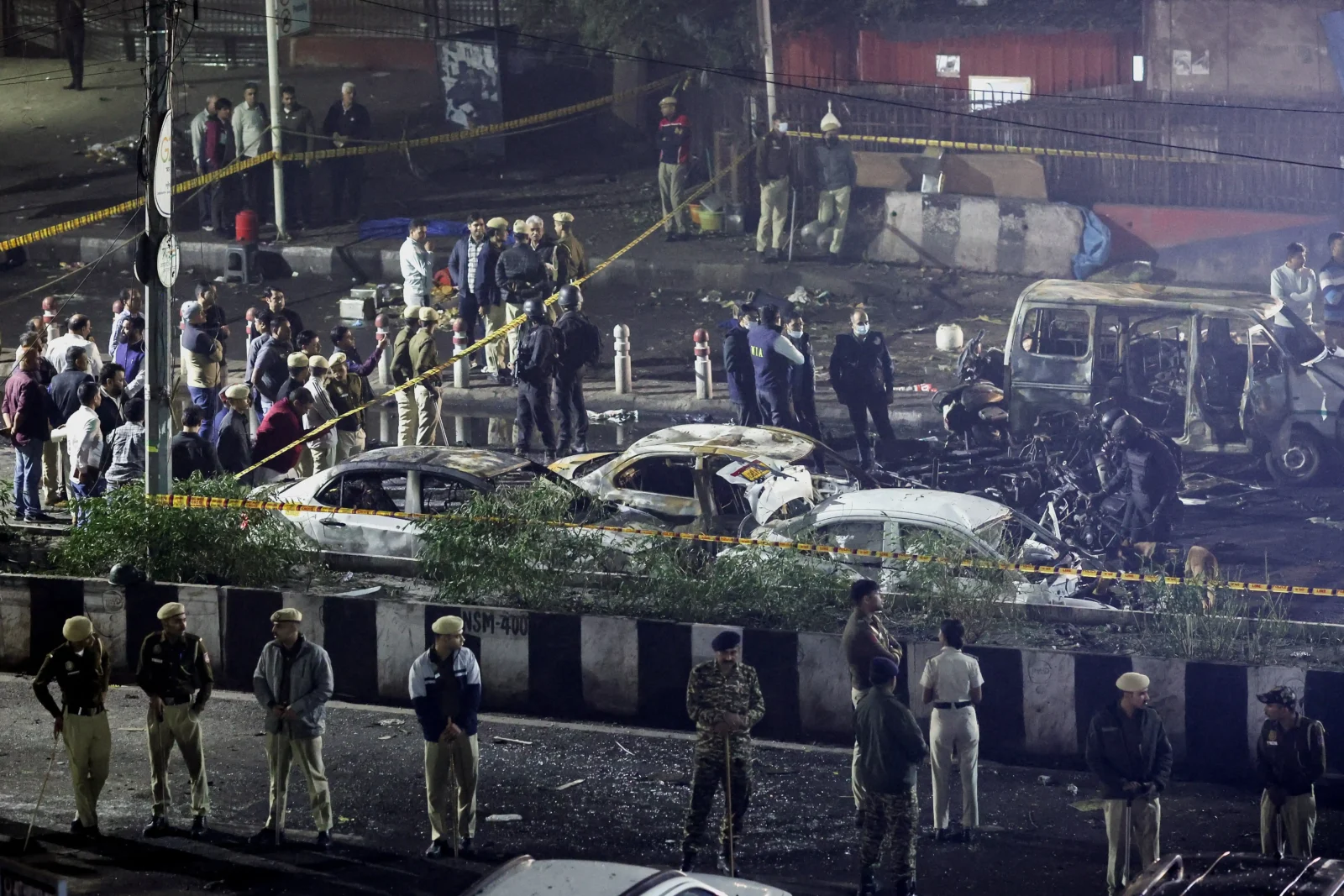

The recent low intensity blast near the Red Fort has reignited concerns about urban security preparedness and coordination between intelligence units across Delhi NCR and surrounding smaller towns. While the incident caused limited physical damage, it has exposed deep gaps in how India’s cities and adjoining districts handle early threat detection and crowd area monitoring.
Why the Red Fort blast matters beyond Delhi
The Red Fort is not just a heritage monument; it is one of India’s highest security zones and a symbolic site for national events. Any breach or explosion in its vicinity instantly becomes a matter of national concern. Security agencies have treated the blast as a localized incident but acknowledged that its origin may lie outside Delhi. This points to a recurring pattern in India’s security grid, where small town or rural links often go unnoticed until an incident reaches a high profile location. The Delhi Police, National Security Guard, and Intelligence Bureau are now jointly assessing whether the materials used were assembled in nearby industrial zones, possibly from Tier 2 peripheries like Ghaziabad, Sonipat, or Aligarh, where monitoring capacity is thinner.
Rising interconnectivity and shifting threat zones
Over the past decade, Delhi NCR has merged physically and economically with its surrounding districts. Improved highways, logistics corridors, and digital communication have blurred the traditional urban rural divide. However, security surveillance has not kept pace. While Delhi’s core is heavily covered by CCTV networks and police patrols, the same cannot be said for satellite towns that act as manufacturing and warehousing extensions. These semi urban areas often lack coordinated intelligence sharing. This imbalance allows potential threats to move across district boundaries before being noticed. Security officials have admitted that the majority of explosive materials seized in past cases originated from peripheral towns where industrial waste and chemicals are poorly regulated.
Infrastructure growth versus security readiness
Rapid infrastructure expansion around Delhi NCR has outpaced the growth of policing and emergency systems. Urban planning often focuses on mobility and housing but neglects surveillance and risk assessment. Towns like Faridabad, Bahadurgarh, and Meerut are growing industrially but rely on outdated police communication networks. The Red Fort incident exposes how quickly incidents in these regions can ripple into national capital territory zones. Experts suggest integrating regional command centers, shared intelligence dashboards, and unified crisis response systems to bridge this gap. A coordinated mechanism similar to the National Disaster Response Framework is needed for urban security management across NCR.
The technology and manpower mismatch
Urban security in India still leans heavily on physical presence rather than predictive intelligence. While AI enabled CCTV analytics, drone monitoring, and real time data fusion are being tested in metropolitan centers, smaller cities lag behind. Local police forces often lack trained personnel to analyze surveillance data. The Red Fort blast investigation has once again highlighted the importance of fusing technology with local intelligence networks. A practical fix would be to train police stations in Tier 2 cities to use basic digital forensics and integrate them into national threat databases. Without this, rural and semi urban intelligence gaps will persist, creating vulnerabilities around every major city.
Community awareness and local vigilance
Security is not only about enforcement but also about public alertness. In small towns surrounding Delhi, awareness programs are minimal, and reporting channels are often unclear. Many residents hesitate to inform authorities about suspicious movements due to fear of inconvenience or retaliation. The Red Fort blast reminds us that early warnings often come from ordinary citizens. Implementing anonymous reporting hotlines and community coordination cells in NCR districts could dramatically improve prevention efforts. Public vigilance campaigns must evolve from occasional advisories to sustained civic education on identifying and reporting potential threats.
The need for a regional security doctrine
Delhi NCR’s unique geography makes it more than a city—it is a cluster of interconnected municipalities spread across multiple states. This administrative fragmentation weakens unified responses to emerging risks. The current system treats urban and rural policing separately, but threats today are borderless. A regional doctrine must outline shared jurisdiction, rapid coordination protocols, and joint training between Delhi Police, Haryana Police, and Uttar Pradesh Police. The Ministry of Home Affairs is reportedly reviewing proposals to strengthen NCR-wide data exchange systems, a step long overdue.
Takeaways
• The Red Fort blast underscores the growing risk from urban rural security gaps across NCR.
• Industrial peripheries and small towns often serve as weak links in the surveillance chain.
• Technology deployment and inter agency coordination must evolve faster than infrastructure growth.
• Public vigilance and local intelligence sharing remain vital for early threat detection.
FAQs
Q1. What caused the recent blast near the Red Fort?
Preliminary investigations suggest a low intensity improvised explosive device was triggered near the monument. Authorities are still verifying its source and intent, but early signs point to locally sourced materials.
Q2. Why are smaller towns relevant in urban security incidents?
Many logistical and industrial activities supporting Delhi are based in neighboring towns. Weak oversight in these areas makes them potential transit points for unmonitored materials or movements.
Q3. How can authorities improve coordination across Delhi NCR?
Creating a regional command framework, common data intelligence system, and standardized communication protocol between state forces can ensure faster response and better information flow.
Q4. What role can citizens play in preventing such incidents?
Public cooperation through prompt reporting of suspicious activity, participation in local safety programs, and community watch networks can provide early warnings that technology alone may miss.