
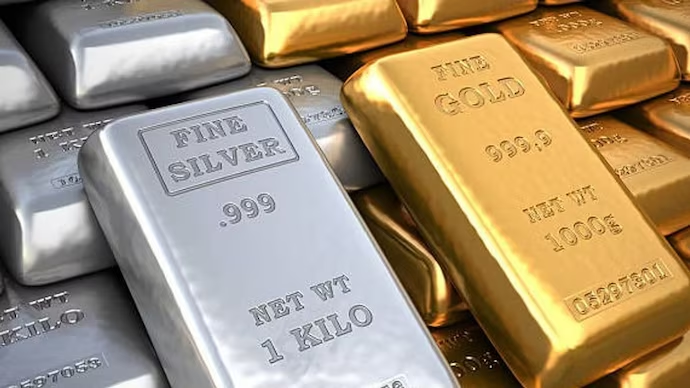

Gold and silver rate movements influence savings decisions for small investors, and understanding these shifts helps determine when to buy or sell. The main keyword appears naturally here. This guide breaks down price drivers, market signals and practical timing strategies relevant for household level investing.
Key factors behind gold and silver price changes (rate volatility drivers)
Gold and silver prices move due to a mix of global economic sentiment, currency strength, interest rate trends and domestic demand patterns. When inflation increases or markets face uncertainty, investors shift toward gold as a safe asset. This pushes prices higher. Silver follows some of the same patterns but also reacts to industrial demand from electronics and solar sectors. A strong dollar typically softens precious metal prices because global traders require fewer dollars to buy the same quantity. For Indian investors, the rupee exchange rate adds another layer, because a weaker rupee automatically raises local buying prices. Festivals and wedding seasons also influence retail demand and create short term spikes. Understanding these factors helps small investors separate temporary noise from meaningful long term signals.
How to read daily and weekly price charts for decision making (technical signals for beginners)
Small investors often rely on headline prices without checking deeper trends. Daily and weekly charts provide clearer insights. Support and resistance levels show where prices repeatedly stabilise or reverse. If gold consistently moves above a resistance level, it often signals sustained upward momentum. When prices fall below support, the trend may weaken. Moving averages like 10 day and 30 day indicators help identify direction. If short term averages cross above long term averages, buying sentiment is strengthening. Silver charts behave more sharply because silver is more volatile, so investors should follow longer ranges like 30 day trends instead of reacting to single day swings. Chart reading does not require professional tools. Most financial apps display simplified versions that small investors can understand with minimal effort.
When small investors should consider buying precious metals (buying zone assessment)
Buying gold or silver without timing often leads to higher entry costs. Investors with limited budgets should observe two triggers. First, during global uncertainty or domestic inflation concerns, gold tends to rise gradually. Buying early in such cycles allows better hedging. Second, periodic corrections create good buying zones. A correction is usually a price drop of around 2 to 5 percent caused by profit booking rather than fundamental weakness. Investors should also consider staggered buying. Purchasing small quantities across multiple weeks reduces the impact of short term spikes. For silver buyers, industrial trends matter. If manufacturing growth slows, silver prices often soften, creating an opportunity. Household investors should avoid bulk buying during festival peaks because prices usually inflate due to retail demand. Instead, planning purchases before or after peak seasons provides better value.
When to sell gold or silver for maximum advantage (exit strategy basics)
Timing exits requires equal attention. Gold usually moves in longer cycles and reacts to central bank policies or economic tension. Investors should consider selling when prices show repeated failure to break key resistance levels or when inflation stabilises and equity markets improve. These signals often indicate weaker future demand. Silver holders should watch industrial data. When production output and electronics demand rise, silver strengthens, making it a better time to hold. When industrial sentiment cools, silver may fall faster than gold, suggesting earlier exits. Profit targets help small investors make disciplined decisions. For example, setting a target of 8 to 12 percent gain for short term holdings prevents emotional trading. Long term holders should review annually, especially if financial goals change or better investment options appear.
Risks small investors must evaluate before buying or selling (market risk considerations)
Precious metals are relatively stable but still carry risks. Gold is less volatile but can stagnate during strong equity markets, making it unsuitable for aggressive growth seekers. Silver is more volatile and can produce sharp losses if bought at the wrong time. Liquidity is generally strong for both metals, but resale values vary across jewellers and regions. Investors should factor in making charges on jewellery because these costs are not recovered during resale. Coins and bars offer cleaner exits because purity and weight are standardised. Digital gold and exchange traded funds provide transparent pricing but require understanding of storage rules or expense ratios. Evaluating these risks ensures smarter timing decisions and avoids unexpected losses.
Takeaways
• Price trends depend on inflation, currency movement and demand patterns
• Chart signals like support and resistance help identify buy and sell zones
• Staggered buying lowers risk for small investors with limited budgets
• Silver moves faster than gold and requires careful trend monitoring
FAQs
How can small investors track gold and silver prices accurately
They can use financial apps or commodity sections of trading platforms that display real time rates along with simple charts.
Is silver a better buy than gold for short term investment
Silver can offer quicker moves but carries higher volatility. It is suitable only if investors can tolerate sharp swings.
What is the safest way to buy gold for investment purposes
Coins, bars and digital gold provide better transparency than jewellery because there are no making charges and resale values are clearer.
When is the right time to sell gold held for many years
Selling is ideal when prices approach long term resistance zones or when the investor has met a financial goal.