
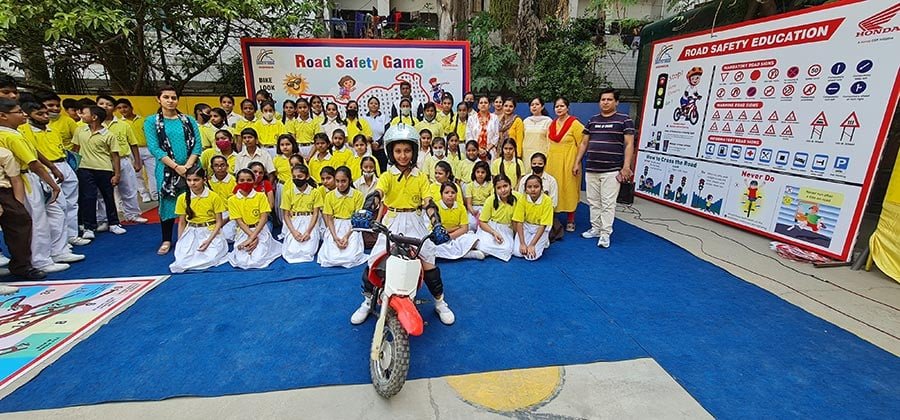

The national road safety awareness drive has been launched with a renewed focus on school students, aiming to build early habits around traffic discipline and safe mobility. Tier two classrooms are now central to this effort as authorities push structured road safety education beyond metros.
This topic is time sensitive as the drive is currently being rolled out nationwide. The tone follows a news reporting style with explanatory context.
What the National Road Safety Awareness Drive Involves
The national road safety awareness drive is a coordinated initiative focused on reducing road accidents through education, behavior change and early intervention. The current phase places special emphasis on students from middle school to senior secondary levels.
Instead of one time lectures, the drive introduces repeated exposure to road safety concepts. These include pedestrian safety, helmet use, seat belt awareness, safe cycling practices and understanding traffic signals. The aim is to normalize safe behavior before students become drivers or frequent independent commuters.
Educational authorities are aligning classroom activities with national road safety goals to ensure consistency across states.
Why Tier Two Classrooms Are a Priority
Tier two cities record a growing share of road accidents due to rising vehicle ownership and rapid urban expansion. Infrastructure often lags behind traffic growth, increasing risk for young commuters.
Students in these cities are more likely to walk, cycle or use shared transport to reach schools. This makes them vulnerable road users. By targeting classrooms early, the drive aims to reduce accident exposure at the most basic level.
Tier two schools also offer scalability. A single program can influence entire communities through students acting as information carriers at home.
How Road Safety Is Being Taught in Schools
The road safety awareness drive uses age appropriate methods rather than generic messaging. Primary students learn through visuals, role play and simple rules like safe road crossing. Middle school students are introduced to traffic signs, right of way concepts and helmet importance.
Senior students receive more detailed input on legal responsibilities, penalties and real life accident scenarios. Interactive sessions, quizzes and simulated road layouts are used to reinforce learning.
Teachers are provided structured modules so road safety lessons are not dependent on external volunteers alone.
Role of Local Authorities and Police Departments
Local traffic police play a key role in implementing the drive at the school level. Officers conduct classroom sessions, demonstrations and campus walkthroughs to show practical application of rules.
In many tier two cities, police departments coordinate with school administrations to schedule recurring visits rather than one off events. This builds familiarity and credibility among students.
Some districts also involve transport departments to explain licensing rules and vehicle safety standards to older students.
Use of Digital Tools and Learning Material
Digital tools are increasingly part of the road safety awareness drive. Short videos, animated explainers and mobile friendly content are used to maintain attention.
In tier two schools with limited digital infrastructure, printed charts and posters are distributed. These visuals remain displayed long after sessions end, reinforcing daily recall.
Some schools integrate road safety topics into morning assemblies and project work, ensuring repetition across the academic year.
How Students Influence Household Road Behavior
One of the most effective outcomes of the drive is indirect behavior change at home. Students often question unsafe practices they observe, such as riding without helmets or jumping signals.
Parents in tier two cities report increased awareness due to children sharing classroom learnings. This creates peer pressure within households to follow rules.
This bottom up influence model is a key reason why classrooms are being prioritized over mass media campaigns alone.
Challenges in Reaching All Tier Two Schools
Despite progress, challenges remain. Some schools face scheduling constraints due to academic pressure. Others lack trained teachers to deliver safety modules consistently.
Language diversity also affects messaging. Road safety content must be adapted to local languages and contexts to be effective.
Authorities are addressing these gaps through standardized material and teacher orientation programs, but coverage remains uneven in some regions.
Long Term Impact Expected from the Drive
The long term goal of the national road safety awareness drive is to reduce accident rates by shaping responsible road users over time. Immediate impact may not be visible, but behavior change compounds over years.
Students trained today will become drivers, riders and pedestrians tomorrow. Embedding safety thinking early reduces future enforcement burden and accident response costs.
Tier two cities stand to gain significantly as traffic volumes continue to rise.
How Schools Can Strengthen Participation
Schools that integrate road safety into regular curriculum activities see better retention. Linking lessons with real world observation assignments increases engagement.
Encouraging students to track unsafe spots around their school helps connect theory with daily experience. Recognition for road safety ambassadors within schools also boosts participation.
These small steps improve the effectiveness of the drive at the ground level.
Takeaways
Road safety education is now reaching tier two classrooms systematically
Students are learning age appropriate traffic and safety rules
Classroom learning is influencing household road behavior
Early education is key to long term accident reduction
FAQ
Which students are covered under the road safety awareness drive
The drive typically targets students from primary to senior secondary levels.
Are these sessions mandatory for all schools
Implementation varies by state, but most government and aided schools are included.
How often are road safety sessions conducted
Many schools conduct recurring sessions rather than one time programs.
Does this replace traffic fines and enforcement
No, education complements enforcement by reducing risky behavior early.