
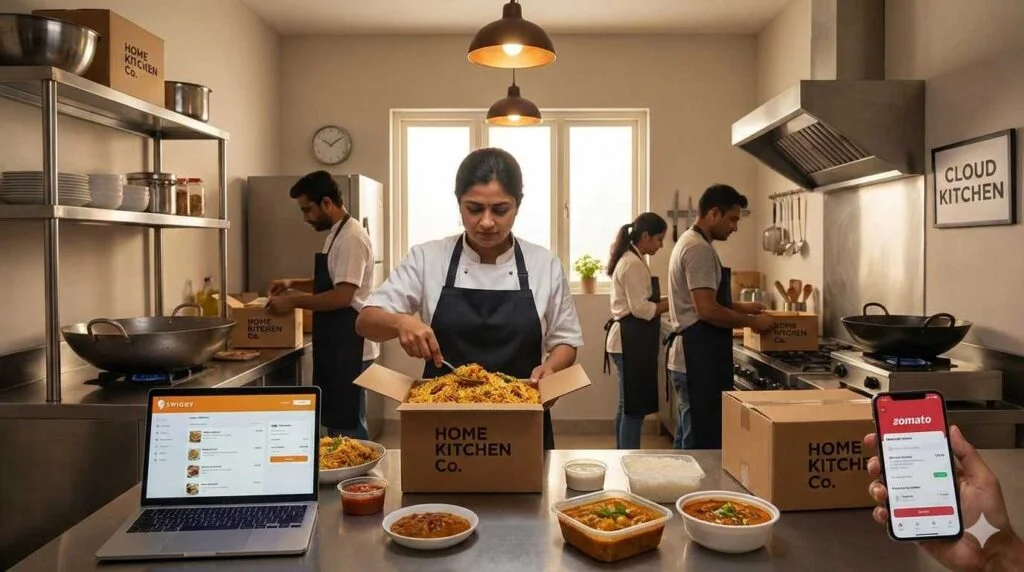

Starting a low investment cloud kitchen from home has become a practical business option in Tier-2 cities where demand for online food delivery is rising steadily. With limited setup costs and access to platforms, individuals can launch food brands without opening a full restaurant.
Why Cloud Kitchens Are Growing in Tier-2 Cities
The low investment cloud kitchen model works especially well in Tier-2 cities due to lower rentals and increasing smartphone penetration. This topic is evergreen with strong business relevance as food delivery habits continue to expand beyond metros.
Platforms like Swiggy and Zomato have widened their reach into smaller cities, bringing consistent order volumes even in non-metro areas. Consumers are also shifting towards convenience, especially among working professionals and students.
Unlike traditional restaurants, cloud kitchens eliminate dine-in costs. This allows operators to focus entirely on food quality, packaging, and delivery efficiency.
Initial Setup Cost and Budget Planning
The cloud kitchen startup cost in Tier-2 cities can start as low as ₹50,000 to ₹2 lakh depending on scale and cuisine.
Key expenses include kitchen equipment, raw materials, packaging, and basic branding. If you already have a functional home kitchen, costs reduce significantly. Gas stove, utensils, refrigerator, and storage units form the core setup.
Licenses are another cost component. You need FSSAI registration, which is mandatory for any food business in India. Basic registration is affordable and can be completed online.
Keeping the menu focused in the beginning helps control inventory costs and reduces wastage.
Licenses and Legal Requirements for Cloud Kitchen
Cloud kitchen licenses in India are straightforward but essential for compliance.
FSSAI registration is mandatory even for home-based kitchens. Depending on turnover, you may need basic registration or a state license. In addition, a local municipal trade license may be required in some cities.
GST registration is applicable if your annual turnover crosses the prescribed threshold or if you operate through food delivery platforms, as they often require GST compliance.
Fire safety and hygiene standards must be maintained, especially if you scale operations. Following these rules helps build long-term credibility.
Choosing the Right Menu and Target Audience
Menu selection is critical in determining success. The cloud kitchen business model depends heavily on repeat orders and customer satisfaction.
Focus on high-demand categories such as biryani, North Indian meals, Chinese fast food, or regional specialties. In Tier-2 cities, affordability and portion size matter more than premium positioning.
Test your menu within your local area before listing online. Feedback from initial customers helps refine taste and pricing.
Niche concepts like healthy meals, homemade tiffin services, or late-night snacks also perform well in cities with student populations.
Partnering with Food Delivery Platforms
Listing your cloud kitchen on Swiggy or Zomato is essential for scaling orders.
These platforms handle logistics, allowing you to focus on food preparation. However, they charge commissions which can impact margins. Pricing strategy must account for these deductions.
High-quality photos, clear descriptions, and good ratings improve visibility on these apps. Timely delivery and consistent taste lead to better reviews, which directly impact order volume.
You can also accept direct orders through WhatsApp or local delivery networks to improve profit margins.
Marketing Strategies for Cloud Kitchens in Small Cities
Cloud kitchen marketing in Tier-2 cities relies more on local reach than heavy digital spending.
Start with WhatsApp groups, local Instagram pages, and word-of-mouth promotion. Offering discounts during the launch phase helps attract first-time customers.
Collaborating with local influencers or food bloggers can give an initial push. Packaging also plays a role in branding, even for home kitchens.
Repeat customers are the backbone of this business. Loyalty offers and consistent quality help retain them.
Takeaways
• Cloud kitchens offer a low investment entry into the food business in Tier-2 cities
• Starting cost can be as low as ₹50,000 with a home kitchen setup
• FSSAI registration and platform partnerships are essential for operations
• Focused menu and local marketing drive consistent orders and growth
FAQs
Q1. How much investment is needed to start a cloud kitchen from home?
It can start from around ₹50,000 and go up depending on equipment and scale.
Q2. Is FSSAI license mandatory for home cloud kitchens?
Yes, any food business in India must have at least basic FSSAI registration.
Q3. Can I run a cloud kitchen without Swiggy or Zomato?
Yes, but these platforms significantly increase reach and order volume.
Q4. Which food items sell best in Tier-2 cities?
Affordable and filling options like biryani, thalis, and fast food items perform consistently well.