
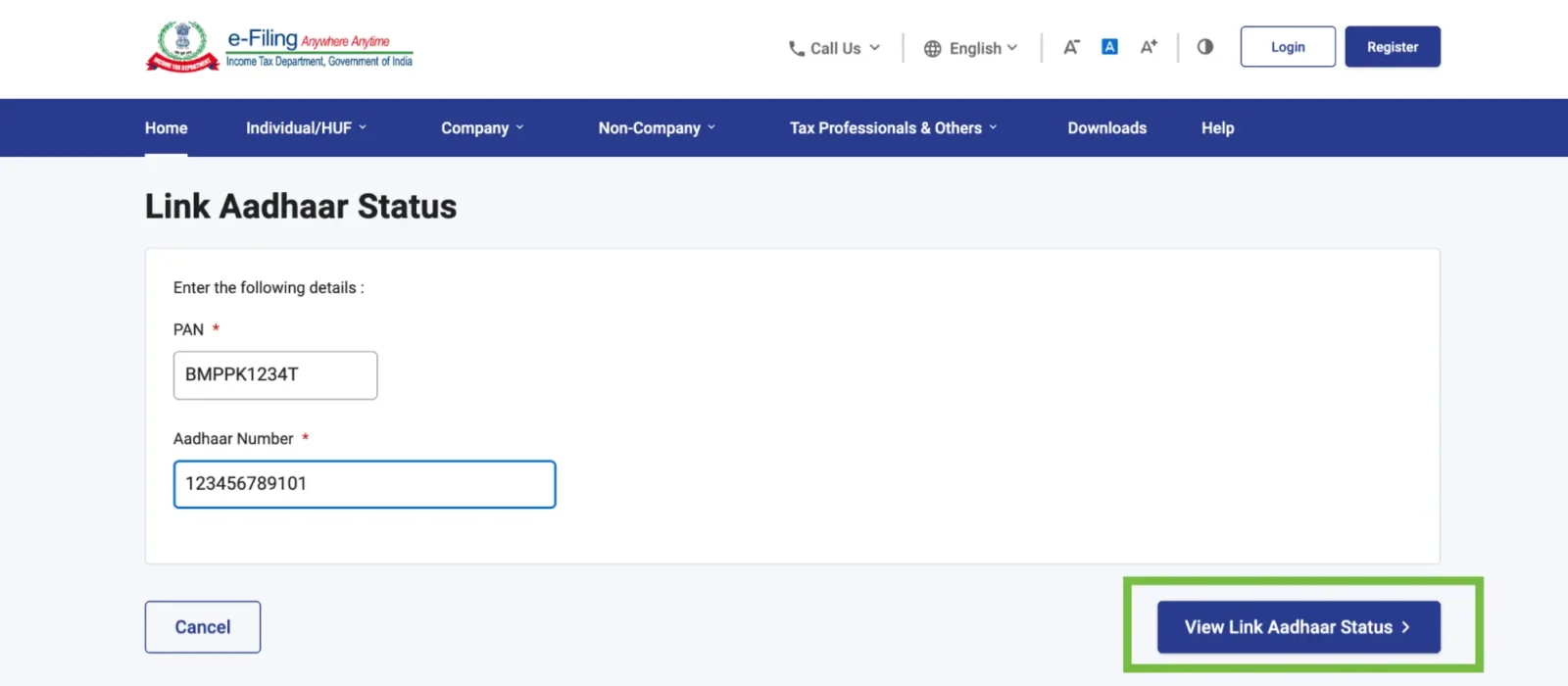

Checking your PAN, Aadhaar, and bank KYC status before applying for a loan, credit card, investment account, or other financial service can help prevent unnecessary delays or rejection. This guide explains how to verify each document, understand common issues, and ensure your records are ready for financial applications.
Financial institutions across India rely on PAN, Aadhaar, and bank KYC status to verify an applicant’s identity before processing financial applications. Whether you are applying for a personal loan, opening a demat account, investing in mutual funds, or requesting a new credit card, incomplete or outdated KYC details can slow down the process.
This is an evergreen informational topic. While the exact online portals and verification methods may receive updates over time, the overall process and regulatory requirements remain consistent under the guidelines of the Income Tax Department, UIDAI, RBI, and financial institutions.
Why PAN, Aadhaar and KYC Verification Matters
Banks, NBFCs, insurance companies, and investment platforms are required to verify customer identity before offering financial services. This process is known as Know Your Customer (KYC).
A successful KYC verification helps institutions:
- Confirm your identity
- Prevent fraud and identity theft
- Comply with RBI and anti-money laundering regulations
- Process applications more quickly
If your PAN is inactive, Aadhaar details do not match, or bank KYC is pending, your application may be delayed or require additional documentation.
Step 1: Check Your PAN Status
Your Permanent Account Number (PAN) is one of the most important financial identity documents in India.
Before applying for any financial product, verify that:
- Your PAN is active.
- Your name and date of birth are correct.
- Your PAN is linked with Aadhaar wherever applicable under current tax regulations.
You can verify PAN details through the Income Tax Department’s official online services using your PAN number.
If your PAN has become inoperative because it was not linked with Aadhaar within the applicable deadline, certain financial transactions may face restrictions until the issue is resolved according to prevailing government rules.
It is also advisable to ensure that the spelling of your name exactly matches your Aadhaar and bank records.
Step 2: Verify Your Aadhaar Details
Aadhaar is widely used as an identity and address proof across banks, investment companies, telecom providers, and government services.
Before submitting any financial application, confirm:
- Aadhaar number is active.
- Mobile number is linked.
- Name matches your PAN.
- Date of birth is correct.
- Address is updated if you have recently moved.
The UIDAI self-service portal allows users to view Aadhaar information after OTP authentication.
Keeping your mobile number updated is especially important because many financial institutions use Aadhaar-based OTP verification during online onboarding.
If any information is incorrect, update it before beginning your application to avoid verification failures.
Step 3: Check Your Bank KYC Status
Most banks periodically ask customers to update KYC documents.
If your account has not been updated for several years, you may receive notifications requesting fresh identity or address proof.
You can usually check your KYC status through:
- Internet banking
- Mobile banking app
- Bank branch
- Customer care
Some banks display messages such as:
- KYC Updated
- Re-KYC Required
- KYC Pending
- Documents Expired
If re-KYC is required, submit the requested documents promptly. Banks generally accept officially valid documents such as Aadhaar, Passport, Voter ID, Driving Licence, or other documents permitted under RBI guidelines.
Completing KYC before applying for financial products helps avoid delays during verification.
Common Reasons for Verification Failure
Many applicants face delays because the information across documents does not match.
Some common issues include:
- Different spellings of the name
- Different dates of birth
- Old residential address
- Unlinked Aadhaar mobile number
- PAN not linked where required
- Expired or incomplete KYC records
- Incorrect gender or marital status in records
Even a small mismatch can require manual verification, increasing processing time.
Review all personal details carefully before submitting any application.
Financial Applications That Require KYC Verification
KYC verification is commonly required for:
- Personal loans
- Home loans
- Education loans
- Credit cards
- Savings accounts
- Current accounts
- Mutual funds
- Demat and trading accounts
- Fixed deposits
- Insurance policies
- Digital wallets
- Gold loans
Many fintech platforms also complete digital KYC using Aadhaar authentication and PAN verification.
Keeping all documents updated allows these services to process applications more efficiently.
Tips to Keep Your Financial Documents Ready
Maintaining updated records throughout the year is better than waiting until you need a loan or investment account.
Useful practices include:
- Keep scanned copies of PAN and Aadhaar securely stored.
- Update your address after shifting residence.
- Ensure your registered mobile number remains active.
- Check bank notifications regarding KYC updates.
- Verify that names are identical across all official documents.
- Respond promptly if your bank requests document renewal.
These simple checks can reduce paperwork and improve the chances of faster approval.
Takeaways
- Verify that your PAN is active and linked with Aadhaar wherever required under current regulations.
- Ensure Aadhaar details, including your mobile number and personal information, are accurate and up to date.
- Check your bank’s KYC status before applying for loans, investments, or new financial products.
- Matching information across PAN, Aadhaar, and bank records helps avoid delays and verification issues.
Frequently Asked Questions
Q1. Is PAN verification mandatory for financial applications?
Yes. PAN verification is required for many financial products, including loans, investments, credit cards, and high-value banking transactions.
Q2. How can I know if my bank KYC is pending?
Most banks display your KYC status through internet banking, mobile banking apps, SMS notifications, or at the branch. You can also contact customer support.
Q3. Can I apply for a loan if my Aadhaar details are outdated?
You may still be able to apply, but incorrect or outdated Aadhaar information can delay digital verification and document approval.
Q4. Why should names match across PAN, Aadhaar and bank records?
Matching details reduce verification errors and speed up identity checks during financial applications.