
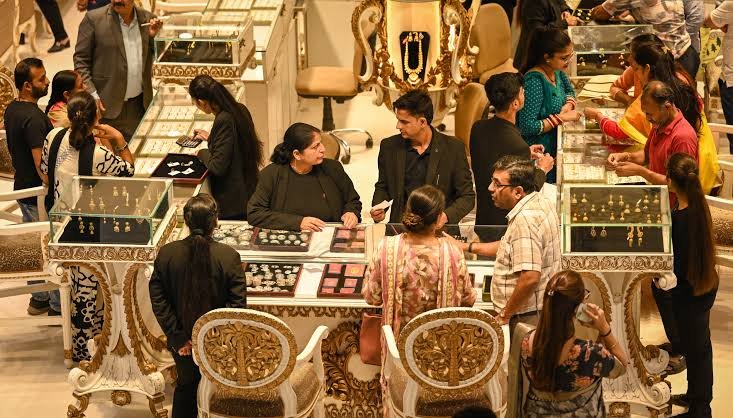

Gold and silver prices can change frequently, while the final jewellery bill also includes purity, weight, making charges, taxes and other costs. Checking the latest gold and silver rates before shopping helps buyers understand the actual price and compare jewellery quotes more accurately.
Why You Should Check Gold and Silver Prices First
The gold or silver rate displayed by a jeweller is only one part of the final price. Jewellery is generally priced according to the precious metal’s purity and weight, along with making charges and applicable taxes.
This is why two jewellery pieces with similar designs can have noticeably different final prices.
Gold rates are also reported separately for different purities. For example, 24K gold has a higher fineness than 22K gold, which is commonly used for jewellery. BIS recognises gold jewellery fineness grades including 14K, 18K, 20K, 22K, 23K and 24KS 995.
Silver jewellery can also carry different purity markings. BIS standards recognise silver fineness grades including 800, 835, 900, 925, 970 and 990.
Before visiting a jewellery store, therefore, buyers should check the relevant market rate and understand which purity they are actually purchasing.
How to Check Today’s Gold and Silver Rates
The easiest approach is to compare rates from reliable industry or financial sources rather than relying on a single social media post or forwarded message.
The Indian Bullion and Jewellers Association, commonly known as IBJA, is one source frequently used for published bullion rates. Financial publications also regularly report 24K, 22K and other gold rates alongside silver prices.
However, a bullion rate should not automatically be treated as the final retail jewellery price.
Recent Indian market reports have shown that gold and silver rates can move significantly over relatively short periods. For example, gold and silver prices reported in August and September 2026 reflected movements in both domestic and international markets.
When checking a rate, note three things:
- The date and time of the quoted price
- The purity or fineness being quoted
- Whether the figure is a bullion rate or a retail jewellery rate
This prevents one of the most common mistakes: comparing a jeweller’s retail rate with a different purity or wholesale reference price.
Understand 24K, 22K and 18K Gold Prices
Gold purity directly affects the amount of pure gold contained in jewellery.
24K gold represents very high-purity gold and is generally associated with bullion and investment products rather than most everyday jewellery. 22K gold is widely used for traditional jewellery because it combines high gold content with greater durability than very high-purity gold.
18K gold contains less gold and a higher proportion of other metals. It is commonly used for certain jewellery designs, including pieces that require greater hardness.
When comparing prices, never compare a 22K jewellery rate with a 24K bullion rate and assume the cheaper number represents a better deal.
For example, if one shop quotes a rate for 22K gold and another quotes 18K gold, the numbers cannot be compared directly without accounting for purity.
BIS states that hallmarking records the proportion of precious metal in an article and provides an official indication of purity or fineness.
Check the Hallmark and HUID Before Buying Gold
Checking the gold price is only one part of the buying process. Buyers should also verify the jewellery’s hallmark.
Under India’s hallmarking system, hallmarked gold jewellery carries three key marks: the BIS logo, the purity or fineness mark and a six-digit alphanumeric Hallmark Unique Identification number, commonly called HUID. BIS says customers can verify the HUID through the Verify HUID feature in the BIS Care App.
For example, a 22K gold article may carry a fineness marking of 916, indicating 916 parts of gold per thousand.
A buyer should physically inspect the hallmark rather than simply accepting a verbal assurance from the seller.
BIS also says registered jewellers should provide customers access to a magnifying glass of at least 10X magnification to inspect hallmark details and a weighing balance with 0.01 gram accuracy for verification of jewellery weight.
Compare the Gold Rate With the Jewellery Bill
Once you know the day’s rate, ask the jeweller to explain how the final amount has been calculated.
A jewellery bill can include several components:
- Gold or silver value based on net precious-metal weight
- Making charges
- Wastage or other applicable charges, where disclosed
- Applicable taxes
- Charges associated with stones or other materials, where relevant
The key figure to examine is the net precious-metal weight, particularly when the jewellery contains stones, beads or other non-metal components.
BIS consumer guidance says bills for hallmarked precious-metal articles should include the description of each article, net weight of the precious metal, purity in carat and fineness, and hallmarking charges.
This information makes it easier to understand what you are actually paying for.
Why Making Charges Can Change the Final Price
Two jewellers can quote similar gold rates but produce different final bills because their making charges may differ.
Making charges can depend on the design, craftsmanship, manufacturing process and jewellery category. A highly detailed piece may cost more to manufacture than a simple chain even when both use the same purity of gold.
This is why shoppers should compare the complete bill rather than focusing only on the per-gram gold rate.
Suppose two shops quote a similar 22K gold rate. One may offer a lower making charge while the other may quote a higher charge but provide a different design or service package.
The correct comparison is therefore the final price for the same or comparable weight, purity and design.
How to Check Silver Jewellery Prices
Silver buyers should follow a similar process.
First, check the current silver bullion rate. Then confirm the fineness of the jewellery being offered.
For example, 925 silver contains 925 parts silver per thousand. Other recognised BIS silver grades include 800, 835, 900, 970 and 990.
The jewellery’s weight and purity should be clearly reflected in the documentation.
Silver jewellery can also involve making charges and other costs, so the market price of silver alone does not tell you what the finished product should cost.
For larger purchases, buyers can compare the quoted silver rate, net silver weight and final invoice across more than one jeweller.
Check the Bill Before Making Payment
Do not treat the invoice as a formality.
Before paying, check whether the bill clearly identifies the jewellery item and provides the important details required for a hallmarked precious-metal purchase.
BIS specifically advises consumers to obtain an authentic bill or invoice for hallmarked articles. It also states that invoice details are important in case of disputes, misuse or complaint resolution.
Check the following:
- Jewellery description
- Net precious-metal weight
- Purity and fineness
- Applicable charges
- Hallmarking details
- Final payable amount
If the jewellery contains gemstones, ask how their weight and value have been calculated separately from the precious-metal weight.
Should You Wait for Gold or Silver Prices to Fall?
Checking prices does not mean trying to predict the exact day when gold or silver will become cheaper.
Precious-metal prices can respond to international market movements, currency movements, interest-rate expectations, geopolitical developments and changes in investment demand. Recent market coverage has shown periods of sharp movement in both gold and silver.
For someone buying jewellery for a wedding, festival or personal use, the more practical approach is to establish a clear budget, compare current rates from reliable sources and examine the complete jewellery quotation.
Trying to time the market based on social media predictions can be misleading.
A Simple Gold and Silver Buying Checklist
Before leaving for the jewellery shop, check the current rate and note the purity you intend to buy.
At the store, verify the hallmark, HUID where applicable, purity and net weight. Ask for a clear breakup of the price rather than accepting only a final figure.
Compare at least two quotations when the purchase is substantial. The comparison should use the same purity and a similar design or weight.
Finally, collect and preserve the original invoice. It provides important information about the purchase and can be useful if a dispute arises later.
Key Takeaways
- Check the latest gold or silver rate and confirm the purity before comparing jewellery prices.
- Gold and silver jewellery prices include more than the underlying metal rate, so examine the complete bill.
- For hallmarked jewellery, check the BIS hallmark, purity or fineness and HUID where applicable.
- Always obtain a detailed invoice showing the jewellery description, net precious-metal weight, purity and applicable charges.
Frequently Asked Questions
How can I check today’s gold price before buying jewellery?
You can check current bullion rates from reliable industry and financial sources, including published IBJA rates, and then compare them with the retail rate quoted by the jeweller. Always check the date, time and purity of the quoted rate.
Is the gold rate shown online the final jewellery price?
No. The final jewellery bill can include the precious-metal value, making charges, applicable taxes and other disclosed costs. A bullion rate should therefore not be treated as the final retail price.
What should I check on hallmarked gold jewellery?
Look for the BIS logo, purity or fineness marking and the six-digit alphanumeric HUID. BIS says customers can use the Verify HUID feature in the BIS Care App to verify HUID details.
What should be mentioned on a jewellery bill?
For hallmarked precious-metal articles, BIS consumer guidance says the bill should include the article description, net precious-metal weight, purity in carat and fineness, and hallmarking charges.