
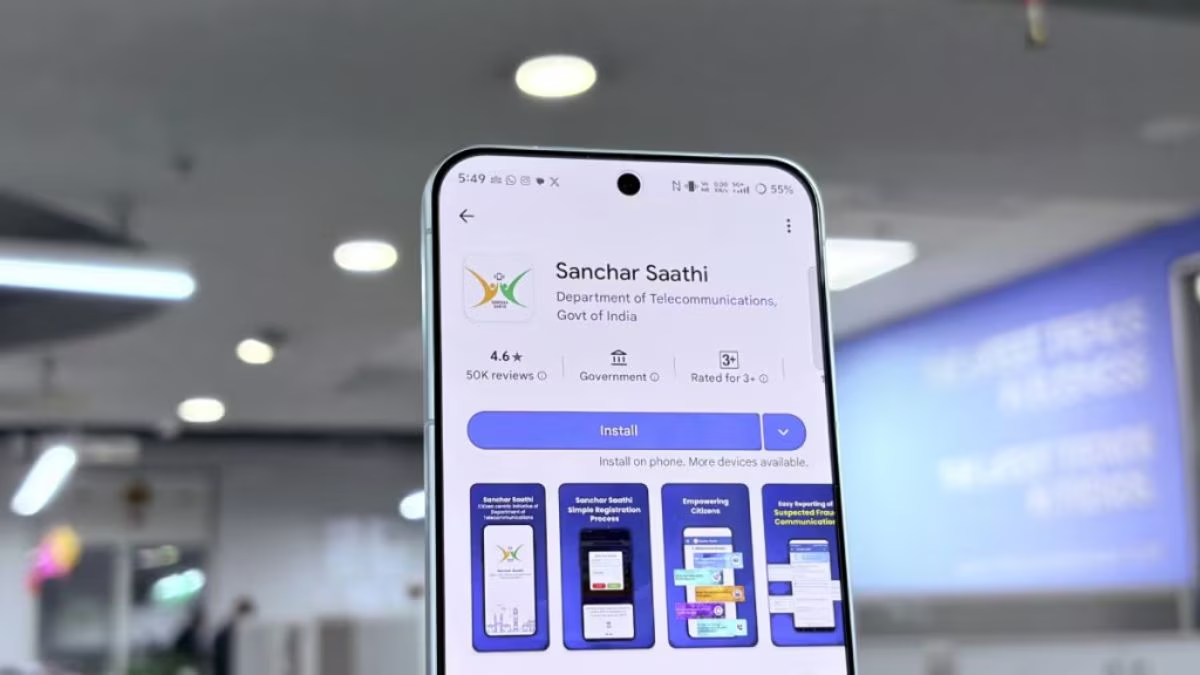

The Sanchar Saathi policy flip has raised a new question among buyers: are budget smartphones safer now that mandatory pre installed apps are no longer required? The rollback changes how manufacturers handle software on low cost devices and affects how consumers evaluate privacy.
Why the Sanchar Saathi reversal matters for budget smartphone buyers
Budget smartphones often come with limited storage, lower processing power and many preloaded apps. The earlier proposal requiring mandatory installation of the Sanchar Saathi app would have added another system level app that users could not remove easily. With the rule now withdrawn, manufacturers no longer need to modify software builds or add extra applications by default. For consumers, especially first time users in smaller cities, this reduces clutter and frees storage. It also avoids automatic permissions that typically accompany system apps. The change strengthens buyer expectations around cleaner software and more transparent device setup.
How the rollback affects pre installed app practices in the budget segment
Secondary keyword: bloatware reduction
Preloaded apps, or bloatware, have long been a concern in budget devices because manufacturers partner with app companies to subsidise hardware costs. Removing one mandatory app does not eliminate bloatware entirely, but it sends a strong signal that forced pre installation is not the preferred policy direction. Brands may feel increased pressure to reduce unnecessary apps to maintain trust and stay competitive. Buyers now look for “clean UI” or “near stock Android” as key features, even in entry level phones. As demand for privacy focused devices rises, companies could prioritise minimal software builds to differentiate their products.
Impact on privacy expectations for budget smartphone users
Secondary keyword: data control
Users have become more aware of data permissions and background app activity. Mandatory pre installed apps create concern because they often run continuously, access sensitive permissions and cannot be deleted. With the policy reversal, users feel more control over what stays on their device. They can choose whether Sanchar Saathi or any other government backed security tool fits their needs. The shift aligns with broader public sentiment that privacy must be optional and consent driven rather than enforced through hardware. For budget smartphone buyers who may not fully understand complex permission prompts, fewer forced apps reduce the risk of unintentional data sharing.
Why a cleaner software environment improves device security overall
Secondary keyword: system stability
Security vulnerabilities in budget devices often arise from outdated system apps, poorly maintained preloads or third party integrations that lack regular updates. Removing the requirement for a mandatory app reduces fragmentation in software builds, allowing manufacturers to keep updates more consistent. A leaner system also lowers the risk of conflicts between apps running in the background. When fewer unknown apps are embedded at the system level, users can better identify suspicious behaviour, manage permissions and maintain device hygiene. This indirectly strengthens overall device security.
How manufacturers may adjust software strategies post reversal
Secondary keyword: compliance clarity
Manufacturers planning 2025 and 2026 models will likely maintain unified global or regional builds without additional India specific system apps. This simplifies testing and speeds up updates. Some brands may highlight compliance friendly design, cleaner UI and reduced pre loads as selling points. With many consumers comparing devices on software experience, companies could prioritise transparency in permission dashboards and privacy features. The rollback also avoids confusion during sales where retailers had to explain mandatory apps, their purpose and uninstall limitations. Simplified device setup improves customer satisfaction, especially in the budget segment.
What this policy shift means for long term privacy regulation in India
Secondary keyword: consent based adoption
The reversal signals that future digital tools are likely to follow an opt in strategy rather than mandatory installation. Policymakers appear more responsive to feedback from users, civil groups and industry. This is important for budget devices, where users may not fully understand system level changes. Future initiatives may rely on awareness campaigns, improved app design and voluntary adoption rather than enforced preloads. This indicates a healthier balance between security objectives and individual choice.
Are budget smartphones genuinely safer now or only slightly improved
Secondary keyword: risk perspective
Budget smartphones become safer when the number of pre installed apps is reduced, but risk levels still depend heavily on manufacturer practices. Devices from reputable brands with regular security patches and minimal bloatware remain more reliable. Ultra low cost devices with outdated software or limited update support still pose risks. The Sanchar Saathi reversal improves privacy perception and reduces forced apps, but buyers must still evaluate device brands, update frequency and data policies. The policy shift should be seen as a positive correction, not a complete solution.
What consumers should now check before buying a budget device
Secondary keyword: buyer checklist
Buyers should examine app lists at setup, check whether preloaded apps can be uninstalled and review permission requests before granting access. Reading brand update policies helps gauge long term security. Choosing models with clean interfaces such as Android Go, One UI Core or near stock builds ensures fewer unwanted apps. Users should also monitor background data usage and disable apps that request unnecessary permissions. With the policy change favouring user control, informed decisions play a larger role in maintaining privacy.
Takeaways
Budget phones benefit from fewer mandatory pre installed apps after the rollback
Privacy improves as users gain control over system apps and permissions
Cleaner software builds enhance device stability and long term security
Buyers must still choose trusted brands and review permissions carefully
FAQs
Does the rollback mean budget smartphones now have no bloatware
No. Manufacturers may still include third party apps, but the government will not enforce additional system level apps like Sanchar Saathi.
Is Sanchar Saathi unsafe since it is no longer mandatory
The rollback is about user choice, not app security. Users can install it voluntarily if they find the features useful.
Do budget phones become more secure without mandatory preloaded apps
They become slightly more secure because fewer system apps reduce attack surfaces, but overall safety still depends on brand update policies.
What should buyers look for when choosing a budget smartphone
Minimal preloads, regular security patches, clear permission control and clean UI design.