

The surge of EV tractor startups like Moonrider signals a major shift in agricultural technology, and the main keyword EV tractor startups appears early because this article explains why these companies are turning farm machinery into a new startup playground shaped by energy efficiency, affordability and rural demand.
Electric tractors offer lower operational costs, simpler maintenance and cleaner energy usage, making them attractive to farmers facing rising diesel prices and irregular fuel availability. Startups are leveraging this opportunity to introduce modern, software driven machines that blend agriculture with advanced engineering.
Why EV Tractors Solve Long Standing Farmer Challenges
Secondary keyword: electric tractor benefits
Traditional diesel tractors involve high fuel expenses, frequent maintenance and rising operational costs. EV tractors address these issues directly. Their charging cost is significantly lower than diesel refuelling, especially in regions where solar energy is common. The reduced number of moving parts also lowers mechanical wear.
Farmers in small and medium holdings benefit most. These tractors are ideal for ploughing, hauling and inter cultivation tasks performed daily. They operate quietly, which supports use in dairy farms, poultry setups or residential fields.
Startups design modular EV tractor models that suit multiple terrains. This gives farmers flexibility without needing large investment in oversized machinery. Precision control features further reduce energy wastage.
How Startups Like Moonrider Use Tech To Build Smarter Machines
Secondary keyword: agri tech innovation
Moonrider and similar startups integrate software, IoT systems and predictive models into their tractor platforms. These features allow real time monitoring of power consumption, soil load, battery health and task efficiency. Farm operators access this data through dashboards or mobile apps.
The tractors use electric drivetrains engineered for torque heavy tasks required in Indian soils. Startups focus on battery safety, fast charging support and temperature management to ensure consistent performance across regions.
Some companies experiment with swappable battery packs, enabling farmers to extend work hours without long breaks. Smart braking systems, motor efficiency algorithms and regenerative features add further operational savings.
Lower Barriers To Adoption Attract Rural Buyers
Secondary keyword: affordable farm machinery
Diesel tractors often require high upfront investment. EV tractor startups reduce this barrier through flexible purchase models, subscription plans or pay per use systems. These models support farmers who cannot afford outright machinery ownership.
Government incentives for electric vehicles, combined with falling lithium battery costs, make EV tractors more economically attractive in the long run. When fuel savings accumulate over seasons, total cost of ownership becomes significantly lower than diesel alternatives.
Startups also partner with microfinance institutions and rural banks to offer credit access. This helps small farms invest in modern machinery without financial strain.
Why India’s Agricultural Ecosystem Encourages Startup Participation
Secondary keyword: rural tech adoption
India’s agriculture sector is undergoing digitisation through soil data platforms, crop advisory apps and precision farming tools. EV tractors fit naturally into this ecosystem by offering machine level data that integrates with broader farm management systems.
Rural connectivity improvements make it easier for farmers to adopt smart machinery. With smartphone penetration rising across Tier 2 and Tier 3 markets, farmers increasingly rely on digital dashboards, service request apps and remote diagnostics.
Startups find this a fertile ground for innovation. They are not limited by legacy manufacturing processes and can build new tractor designs from scratch using modular engineering. This agility allows them to innovate faster than traditional OEMs.
Manufacturing Shifts And Local Supply Chains Strengthen Growth
Secondary keyword: EV manufacturing ecosystem
Manufacturing EV tractors requires precision components, power electronics and specialised motors. India’s EV supply chain has expanded rapidly due to growth in two wheelers and commercial EVs. Startups now benefit from better vendor networks, improved battery production capacity and shared manufacturing clusters.
Localising components reduces costs and shortens delivery timelines. Startups often collaborate with state governments to establish small scale assembly units in rural industrial zones. This creates local jobs and strengthens the overall agricultural technology ecosystem.
Service networks also evolve around these manufacturing centres. Trained technicians support farmers with on ground servicing, ensuring reliability.
The Role Of Sustainability In Future Agricultural Mechanisation
Secondary keyword: sustainable farming machinery
EV tractors support broader sustainability goals. They reduce carbon emissions, lower soil disturbance and minimise noise pollution. This makes them suitable for farm tourism, organic farming and greenhouse operations where environmental compliance is crucial.
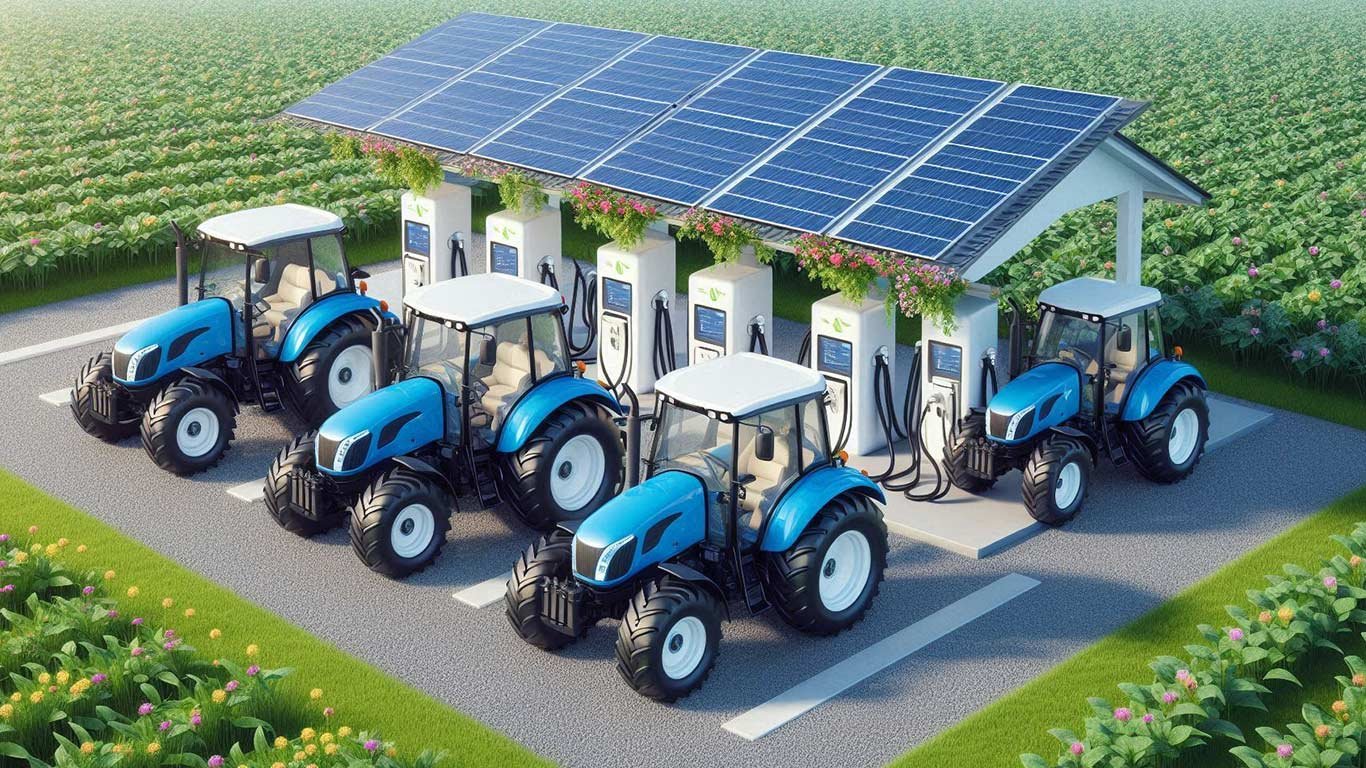
Farmers adopting solar powered charging stations gain energy independence. This combination of EV machinery and renewable power creates long term cost stability. It also aligns with national goals of cleaner energy in agriculture.
As climate conditions change, efficient energy use becomes essential. EV tractors help maintain consistent output without reliance on fluctuating fuel prices.
Challenges And Strategic Considerations For EV Tractor Startups
Secondary keyword: EV adoption challenges
Battery durability in extreme climates, charging infrastructure gaps and upfront price sensitivity remain hurdles. Farmers require assurance that EV tractors can operate reliably in muddy fields, high temperature zones and long work cycles.
Startups must invest in after sales support, warranty structures and dealer networks to build trust. Demonstration programs and field trials help farmers understand real world performance.
Another challenge is perception. Many farmers still associate tractors with high horsepower diesel engines. Startups need to educate buyers that electric drivetrains provide strong torque suitable for farm tasks.
Takeaways
EV tractors reduce operating costs and maintenance for farmers
Startups integrate software and IoT to create intelligent farm machinery
Flexible purchase models help rural buyers adopt advanced equipment
Local manufacturing and sustainability goals strengthen long term growth
FAQs
Do EV tractors provide enough power for heavy farm tasks
Yes. Electric motors deliver high torque at low speeds, making them suitable for ploughing, hauling and cultivation.
Are EV tractors cost effective for small farms
Yes. Savings from fuel and maintenance lower the total cost of ownership significantly.
How long does an EV tractor battery last in the field
Battery life depends on load and terrain but modern packs support typical daily farm cycles.
Is charging infrastructure a limitation
Some regions face gaps, but solar charging and swappable battery systems offer practical solutions.