
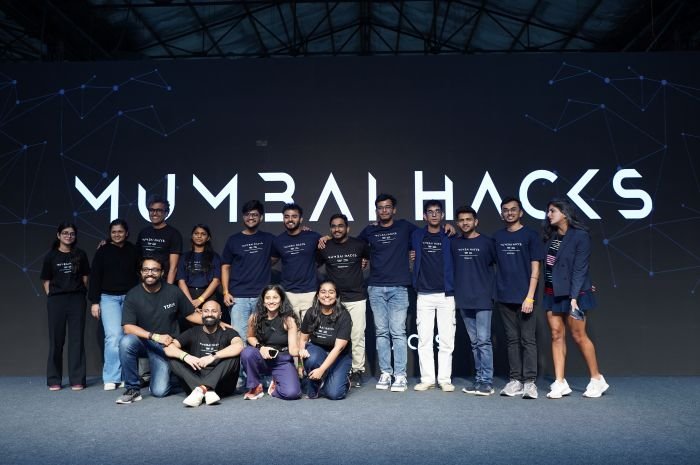

MumbaiHacks 2025, positioned as India’s biggest AI hackathon, is drawing national attention, and the main keyword MumbaiHacks 2025 appears early because this article examines what the event means for emerging developers, innovators and students from Tier 2 cities seeking access to high growth opportunities in artificial intelligence.
The hackathon showcases advanced problem solving, rapid prototyping and industry collaboration at a scale unmatched by previous AI competitions. For participants outside metropolitan tech hubs, it represents not only visibility but also a realistic entry point into India’s expanding AI economy.
A National Stage That Levels The Playing Field
Secondary keyword: AI hackathon opportunities
MumbaiHacks 2025 brings together students, freelancers, startup founders and early career engineers from across the country. Unlike traditional tech events where metro based institutions dominate, this hackathon places strong emphasis on nationwide representation. Selection formats, virtual qualifiers and hybrid participation models reduce the advantage usually held by major city engineering colleges.
Tier 2 participants gain exposure to real world challenges provided by partner companies across finance, logistics, retail and public technology services. These tasks reflect actual industry use cases, enabling participants to learn skills relevant for hiring pipelines.
The hackathon’s scale attracts mentors, venture capital firms and hiring managers who closely track standout performers. This visibility helps talented individuals who may not have strong institutional backing.
Advanced AI Problem Statements Encourage Deep Technical Learning
Secondary keyword: AI skill development
The event focuses on generative AI, machine learning optimisation, computer vision, speech processing and agent based AI systems. These domains require hands on experimentation and strong conceptual understanding. By solving such tasks under time pressure, Tier 2 candidates gain practical experience that traditional coursework rarely provides.
Hackathon environments reward creativity and engineering efficiency. Participants learn to build scalable systems, integrate APIs quickly and optimise model performance. These abilities are highly valued in modern AI roles.
Workshops and masterclasses offered during the event give structured insights into emerging frameworks, data handling practices and deployment strategies. Such exposure helps bridge the knowledge gap between metro and non metro learners.
Mentorship And Industry Interaction Boost Career Mobility
Secondary keyword: tech mentorship benefits
One of the strongest advantages of MumbaiHacks 2025 is mentor accessibility. Experts from AI labs, startups and large enterprises guide participants throughout the event. Tier 2 candidates who typically lack connections in major tech circles benefit significantly from this direct interaction.
Mentors help refine project ideas, improve algorithmic approaches and offer insights into industry expectations. These relationships often continue beyond the hackathon, providing long term career guidance.
Corporate recruiters use hackathons as hiring grounds because they demonstrate practical problem solving ability better than traditional tests. Participants who perform well often receive interview calls or internship opportunities, offering an accelerated path into the tech workforce.
Tier 2 Talent Gains Visibility In India’s AI Startup Ecosystem
Secondary keyword: startup ecosystem access
India’s AI startup scene is growing quickly, but founders from Tier 2 cities often struggle to access investors or high quality networks. MumbaiHacks 2025 creates a unified platform where early stage innovators can showcase prototypes to accelerators, angel investors and corporate innovation teams.
Winning teams or standout projects may receive incubation support, cloud credits or early grants. This reduces the financial pressure faced by young entrepreneurs and motivates them to pursue AI solutions rooted in local problems.
Startups addressing agriculture, healthcare delivery, regional commerce and rural supply chains find strong alignment with the needs of Tier 2 and Tier 3 markets. Hackathon visibility helps validate these ideas and attract collaborators.
Skill Gaps Narrow As Tier 2 Developers Work With Emerging Tech
Secondary keyword: bridging tech divide
The hackathon equips participants with technologies that are still new to the academic curriculum in many smaller cities. These include large language models, synthetic data generation tools, edge AI frameworks and multimodal architectures.
By working with these systems, developers understand how to balance resource constraints, dataset challenges and inference quality. This knowledge helps them compete with metro based engineers who typically have earlier access to cutting edge technology.
Collaborative team formation also strengthens peer learning. Participants from diverse regions bring unique problem solving styles, exposing Tier 2 developers to new coding standards, design principles and teamwork methods.
Long Term Benefits For Education And Local Tech Ecosystems
Secondary keyword: Tier 2 tech growth
When students return to their cities after participating in large hackathons, they often become catalysts for local innovation. They organise college workshops, lead coding clubs and introduce peers to AI frameworks. This gradually strengthens the talent pipeline.
Educational institutions in smaller cities take cues from such events and update their curriculum to include practical AI labs, industrial projects and interdisciplinary learning. Hackathon exposure encourages colleges to collaborate with companies for research and internships.
Over time, this ecosystem development reduces migration pressure toward metros and creates stable local tech clusters capable of contributing to India’s AI sector.
Takeaways
MumbaiHacks 2025 provides Tier 2 talent national scale exposure and opportunity
Hands on AI problem solving accelerates practical learning and employability
Mentorship and startup visibility improve long term career mobility
Participation strengthens local tech ecosystems and builds regional innovation capacity
FAQs
Do Tier 2 participants face disadvantages in large AI hackathons
Not in MumbaiHacks 2025. Hybrid entry formats and industry mentorship reduce barriers significantly.
Can hackathon projects turn into real startups
Yes. Strong prototypes often receive incubation, mentoring or early stage funding support.
Is advanced AI knowledge required to participate
Basic familiarity helps, but participants learn rapidly through workshops and team collaboration.
How do companies benefit from sponsoring such events
They identify skilled candidates, crowdsource innovative ideas and test solutions for real business problems.