
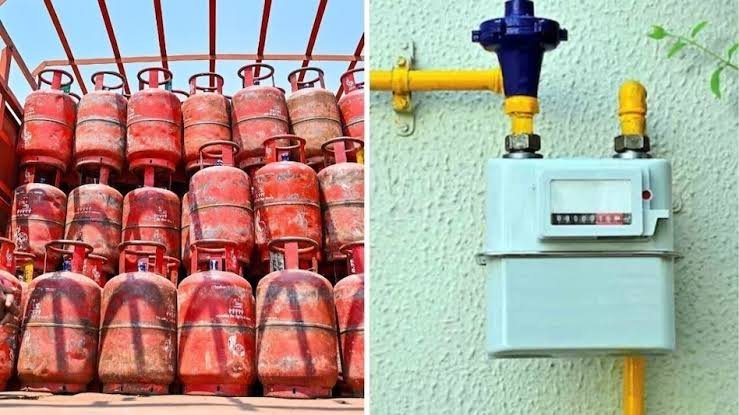

LPG, PNG, and CNG prices are revised periodically based on government policies and market conditions. Understanding how these fuels are priced and compared can help households, vehicle owners, and businesses make informed decisions while managing their monthly energy expenses.
The LPG, PNG and CNG prices in India are revised periodically by oil marketing companies and city gas distribution firms. These revisions vary across cities because of transportation costs, local taxes, network charges, and regional operational expenses. Whether you are cooking at home, running a business, or fueling a vehicle, comparing LPG, PNG, and CNG prices can help reduce monthly expenses and improve budgeting. Instead of looking only at the headline price, consumers should understand how each fuel is billed and what factors affect the final cost.
Why LPG, PNG and CNG Prices Differ Across Cities
Although all three fuels serve different purposes, their pricing mechanisms are not identical. Domestic LPG cylinders are supplied by public sector oil marketing companies and their prices are reviewed periodically. Commercial LPG cylinders follow a different pricing structure and often witness more frequent revisions.
PNG, or Piped Natural Gas, is supplied through city gas distribution networks. Since these networks operate in specific geographical areas, prices vary depending on the distribution company, infrastructure costs, and local regulations.
CNG, or Compressed Natural Gas, is mainly used as an automotive fuel and is sold through fuel stations operated by city gas distributors. Like PNG, CNG prices differ from one city to another because of operational costs, taxes, and transportation.
As a result, a consumer in Nagpur may pay a different rate than someone living in Delhi, Mumbai, Pune, Lucknow, or Jaipur, even during the same pricing cycle.
How to Check the Latest Fuel Prices in Your City
The most reliable way to compare fuel prices is to use official sources instead of relying on social media posts or unofficial websites.
For LPG, consumers should check the official websites or mobile applications of Indian Oil, Bharat Petroleum (BPCL), or Hindustan Petroleum (HPCL). These companies regularly publish updated domestic and commercial LPG cylinder prices for different cities.
For PNG and CNG, visit the website or mobile application of your city’s gas distribution company. Most distributors display current tariffs, billing information, and any recent revisions.
Many news portals also publish monthly fuel price updates, but official company websites remain the most accurate source because they reflect the latest revisions applicable to your location.
Compare More Than Just the Price Per Unit
Many consumers make the mistake of comparing only the headline price without considering actual usage and efficiency.
LPG is generally sold per cylinder, while PNG is billed according to gas consumption through a household meter. CNG is priced per kilogram at filling stations.
For households, PNG can offer greater convenience because there is no need to book or store cylinders. LPG, however, remains the preferred option in areas where piped gas infrastructure has not yet reached.
Vehicle owners should compare not only the CNG price but also vehicle mileage, maintenance costs, fuel availability, and travel distance to the nearest CNG station.
Businesses such as restaurants and hotels may evaluate commercial LPG and PNG based on their daily fuel consumption and operational requirements rather than focusing solely on price.
Factors That Influence Fuel Price Revisions
Several factors determine revisions in LPG, PNG, and CNG prices across India.
International energy prices play a major role, especially the cost of crude oil and natural gas in global markets. Currency exchange rates also affect import costs because India imports a significant portion of its energy requirements.
Government policies, taxes, freight charges, and distribution costs contribute to regional price differences. For PNG and CNG, infrastructure expansion, maintenance expenses, and pipeline operations also influence tariffs.
Consumers should remember that fuel price revisions are not always monthly. Depending on policy decisions and market conditions, revisions may occur at different intervals.
Tips to Reduce Household Fuel Expenses
Comparing prices is only one part of managing household energy costs. Efficient usage can have an equally significant impact.
Use pressure cookers whenever possible, maintain gas burners regularly, and avoid unnecessary flame wastage while cooking. Households using PNG should periodically monitor meter readings to identify unusual increases in consumption.
Vehicle owners using CNG should maintain proper tyre pressure, follow recommended servicing schedules, and avoid aggressive driving habits to improve fuel efficiency.
If your city offers both LPG and PNG options, compare your monthly consumption pattern instead of making decisions based only on one month’s price revision. Long-term usage often provides a better picture of overall savings.
Should You Switch Between LPG, PNG and CNG?
The best fuel depends on your specific needs rather than price alone.
LPG continues to be the most practical option in rural and semi-urban areas where pipeline infrastructure is limited. PNG is often preferred in urban areas because of uninterrupted supply and convenience for households.
For transport, CNG remains an economical option for many private and commercial vehicle owners where filling stations are easily accessible. However, fuel availability, maintenance requirements, and driving patterns should also be considered before converting a vehicle to CNG.
Comparing official prices alongside convenience, accessibility, and long-term operating costs allows consumers to make better financial decisions instead of reacting only to short-term price revisions.
Takeaways
- Compare LPG, PNG, and CNG prices using official company websites for accurate information.
- Consider billing methods, fuel efficiency, and accessibility instead of comparing only headline prices.
- Fuel prices vary across cities because of taxes, transportation, and distribution costs.
- Choose the fuel that best suits your household or business needs rather than focusing only on temporary price changes.
Frequently Asked Questions
Q1. Why are LPG prices different in different cities?
LPG prices vary because of transportation costs, freight charges, local taxes, and distribution expenses, even though the product remains the same.
Q2. Is PNG cheaper than LPG?
It depends on your city, consumption pattern, and local tariff. In many urban areas, PNG can be cost-effective over the long term, but actual savings vary by location.
Q3. How often are CNG and PNG prices revised?
There is no fixed nationwide schedule. City gas distribution companies revise prices based on input costs, government policies, and market conditions.
Q4. Where can I check the latest LPG, PNG, and CNG prices?
Consumers should refer to the official websites or mobile applications of oil marketing companies for LPG and their respective city gas distribution companies for PNG and CNG rates.
(Internal keyword suggestions: LPG price today, PNG price India, CNG price comparison, LPG vs PNG vs CNG, fuel price revision India, domestic LPG rates, city gas distribution, CNG price by city, household fuel comparison, cooking gas price guide)