
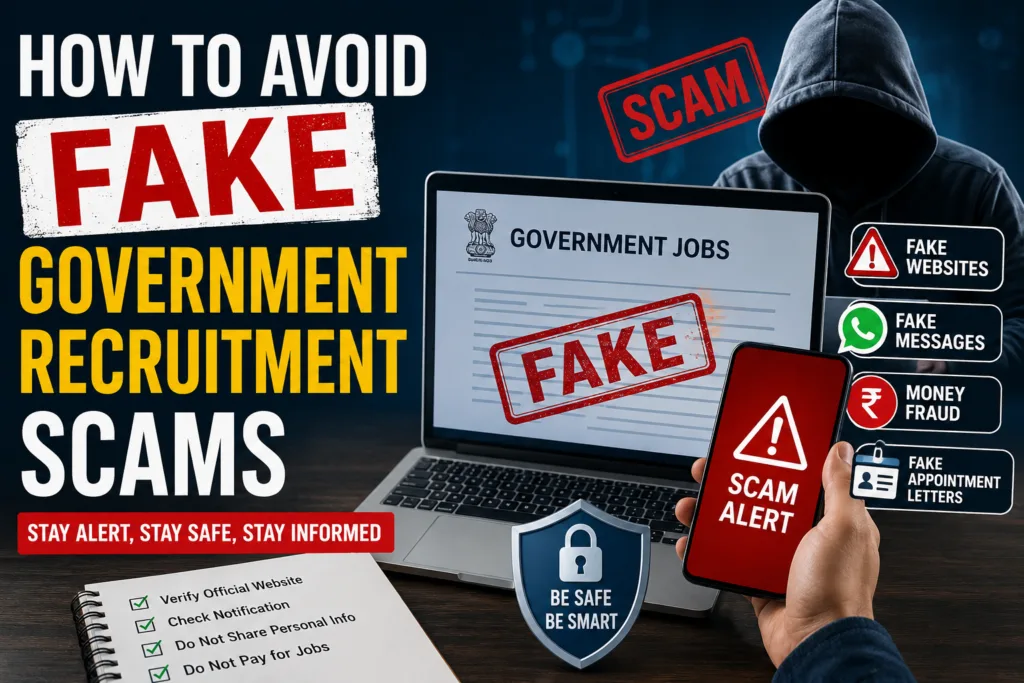

Fake government job notifications have become increasingly common as millions of candidates apply for public sector vacancies every year. Learning how to spot fake government job notifications before you apply can protect your money, personal information, and valuable preparation time. A few simple verification steps can help job seekers avoid recruitment scams and focus only on genuine opportunities.
Why Government Job Scams Are Increasing
Government jobs remain one of the most sought-after career options in India because of job security, competitive salaries, and additional benefits. Every recruitment drive by central and state government departments attracts lakhs of applicants. Unfortunately, fraudsters exploit this demand by circulating fake recruitment notices through social media, messaging apps, email, and fraudulent websites.
These fake notifications often resemble official advertisements. They may use government logos, copied formats, forged signatures, and convincing language to appear authentic. Some even create websites with names similar to official government domains to trick candidates into submitting applications or paying fake registration fees.
Candidates who fail to verify these notifications may lose money, share sensitive personal information, or become victims of identity theft.
Check the Official Government Website First
The most reliable way to verify any government recruitment is by visiting the official website of the recruiting authority. Every genuine recruitment notification is published on the official portal of the respective department, commission, university, public sector undertaking, or government agency.
Official government websites generally use domains ending in “.gov.in”, “.nic.in”, or other authorized government domains. While some government organizations may have approved alternative domains, candidates should always cross-check through official links available on government portals.
Avoid relying solely on forwarded WhatsApp messages, Telegram channels, Facebook posts, or YouTube videos claiming to announce new vacancies. Social media can help spread information, but it should never be treated as the primary source for recruitment details.
Look for Common Warning Signs in Fake Job Notifications
Many fake recruitment advertisements contain noticeable errors that genuine government notifications rarely have.
Watch for spelling mistakes, poor grammar, inconsistent formatting, low-quality logos, or incorrect department names. Fraudulent advertisements often promise guaranteed selection without examinations or interviews, which is highly unusual for government recruitment.
Be cautious if the notification asks applicants to pay fees through personal UPI IDs, private bank accounts, digital wallets, or QR codes. Genuine recruitment fees, where applicable, are collected only through official payment gateways integrated into authorized recruitment websites.
Another warning sign is unrealistic salary packages for entry-level positions or claims that vacancies are available without meeting eligibility criteria.
Verify Recruitment Details Through Trusted Sources
Apart from checking the official recruitment website, candidates should compare the notification with information available on recognized government employment portals.
Many central recruitment agencies such as UPSC, SSC, Railway Recruitment Boards, banking recruitment bodies, and various state public service commissions publish detailed recruitment calendars and official advertisements. If a notification cannot be found on the recruiting organization’s official website, treat it with caution.
Candidates should also verify important information such as application deadlines, educational qualifications, age limits, examination dates, reservation rules, and vacancy numbers. Any mismatch between multiple official sources should prompt further verification before applying.
Protect Your Personal and Financial Information
Government recruitment applications require personal documents such as Aadhaar details, educational certificates, photographs, signatures, and identity proofs. Sharing these documents with fake websites can expose candidates to identity fraud.
Never upload personal documents unless you have confirmed that the recruitment portal is genuine. Before entering sensitive information, ensure that the website address is correct and uses a secure connection.
Do not share OTPs, banking credentials, debit card details, or passwords with anyone claiming to help complete your application. Government recruitment authorities never ask candidates to disclose confidential banking information over phone calls, emails, or messaging apps.
It is also advisable to use strong passwords for recruitment portals and regularly monitor your email for official communication.
Be Careful of Fake Agents and Selection Guarantees
Another common recruitment scam involves individuals claiming to have contacts inside government departments. These fraudsters promise guaranteed jobs, exam exemptions, or interview selection in exchange for money.
In India, government recruitment follows structured selection processes that typically include written examinations, skill tests, interviews, document verification, and merit-based selection. No individual or private agency can legally guarantee appointment by collecting money.
Candidates should immediately ignore anyone offering direct recruitment, paid recommendations, or appointment letters before official examinations are completed.
If you receive suspicious calls or messages, report them to the concerned recruitment authority or local cybercrime portal.
Safe Practices Before Submitting Any Application
Before clicking the final submit button, verify every aspect of the recruitment process. Download the official notification PDF directly from the recruiting organization’s website and read it carefully.
Keep copies of the application form, payment receipt, registration number, and official advertisement for future reference. Regularly check the official website for updates regarding admit cards, examination schedules, answer keys, and results.
Candidates preparing for multiple competitive examinations should create a habit of following only verified government recruitment portals instead of depending on unofficial social media forwards.
Staying informed and verifying every recruitment announcement can save candidates from financial loss and unnecessary stress.
Key Takeaways
- Verify every government job notification through the official recruitment website before applying.
- Never pay application fees through personal accounts, UPI IDs, or unofficial payment links.
- Be cautious of fake websites, misleading social media posts, and guaranteed job offers.
- Protect your personal documents and banking information throughout the recruitment process.
Frequently Asked Questions
1. How can I confirm whether a government job notification is genuine?
Visit the official website of the recruiting department or commission and verify whether the notification has been officially published there.
2. Are all websites ending with “.gov.in” genuine?
Government departments generally use official government domains such as “.gov.in” or “.nic.in”. However, candidates should still verify the exact website address from trusted government sources to avoid lookalike domains.
3. Can anyone guarantee a government job after taking money?
No. Government recruitment in India follows a merit-based selection process. Anyone promising guaranteed selection in exchange for money is likely attempting fraud.
4. What should I do if I receive a suspicious recruitment message?
Do not click unknown links or make any payment. Verify the recruitment on the official website and report suspicious messages to the concerned authority or the National Cyber Crime Reporting Portal if fraud is suspected.
(Internal keyword suggestions: fake government job notifications, government job scams India, verify recruitment notification, government recruitment fraud, official government jobs, fake job alert, competitive exam safety, government vacancy verification, recruitment scams, secure job application)