
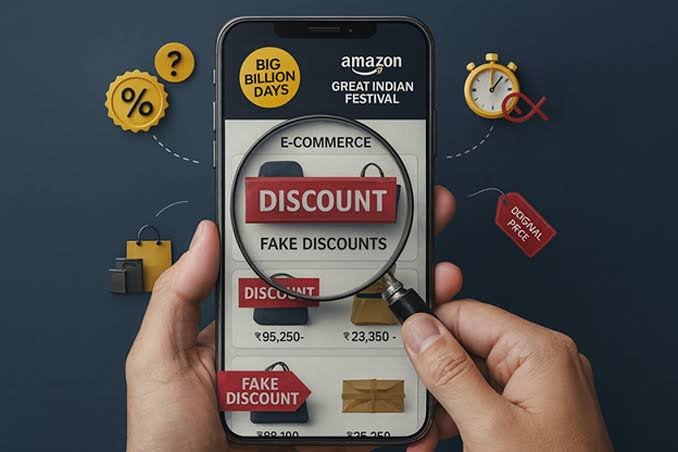

Mega online shopping sales attract millions of buyers with attractive discounts, flash deals, and limited-time offers. However, not every discount is genuine. Here’s how shoppers can identify fake price cuts, avoid scams, and make smarter purchasing decisions during sale season.
Knowing how to spot fake online shopping discounts during mega sale season has become an essential skill for online shoppers in India. Every year, major e-commerce platforms announce festival sales, flash deals, and limited-time offers promising discounts of up to 90 percent. While many of these offers are genuine, some listings use misleading pricing tactics that make discounts appear larger than they actually are. Understanding how these tactics work can help consumers save money while avoiding impulsive purchases and online scams.
Why Fake Discounts Have Become More Common
Online shopping has grown rapidly across India, especially in Tier-2 and Tier-3 cities where smartphone usage and digital payments have increased significantly. With millions of shoppers participating in festive and seasonal sales, sellers compete aggressively for attention.
One common marketing tactic involves increasing the displayed Maximum Retail Price (MRP) or showing a higher “original price” before applying a discount. In some cases, the selling price remains similar to what it was before the sale despite the product being advertised as heavily discounted.
Another issue involves fake countdown timers, misleading “only a few items left” messages, or exaggerated savings claims designed to encourage quick purchases without comparison shopping.
While these tactics may not always violate marketplace rules, they can create a false impression of exceptional savings.
Compare Price History Before Buying
One of the easiest ways to identify a genuine deal is to compare the product’s price over time.
Instead of relying only on the discount percentage shown during a sale, check whether the product has actually become cheaper compared to previous weeks or months. Several price-tracking tools and browser extensions allow users to view historical pricing for popular products sold online.
For example, a smartphone advertised at 50 percent off may have been available at nearly the same selling price a few days before the sale. In such cases, the discount percentage reflects a marketing strategy rather than actual savings.
Comparing prices across multiple shopping platforms also helps determine whether the offer is competitive.
Check the Seller Before Ordering
A large discount does not automatically guarantee a trustworthy seller.
Always review the seller’s ratings, customer feedback, return history, and the number of completed orders. Established sellers with consistently positive reviews are generally more reliable than newly created accounts with little transaction history.
Read recent customer reviews instead of focusing only on overall ratings. Recent reviews often reveal problems such as counterfeit products, damaged packaging, delayed delivery, or incorrect specifications.
If several buyers report receiving products different from what was advertised, it is safer to avoid that listing regardless of the advertised discount.
Watch for Fake Websites and Scam Offers
Mega sale seasons also see an increase in fake shopping websites and phishing scams.
Fraudsters often create websites that closely resemble popular e-commerce platforms. These fake websites may advertise unrealistic discounts, collect payment information, and disappear without delivering products.
Before making a purchase, verify the website address carefully. Genuine shopping platforms use secure HTTPS connections and official domain names.
Avoid clicking shopping links received through unknown WhatsApp messages, SMS, or social media posts promising unbelievable discounts. If an offer appears too good to be true, it deserves additional verification before making payment.
Read Return, Refund and Warranty Policies
Many shoppers focus only on the discount and overlook important purchase conditions.
Before placing an order, review the return window, replacement policy, warranty coverage, and refund terms. Some heavily discounted products may be marked as non-returnable or may only qualify for replacement instead of refunds.
Electronics should include manufacturer warranty details, while branded products should mention authenticity guarantees wherever applicable.
Understanding these policies reduces the chances of disappointment after delivery.
Avoid Impulse Buying During Flash Sales
Flash sales are designed to create urgency by offering products for a limited period.
Although genuine flash deals exist, consumers should avoid purchasing items simply because a countdown timer is displayed. Preparing a shopping list before the sale begins helps prevent unnecessary spending.
Compare product specifications, customer reviews, and competing prices before completing the purchase. Waiting a few extra minutes to verify details is usually better than rushing into a purchase driven by fear of missing out.
Consumers should also set a shopping budget before participating in major online sales to avoid overspending.
Secure Payment Practices Matter
Safe online shopping extends beyond identifying genuine discounts.
Use trusted payment methods offered by established platforms. Enable two-factor authentication on banking and payment applications whenever available.
Avoid transferring money directly to personal bank accounts requested by unknown sellers outside the shopping platform.
After placing an order, save the invoice, payment confirmation, and order details until the product is delivered and verified.
These simple practices provide additional protection in case a dispute arises later.
Takeaways
- Compare product price history instead of relying only on advertised discount percentages.
- Buy from trusted sellers with strong ratings and recent positive customer reviews.
- Verify website addresses carefully to avoid fake shopping platforms and phishing scams.
- Read return policies, warranty details, and payment terms before placing an order.
Frequently Asked Questions
Q1. Are all online mega sale discounts genuine?
No. Many discounts are genuine, but some listings use inflated original prices or marketing tactics that make savings appear larger than they actually are.
Q2. How can I check if a discount is real?
Compare the current price with historical prices, review prices on multiple platforms, and evaluate whether the product has actually become cheaper.
Q3. Is it safe to buy from new online sellers?
It depends on the seller’s ratings, customer reviews, return policy, and transaction history. Buyers should verify these details before ordering.
Q4. What should I do if I receive a counterfeit or incorrect product?
Use the marketplace’s return or replacement process immediately, keep all order records, and contact customer support within the specified return period.