
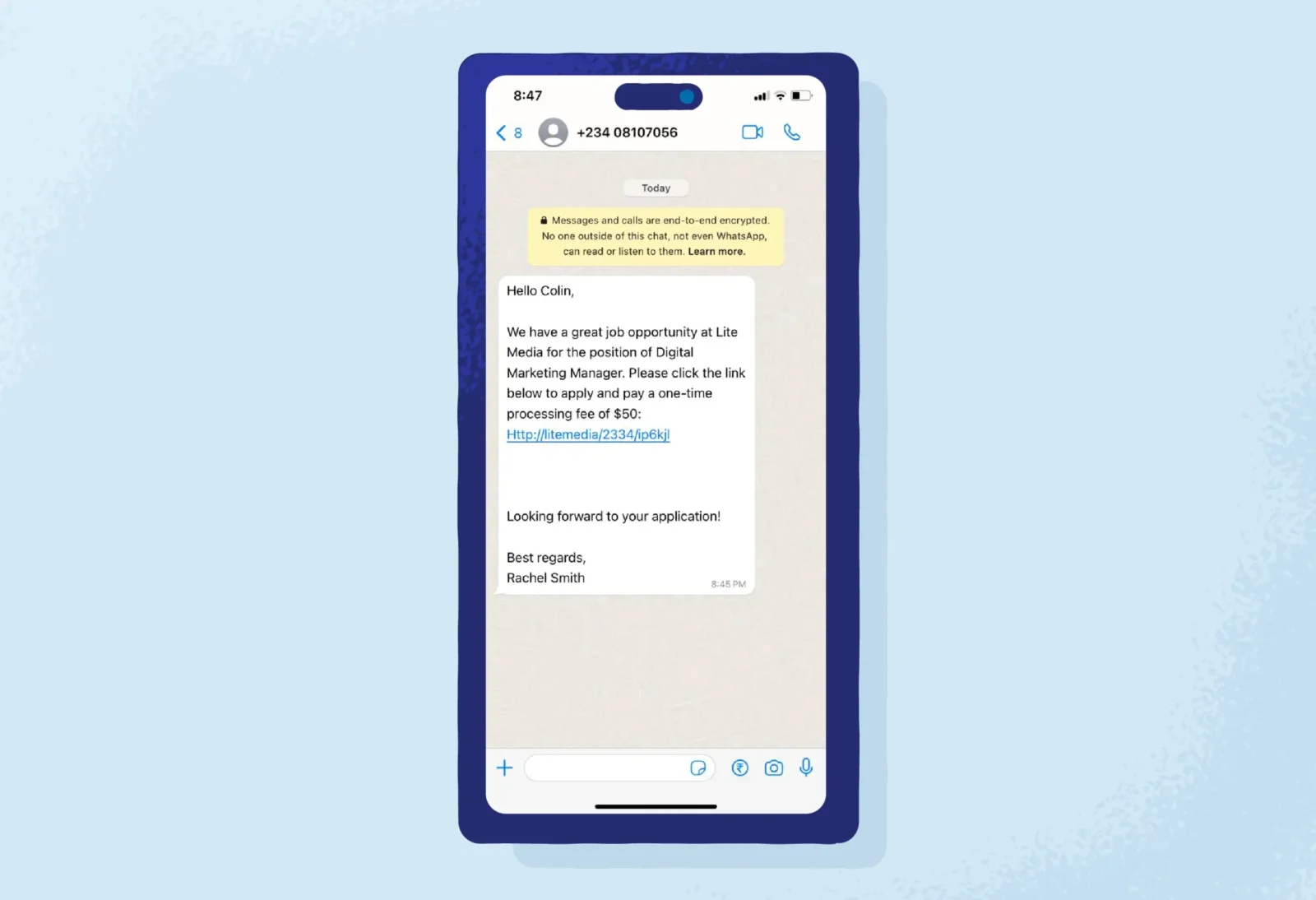

Fake job offers circulating on WhatsApp have become a widespread issue in India, especially targeting job seekers in Tier-2 and Tier-3 cities. Learning how to verify fake job offers is essential to avoid financial loss, identity theft, and long-term fraud risks.
Why Fake Job Offers Are Spreading Rapidly on WhatsApp
Fake job offers on WhatsApp are increasing due to the platform’s wide reach and ease of message forwarding. Fraudsters often exploit urgency and trust by posing as recruiters from well-known companies.
Authorities like Ministry of Electronics and Information Technology and Indian Cyber Crime Coordination Centre have repeatedly warned about scams involving job offers, part-time work schemes, and online earning promises.
These scams are often designed to appear legitimate, using company logos, fake offer letters, and convincing language. Many victims fall for them due to lack of awareness or desperation for employment.
Common Signs of Fake Job Offers on WhatsApp
Recognising red flags is the first step in identifying fake job offers. Messages that promise high salaries for minimal work or require no qualifications are often fraudulent.
Scammers frequently ask for upfront payments for registration, training, or equipment. Legitimate companies do not charge candidates during the hiring process.
Another warning sign is the use of unofficial email IDs or WhatsApp-only communication without any formal interview process. Poor grammar, vague job descriptions, and unrealistic deadlines also indicate potential fraud.
Being cautious about these signs can prevent immediate financial loss.
How to Verify Company and Recruiter Authenticity
Verifying the company behind a job offer is critical. Start by checking the official website of the company and looking for career listings that match the offer.
Search the recruiter’s name on professional platforms like LinkedIn to confirm their identity and association with the company. Genuine recruiters usually have a visible professional history.
You can also contact the company directly through official email or phone numbers listed on their website. Avoid relying on contact details provided in the WhatsApp message itself.
Cross-checking these details helps confirm whether the offer is genuine or fraudulent.
Checking Job Offers Against Official Government Platforms
Government platforms can help verify job opportunities and prevent scams. Portals like National Career Service list verified job openings and employer details.
If a job offer claims to be part of a government scheme or public sector recruitment, always verify it through official websites. Fake messages often misuse government names to appear credible.
Cybercrime reporting portals also provide information about ongoing scams and allow users to report suspicious messages.
Using these platforms adds an extra layer of verification.
Steps to Take If You Receive a Suspicious Job Offer
If you receive a job offer on WhatsApp that seems suspicious, avoid responding immediately. Do not share personal details such as Aadhaar number, bank information, or OTPs.
Take screenshots of the message and report it through official cybercrime channels. Blocking the sender prevents further communication.
If you have already made a payment, report the incident immediately to your bank and cybercrime authorities. Quick action can sometimes help recover funds or prevent further damage.
Staying calm and acting quickly is important in such situations.
Why Tier-2 Job Seekers Are More Vulnerable
Job seekers in smaller cities are often targeted due to limited access to verified job information and fewer local opportunities. Scammers exploit this gap by offering remote jobs or high-paying roles.
Digital literacy levels may vary, making it harder to identify sophisticated scams. Additionally, peer sharing on WhatsApp increases the spread of fake messages within communities.
Improving awareness and verifying every opportunity can significantly reduce risk for job seekers in these regions.
Practical Tips to Stay Safe from Job Scams
Always rely on trusted job platforms and official company websites when applying for jobs. Avoid offers that bypass standard hiring processes.
Use separate email IDs for job applications to minimise risk. Enable two-factor authentication on important accounts to enhance security.
Educating friends and family about common scams can also reduce the spread of fraudulent messages.
Consistent caution and verification are the most effective ways to stay safe.
Takeaways
• Never pay money for job offers or recruitment processes
• Verify company details through official websites and platforms
• Avoid sharing personal or financial information on WhatsApp
• Report suspicious messages to cybercrime authorities immediately
FAQs
Are all job offers on WhatsApp fake?
No, but most legitimate companies do not conduct hiring solely through WhatsApp without formal processes.
How can I check if a recruiter is genuine?
Verify their profile on LinkedIn and confirm their association with the company through official channels.
What should I do if I have already paid money?
Report the incident तुरंत to your bank and cybercrime authorities to limit potential loss.
Which platform can help verify job opportunities in India?
Government portals like National Career Service provide verified job listings.