
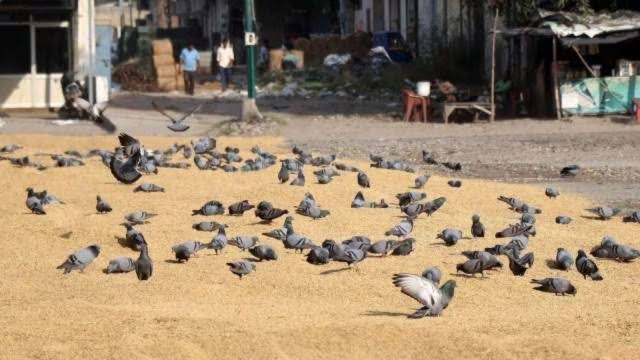

The Brihanmumbai Municipal Corporation (BMC) is preparing to take stricter action against people feeding pigeons at Dadar and Mahim beaches in Mumbai. The civic body will deploy staff at both locations and impose a ₹500 fine on violators amid residents’ complaints about bird droppings, unhygienic conditions and potential health risks.
Why Is BMC Taking Action Against Pigeon Feeding at Dadar and Mahim?
The BMC’s decision follows repeated complaints from residents living near Dadar and Mahim beaches about people gathering to feed pigeons.
According to a report published by Maharashtra Times on November 26, residents have raised concerns about increasing pigeon activity, accumulated bird droppings, unpleasant smells and sanitation problems around nearby residential buildings.
Some residents have also alleged that people bring large quantities of grain to the beaches and continue feeding pigeons despite existing restrictions.
The issue has become more noticeable following the closure of the Dadar Kabutarkhana in August 2025. Residents claim that some people who previously visited designated pigeon-feeding locations have shifted their activities to nearby public spaces, including beaches.
The BMC’s G-North ward has now decided to strengthen enforcement at Dadar and Mahim beaches.
The move is intended to prevent these public locations from becoming regular pigeon-feeding spots and address complaints from people living in the surrounding neighbourhoods. Maharashtra Times+1
₹500 Fine for Feeding Pigeons: What Are the New BMC Rules?
Under the existing Greater Mumbai cleanliness and sanitation regulations, feeding animals or birds in non-designated public spaces can attract a ₹500 penalty.
The BMC’s revised Solid Waste Management and sanitation by-laws also list a ₹500 fine for feeding animals or birds in open and public spaces where such activities create nuisance spots.
The restriction covers activities such as feeding birds along major streets and feeding animals on public footpaths.
The latest enforcement drive at Dadar and Mahim beaches will apply this existing penalty to people found feeding pigeons at these locations.
This means the ₹500 fine is not an entirely new charge introduced specifically for the two beaches. Instead, the civic administration is strengthening the implementation of an existing rule in response to local complaints.
According to the BMC’s 2026 Civic Diary, feeding animals or birds in public spaces that create nuisance spots attracts a ₹500 fine for the first offence.
Residents and visitors should therefore avoid carrying grains or other food specifically to feed pigeons at these public locations. MyBMC+1
BMC to Deploy Staff During Specific Hours at Both Beaches
One of the important aspects of the latest decision is the deployment of municipal staff at Dadar and Mahim beaches.
According to Maharashtra Times, G-North ward Assistant Commissioner Yogesh Desai confirmed that staff would be stationed at both locations to monitor violations and take action.
The reported enforcement schedule includes two periods:
- Morning: Between 9 am and 11 am.
- Afternoon and evening: After 4 pm, for approximately two to three hours.
The deployment is intended to cover periods when people commonly visit the beaches and engage in pigeon feeding.
The BMC also plans to install information boards at both locations to inform visitors about the restrictions and applicable penalty.
These measures are expected to make enforcement more visible and help prevent people from claiming that they were unaware of the rules.
The administration’s approach combines on-ground monitoring with public awareness. However, the effectiveness of the drive will depend on regular inspections and consistent action against violations. Maharashtra Times
Dadar Kabutarkhana Closure: Why Pigeon Feeding Shifted to Beaches
The closure of the Dadar Kabutarkhana in August 2025 is an important part of the current controversy.
The Dadar Kabutarkhana, located near Dadar railway station, was a well-known pigeon-feeding location in Mumbai. People regularly gathered there to offer grains to large numbers of pigeons.
However, the site became the centre of a dispute involving public health concerns, animal welfare arguments and civic regulations.
Following government action in July 2025, restrictions were imposed on feeding pigeons at public places across Mumbai. The Dadar Kabutarkhana was subsequently closed for feeding activities in August 2025.
After its closure, some residents observed an increase in pigeon-feeding activity at nearby locations, particularly Dadar beach.
Residents have alleged that people began using the beach as an alternative feeding spot. They also raised concerns about the large quantities of grain brought to the area and the difficulty of stopping the activity through informal requests.
The latest BMC action indicates that the administration wants to prevent restrictions at designated feeding locations from being bypassed by shifting the activity to other public spaces. Mid-Day+1
Pigeon Droppings and Health Concerns Behind the Restrictions
Public health concerns are among the main reasons behind restrictions on feeding pigeons in Mumbai.
Pigeons can leave significant quantities of droppings in places where large groups gather regularly. These droppings can accumulate on footpaths, building ledges, rooftops, public seating areas and other surfaces.
Over time, accumulated droppings can create sanitation problems, unpleasant smells and additional cleaning requirements.
Health experts have also raised concerns about exposure to pigeon droppings and dried bird-related particles. In certain circumstances, inhaling contaminated dust may be associated with respiratory infections and allergic reactions.
People with existing respiratory sensitivities may be particularly concerned about prolonged exposure to areas with heavy pigeon activity.
However, the presence of pigeons does not mean that every person exposed to them will develop an illness. Health risks depend on factors such as exposure levels, environmental conditions and individual susceptibility.
The civic restrictions are intended to address the broader public health and sanitation concerns associated with concentrated pigeon-feeding activities.
The issue also highlights the need to balance public hygiene with responsible treatment of urban wildlife.
What Does the Bombay High Court Say About Pigeon Feeding?
The pigeon-feeding issue in Mumbai has also involved legal proceedings before the Bombay High Court.
In July 2025, the court issued directions concerning the feeding of pigeons at Dadar Kabutarkhana and other locations in Mumbai.
The legal dispute involved questions about public health, municipal authority, restrictions on feeding activities and the rights of people associated with traditional pigeon-feeding practices.
On July 30, 2025, the Bombay High Court directed the BMC to register FIRs against individuals who continued feeding pigeons at prohibited locations in a defiant manner.
The court proceedings also addressed the heritage status of the Dadar Kabutarkhana and the dispute surrounding its closure.
These developments formed part of the wider legal background to the city’s restrictions on pigeon feeding.
For residents and visitors, the important point is that feeding pigeons at prohibited public locations can lead to municipal penalties and, in circumstances covered by court directions, further legal action.
The current enforcement at Dadar and Mahim beaches is focused on implementing the existing restrictions in public spaces. Mid-Day+1
How Will the New Enforcement Affect Residents and Beach Visitors?
Dadar and Mahim beaches are visited by local residents, morning walkers, families and people looking for open spaces along Mumbai’s coastline.
The introduction of regular monitoring could change how visitors use these public areas.
People who previously carried grains to feed pigeons may have to stop the activity to avoid penalties. Visitors may also see municipal staff monitoring the beaches during the announced enforcement periods.
For nearby residents, the decision addresses complaints about cleanliness and the concentration of pigeons around residential buildings.
However, enforcement alone may not resolve every sanitation concern. Regular cleaning, waste management and public cooperation will also be important.
The BMC’s decision to install warning boards could help visitors understand the rules before violations occur.
People visiting Dadar and Mahim beaches should pay attention to municipal notices and follow instructions issued by civic staff.
The action also sends a wider message that public spaces are governed by cleanliness and sanitation rules, even when an activity is traditionally viewed as harmless.
What Visitors Should Do to Avoid the ₹500 Penalty
People visiting Dadar and Mahim beaches should follow the BMC’s restrictions and avoid activities that attract municipal penalties.
Here are some important points to remember:
- Do not carry grains or food specifically to feed pigeons at the beaches.
- Follow warning boards installed by the municipal corporation.
- Cooperate with municipal staff during inspections.
- Avoid leaving food waste or other materials in public spaces.
- Report sanitation problems through the appropriate municipal complaint channels.
The restriction is specifically aimed at feeding birds in prohibited public spaces. It does not mean that visitors are prohibited from walking, relaxing or spending time at these beaches.
The BMC’s enforcement drive will be an important test of how effectively the city can manage public sanitation complaints while implementing its existing regulations.
Key Takeaways
- BMC plans to impose a ₹500 fine on people feeding pigeons at Dadar and Mahim beaches.
- G-North ward will deploy municipal staff between 9 am and 11 am and again after 4 pm.
- The decision follows complaints from residents about pigeon droppings, unpleasant smells and sanitation problems.
- The ₹500 penalty already exists under BMC sanitation regulations and is now being enforced more strictly at these locations.
Frequently Asked Questions (FAQs)
1. What is the fine for feeding pigeons at Dadar and Mahim beaches?
The BMC can impose a ₹500 fine on people found feeding pigeons at prohibited public locations under its existing cleanliness and sanitation regulations.
2. When will BMC staff monitor Dadar and Mahim beaches?
According to the November 26 report, municipal staff will be deployed between 9 am and 11 am and for another two to three hours after 4 pm.
3. Why has BMC restricted pigeon feeding in Mumbai?
The restrictions are linked to concerns about accumulated bird droppings, public cleanliness and potential health risks associated with concentrated pigeon-feeding activities.
4. Is feeding pigeons banned at all public places in Mumbai?
Restrictions apply to feeding pigeons and other birds in prohibited or non-designated public spaces. The BMC’s sanitation by-laws prescribe a ₹500 penalty for feeding animals or birds in public spaces that create nuisance spots.