
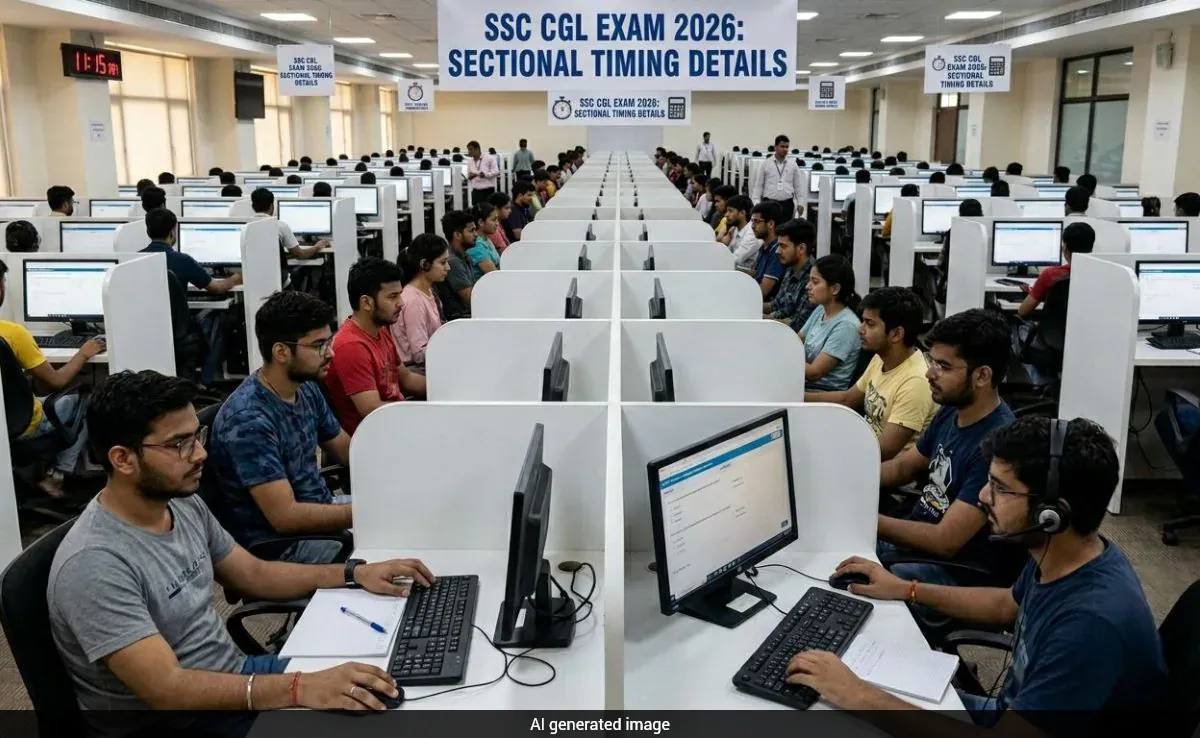

The SSC CGL 2026 Tier 1 examination has begun across India, with the computer-based test scheduled from September 30 to October 30. Candidates from Tier-2 and Tier-3 cities should pay close attention to their exam city, reporting time, documents, travel arrangements and computer-based exam requirements.
The SSC CGL 2026 Tier 1 examination is now underway, giving thousands of graduates across India a crucial opportunity to compete for Group B and Group C government posts. The Staff Selection Commission is conducting the exam in computer-based mode at centres across the country between September 30 and October 30, 2026.
For students from Tier-2 and Tier-3 cities, exam preparation involves more than revision. Candidates also need to plan transportation, check the exact examination centre, download the correct admit card and understand the reporting instructions before leaving for the test.
The SSC has already released city intimation information and is issuing admit cards in phases according to examination dates. Candidates should therefore rely on the details displayed for their own examination rather than assuming that all applicants have the same schedule.
SSC CGL 2026 Tier 1 Exam Dates and Current Status
The SSC CGL 2026 notification initially gave a tentative schedule for Tier 1, but the examination is now being conducted from September 30 to October 30, 2026. The test is being held as a computer-based examination in multiple shifts.
Candidates should check their individual examination date and shift because the schedule is not the same for every applicant. The city intimation slip provides information about the allotted city, examination date and shift, while the admit card contains the detailed centre information and instructions needed for the examination day.
The SSC has been releasing admit cards in phases. Candidates whose examinations are scheduled later in the window may not see their hall ticket at the same time as candidates appearing on earlier dates.
For this reason, candidates should check the official SSC portal and their relevant regional SSC website instead of relying on screenshots or forwarded messages on social media.
Why Exam City Details Matter for Tier-2 Students
For candidates living in smaller cities, the examination centre may sometimes require travel to another city or a different part of the district. This makes checking the city and centre information early particularly important.
The SSC has released city intimation details so candidates can know their allotted examination city and plan their travel.
Students should not confuse the city intimation slip with the admit card. The city slip primarily provides advance information about the examination location, date and shift. The admit card contains the specific examination centre address and other instructions required for the test day.
Candidates travelling from cities such as Nagpur, Kota, Indore, Gwalior, Patna, Ranchi, Raipur, Kanpur, Jaipur, Lucknow or other regional centres should check the route before the examination day. If public transport is being used, it is also sensible to keep an alternative route in mind.
What to Check on the SSC CGL Admit Card
Once the admit card is available, candidates should carefully verify every detail. The examination date, shift, reporting time and centre address should be checked before making travel arrangements.
Candidates should also check their name, photograph and other personal information. If there is a serious discrepancy, they should contact the appropriate SSC regional authority through the official channels rather than attempting to correct the document themselves.
The admit card should be downloaded from the official SSC system and kept safely. Candidates should also take a clear printout if the examination instructions require one. Recent guidance for SSC CGL candidates has emphasised carrying the admit card and a valid photo identity document to the examination centre.
A candidate should not depend entirely on a mobile phone copy if the instructions require a physical document. Preparing the required documents the previous evening can prevent unnecessary stress on the examination morning.
Plan Travel Around Reporting Time
Reaching the examination centre on time is particularly important for candidates travelling from smaller towns or nearby districts.
A candidate who has to travel several kilometres to another city should consider traffic, railway delays, bus schedules and the possibility of finding the centre in an unfamiliar area. Google Maps or another navigation service can be used to identify the route beforehand, but candidates should also save the centre address separately.
If possible, candidates travelling from another city can consider reaching the area a day earlier, particularly when the reporting time is early in the morning.
The objective is not to arrive extremely early without reason, but to leave enough time for unexpected delays. Examination centres can also become crowded shortly before reporting or gate-closing times.
Understand the Tier 1 Exam Pattern
The SSC CGL Tier 1 examination is a computer-based objective test. The notified scheme provides four sections: General Intelligence and Reasoning, General Awareness, Quantitative Aptitude and English Comprehension.
Each section has 25 questions, making a total of 100 questions and 200 marks. The standard examination duration is one hour, with sectional timing of 15 minutes for each subject. Candidates eligible for a scribe receive additional time according to the applicable provisions.
The examination also has negative marking. The notified scheme specifies a deduction of 0.50 marks for every incorrect answer.
This means candidates should pay attention not only to speed but also to accuracy. Guessing without considering the probability of a correct answer can affect the final score because of the negative marking.
Computer-Based Test Preparation Matters
Students who have primarily prepared through books and handwritten practice should spend some time practising questions on a computer before the examination.
The actual SSC CGL Tier 1 test is computer-based. Candidates need to read questions on the screen, navigate between questions and manage the sectional timer within the computer-based examination environment.
Mock tests can help candidates become familiar with this format. They can also reveal practical issues such as spending too much time on one question or struggling to switch between sections.
For Tier-2 city candidates who may have had limited access to coaching infrastructure compared with larger examination hubs, online mock tests and previous-year computer-based practice papers can provide a useful way to simulate the exam environment.
What Students Should Carry and Avoid
Candidates should read the instructions printed on their admit card carefully because the permitted items and requirements should be determined from the official examination instructions.
At minimum, candidates should organise their admit card and required identity document before leaving for the centre. They should avoid carrying unnecessary electronic devices or prohibited items.
Candidates should not assume that an item permitted at another competitive examination will automatically be allowed in SSC CGL. The instructions applicable to the SSC examination should take priority.
It is also useful to keep personal belongings to a minimum. Examination centres may have restrictions on where certain items can be kept, and candidates should avoid creating avoidable problems by carrying unnecessary accessories.
After Tier 1, What Happens Next?
Tier 1 is only one stage of the SSC CGL recruitment process. The official 2026 notification originally indicated a tentative Tier 2 schedule for December 2026.
Candidates should therefore avoid treating the Tier 1 examination as the end of their preparation. Once their Tier 1 examination is completed, they should follow official SSC announcements regarding results, cut-offs, subsequent stages and Tier 2.
The exact requirements for later stages depend on the post and the recruitment rules applicable to that year’s examination. Candidates should refer to the official notification and subsequent SSC notices rather than relying solely on coaching-centre predictions.
For students in Tier-2 and Tier-3 cities, the broader lesson is that examination logistics are now an important part of competitive exam preparation. Good preparation includes both academic revision and practical planning.
Takeaways
- SSC CGL Tier 1 2026 is being conducted in computer-based mode from September 30 to October 30 across multiple shifts.
- Candidates should check their individual city, examination date, shift and centre details through official SSC channels.
- Tier 1 consists of 100 objective questions across four sections, with a standard duration of one hour and 0.50-mark negative marking for each wrong answer.
- Candidates travelling from Tier-2 and Tier-3 cities should plan transportation and verify required documents well before examination day.
FAQ
Q1. When is the SSC CGL Tier 1 2026 examination being conducted?
SSC CGL Tier 1 2026 is being conducted from September 30 to October 30, 2026, in computer-based mode and multiple shifts. Candidates should check their individual examination date and shift through the official SSC information available to them.
Q2. What is the difference between the SSC CGL city slip and admit card?
The city intimation slip provides information such as the allotted examination city, date and shift. The admit card contains the detailed examination centre address, reporting information and other examination-day instructions.
Q3. How many questions are there in SSC CGL Tier 1?
The Tier 1 examination has 100 objective questions divided equally among General Intelligence and Reasoning, General Awareness, Quantitative Aptitude and English Comprehension. Each section has 25 questions and carries 50 marks.
Q4. Is there negative marking in SSC CGL Tier 1?
Yes. The SSC CGL examination scheme specifies negative marking of 0.50 marks for each incorrect answer in Tier 1.