
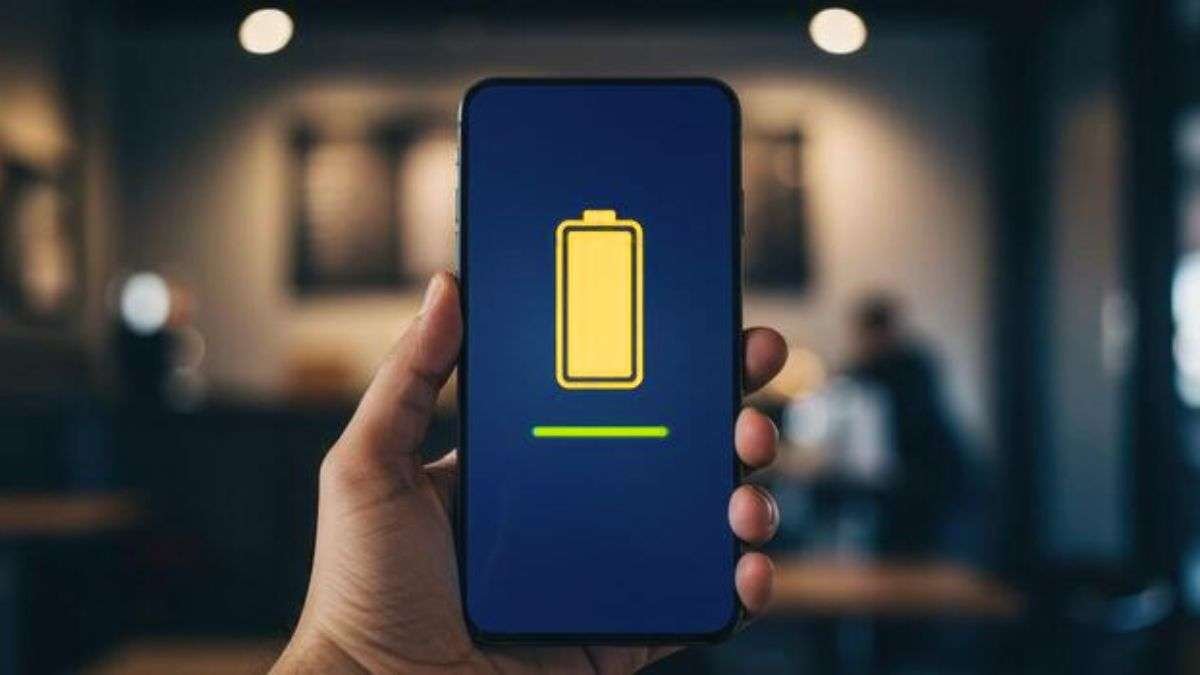

The global smartphone market has officially entered the two day battery era as manufacturers launch the first wave of 9000mAh devices. This technical shift challenges the traditional 5000mAh benchmark and redefines mobile endurance for heavy users and gamers alike.
The arrival of the 9000mAh battery in mainstream devices like the OnePlus Nord 6 and the Vivo T5 Pro marks a pivotal moment in consumer technology. For years the industry was stagnant at a 5000mAh ceiling due to the physical limitations of lithium ion chemistry which would have made larger batteries too bulky for modern pockets. However the widespread adoption of Silicon Carbon anode technology has allowed brands to increase energy density by nearly 40 percent without significantly increasing device thickness. In May 2026 these high capacity powerhouses are no longer niche experiments but are becoming the baseline for the mid range and premium segments in India.
Silicon Carbon Technology Powering the 9000mAh Revolution
The primary driver behind this massive jump in capacity is the transition from graphite to Silicon Carbon anodes. Traditional batteries use graphite to store lithium ions but silicon can hold significantly more ions by volume. In 2026 manufacturers have successfully addressed the “expansion issue” where pure silicon would swell and damage the phone. By using a carbon composite matrix brands like OnePlus and Vivo can now fit 9000mAh of power into a chassis that measures less than 8.5mm in thickness.
This density advantage means that a phone like the Vivo T5 Pro which features a 9020mAh cell remains as pocketable as its predecessors while offering nearly double the standby time. For the average user this translates to roughly 48 to 60 hours of moderate use on a single charge. The “overkill” label is quickly fading as users realize they no longer need to carry power banks or hunt for charging outlets during long commutes or travel days.
Performance vs Endurance The OnePlus Nord 6 Approach
In the 9000mAh battery showdown the OnePlus Nord 6 has taken a performance first approach. By pairing its 9000mAh Silicon Carbon battery with the Snapdragon 8s Gen 4 chipset and a 165Hz refresh rate display the device aims at the competitive gaming market. High refresh rate gaming is notoriously power hungry often draining traditional batteries in just a few hours. With this new capacity gamers can now sustain high frame rate sessions for over eight hours without thermal throttling or low battery anxiety.
OnePlus has also integrated its 80W SUPERVOOC charging technology to ensure that the massive cell does not take hours to replenish. Despite the large capacity the phone can hit a 50 percent charge in approximately 25 minutes. This balance of speed and sheer volume is what characterizes the 2026 standard. It is not just about having a large battery but about having a smart ecosystem that manages that power efficiently through AI driven background task optimization.
The Competition Vivo T5 Pro and the Endurance Kings
Vivo has countered with the T5 Pro which features an even slightly larger 9020mAh battery. While the OnePlus focuses on gaming the Vivo T5 Pro is positioned as the ultimate reliability tool for professionals and content creators. Its 90W fast charging capability gives it a slight edge in replenishment speeds while its 6.83 inch display is optimized for outdoor visibility and long duration video playback. Vivo’s strategy targets the Tier 2 and Tier 3 markets in India where consistent power supply can sometimes be an issue and a “two day phone” is a highly valued asset.
Other players like Poco and iQOO are also joining the fray with the Poco X8 Pro Max expected to feature a 9000mAh cell with 100W charging. This fierce competition is driving down the price of high density battery tech making it accessible to a wider audience. By mid 2026 we are seeing the 7000mAh mark become the new entry level standard for budget phones while 9000mAh remains the gold standard for those who demand uninterrupted connectivity.
Environmental Impact and Future Battery Life Sustainability
As battery sizes grow the industry is facing questions about sustainability and the environmental cost of lithium and cobalt extraction. While Silicon Carbon batteries are more efficient they still rely on traditional mineral mining. However the longer lifespan of these new cells which are rated for over 1000 full charge cycles means that consumers are likely to keep their phones longer. This reduction in the “replacement cycle” could potentially offset some of the environmental footprint by reducing electronic waste.
Furthermore the shift toward 9000mAh batteries is forcing software developers to be more mindful of efficiency. Operating systems like Android 16 have introduced “Endurance Modes” specifically designed to squeeze every last minute out of these high capacity cells. As we look toward the end of 2026 the question is no longer whether 9000mAh is overkill but rather how soon the industry will attempt to break the 10000mAh barrier in a standard smartphone form factor.
Key Takeaways for Smartphone Buyers
- Density Leap: Silicon Carbon anodes allow 9000mAh capacities in slim 8.5mm bodies without adding significant weight.
- Two Day Standard: Most 2026 mid range devices now comfortably provide 48 hours of usage on a single charge.
- Charging Synergy: High wattage charging between 80W and 100W ensures these massive cells refill in under 50 minutes.
- Market Shift: 5000mAh is now considered the “compact” standard whereas 7000mAh to 9000mAh is the mainstream expectation.
Frequently Asked Questions
Is a 9000mAh battery phone too heavy to hold?
No because of Silicon Carbon technology these phones maintain a weight of around 190g to 210g which is comparable to previous flagship models with 5000mAh batteries.
Does a larger battery take much longer to charge?
While the capacity is larger the 2026 charging standards of 80W to 100W mean these phones can still reach a full charge in roughly 45 to 55 minutes.
Which is better for gaming the OnePlus Nord 6 or Vivo T5 Pro?
The OnePlus Nord 6 is superior for gaming due to its 165Hz refresh rate and Snapdragon 8s Gen 4 processor whereas the Vivo T5 Pro is optimized for general endurance and faster charging.