
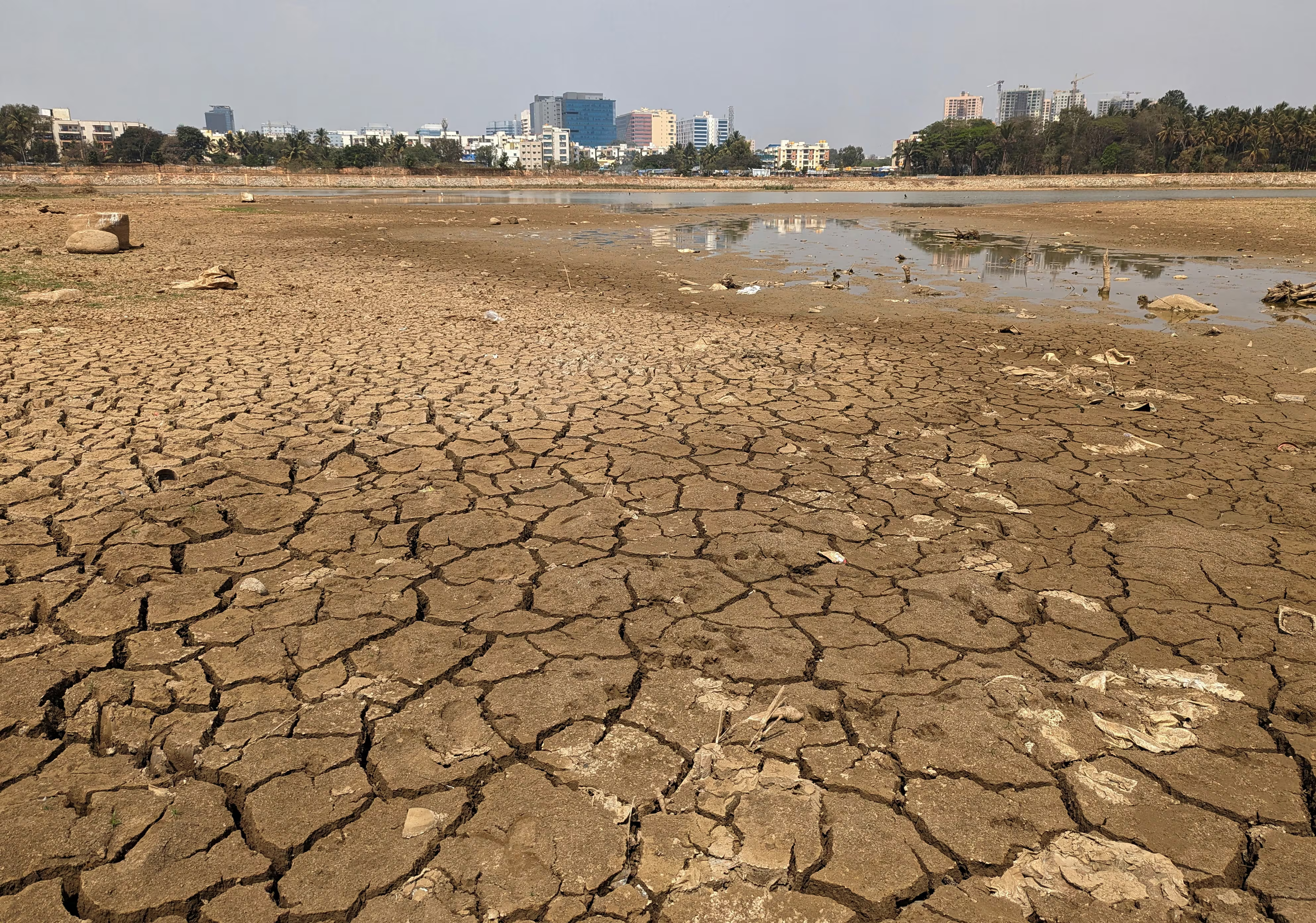

Several regions in India are issuing water shortage alerts as summer approaches, prompting local administrations to activate contingency plans. Authorities are focusing on supply management, tanker deployment, and conservation measures to address rising demand and falling water levels.
Water shortage alerts in multiple regions have been issued ahead of peak summer as rising temperatures and low rainfall patterns begin to impact water availability. The main keyword water shortage alerts India reflects growing concerns across urban and semi urban areas, where demand often exceeds supply during the hottest months. Local bodies and state authorities are preparing for potential shortages by implementing emergency response measures.
Cities in Maharashtra, parts of central India, and southern states are already reporting declining reservoir levels. This trend is consistent with seasonal patterns, but early warnings suggest that some areas may face more severe shortages if demand continues to rise.
Why Water Shortage Alerts Are Being Issued Early
Authorities are issuing alerts earlier this year due to lower than expected water storage levels in reservoirs and lakes. Many regions depend on monsoon rainfall to replenish water sources, and any variation directly affects summer supply.
The keyword summer water crisis India highlights how peak summer months place extreme pressure on existing water systems. Increased usage for drinking, cooling, and agriculture adds to the strain.
Urban expansion in Tier-2 cities has also contributed to higher demand. Rapid population growth often outpaces infrastructure development, making it difficult to maintain consistent supply during high demand periods.
Early alerts help administrations plan distribution strategies and avoid sudden crises.
Local Administration Plans to Manage Water Supply
Local governments are preparing multiple strategies to manage water distribution effectively. One of the primary measures is the deployment of water tankers to areas facing acute shortages.
The keyword water supply management India becomes relevant as authorities focus on equitable distribution. Tankers are used to supply water to residential areas where pipelines cannot meet demand.
In addition, scheduled water supply is being implemented in some regions. This involves limiting supply to specific hours to ensure fair access across neighborhoods.
Maintenance of pipelines and repair of leaks are also being prioritized to prevent wastage. Even minor leaks can result in significant losses when water availability is already limited.
Efforts to Monitor and Conserve Water Resources
Monitoring water usage is a key part of managing shortages. Authorities are using data to track consumption patterns and identify high usage areas.
The keyword water conservation measures India is important because conservation plays a critical role in reducing pressure on supply systems. Public awareness campaigns are being launched to encourage responsible water use.
Simple actions such as fixing leaks, using water efficient appliances, and reducing unnecessary consumption can make a significant difference at the household level.
In some regions, restrictions on non essential water usage such as car washing or garden watering may be enforced to conserve resources.
Impact on Residents and Daily Life
Water shortages directly affect daily routines, especially in areas with limited storage capacity. Residents may need to adjust their schedules based on water supply timings.
The keyword impact of water shortage on cities highlights how shortages can disrupt household activities, increase dependence on private water suppliers, and raise costs for families.
Small businesses such as restaurants, salons, and construction sites may also face operational challenges due to limited water availability.
In Tier-2 cities, where infrastructure may not be as robust as metros, the impact can be more pronounced. This makes early preparation and efficient management even more important.
Long Term Solutions and Infrastructure Needs
While short term measures help manage immediate shortages, long term solutions are essential to prevent recurring crises. Investments in water storage, rainwater harvesting, and recycling systems are key to sustainable supply.
The keyword long term water solutions India reflects the need for better planning and infrastructure development. Expanding reservoir capacity and improving groundwater management can provide more reliable water sources.
Urban planning must also include water management strategies to handle population growth. Without long term investments, seasonal shortages are likely to become more frequent.
Takeaways:
- Water shortage alerts are being issued early due to low reservoir levels
- Local administrations are using tankers and scheduled supply to manage demand
- Conservation measures are essential to reduce pressure on resources
- Long term infrastructure planning is needed to prevent recurring shortages
FAQ:
Q1: Why are water shortage alerts issued before summer?
Alerts are issued early to prepare for increased demand and manage limited water resources effectively.
Q2: How are authorities supplying water during shortages?
They use tankers, scheduled supply systems, and pipeline maintenance to ensure distribution.
Q3: What can residents do to reduce water usage?
Fix leaks, use water efficiently, and avoid unnecessary consumption.
Q4: Are water shortages becoming more frequent?
In many regions, increasing demand and climate variability are making shortages more common.