
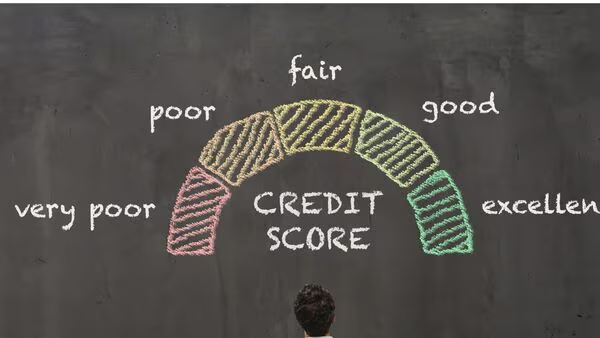

A good CIBIL score in 2026 is essential for getting loans, credit cards, and better interest rates in India. With digital access improving, checking and improving your score has become faster, but it still requires consistent financial discipline and smart credit behavior.
Checking and improving your CIBIL score in 2026 is now easier with online access through credit bureaus and banking apps. However, improving it quickly depends on correcting errors, managing credit usage, and building a strong repayment track record over time.
What Is CIBIL Score and Why It Matters in 2026
A CIBIL score is a three-digit number ranging from 300 to 900 that reflects your creditworthiness. It is calculated by TransUnion CIBIL based on your credit history, repayment behavior, and credit exposure.
In 2026, lenders heavily rely on this score for approving personal loans, home loans, and credit cards. A score above 750 is generally considered good and improves your chances of approval with lower interest rates.
For salaried individuals and small business owners in Tier-2 cities, a strong score has become important as digital lending platforms expand access to credit.
How to Check Your CIBIL Score Online for Free
Checking your CIBIL score has become simple and accessible. You can check it directly through the official TransUnion CIBIL website once a year for free, or through various banking and fintech apps that provide regular updates.
To check your score, you need basic details such as PAN number, mobile number, and date of birth. After verification through OTP, your score and credit report are generated instantly.
It is important to review not just the score but also the detailed report. This includes active loans, credit cards, repayment history, and any defaults.
Regularly checking your report helps you identify errors or unauthorized accounts that may affect your score.
Factors That Affect Your Credit Score in India
Several key factors determine your CIBIL score. Payment history is the most important. Missing EMIs or credit card payments negatively impacts your score.
Credit utilization is another critical factor. Using more than 30 to 40 percent of your credit limit signals higher risk to lenders.
The length of your credit history also matters. Older credit accounts with a good repayment record strengthen your profile.
Frequent loan or credit card applications can lower your score as multiple inquiries indicate higher credit dependence.
Maintaining a mix of secured and unsecured loans also contributes positively to your overall credit profile.
Quick Ways to Improve Your CIBIL Score in 2026
Improving your CIBIL score quickly requires targeted actions. Start by clearing overdue payments and ensuring all EMIs are paid on time. Even a single missed payment can reduce your score significantly.
Reduce your credit card usage and keep it within a safe limit. If possible, pay more than the minimum due to reduce outstanding balance.
Avoid applying for multiple loans or cards within a short period. This helps prevent unnecessary hard inquiries on your report.
If you find errors in your credit report, raise a dispute with the credit bureau immediately. Correcting inaccuracies can lead to a quick improvement in your score.
Another effective method is to maintain a low credit utilization ratio consistently for a few months.
Common Mistakes That Lower Your Credit Score
Many users unknowingly damage their credit score through avoidable mistakes. Ignoring small dues or late payments is one of the most common issues.
Closing old credit cards may also reduce your score as it shortens your credit history. Instead, keep older accounts active with minimal usage.
Using the full credit limit frequently creates a negative impression. Lenders may consider this as financial stress.
Co-signing or guaranteeing loans for others can also affect your score if the primary borrower defaults.
Understanding these mistakes helps in maintaining a stable and healthy credit profile.
Building a Strong Credit Profile for Long-Term Benefits
While quick improvements are possible, building a strong CIBIL score is a long-term process. Consistency in repayment and responsible credit usage are key.
Using a secured credit card or small loan and repaying it on time can help beginners build a credit history.
For professionals and small business owners in Tier-2 cities, maintaining a good score can unlock better financial opportunities and lower borrowing costs.
A disciplined approach ensures that your score remains stable even during financial changes.
Takeaways
- CIBIL score is crucial for loan approval and better interest rates
- Regular monitoring helps detect errors and track improvements
- Timely payments and low credit usage are key to improving score
- Avoid multiple loan applications and maintain long credit history
FAQ
Q1. What is a good CIBIL score in 2026?
A score above 750 is generally considered good and improves chances of loan approval.
Q2. How often should I check my CIBIL score?
It is advisable to check your score at least once every few months to stay updated.
Q3. Can I improve my CIBIL score quickly?
Yes, by clearing dues, reducing credit usage, and correcting report errors, you can see improvement over time.
Q4. Does checking my CIBIL score reduce it?
No, checking your own score is considered a soft inquiry and does not impact your score.