
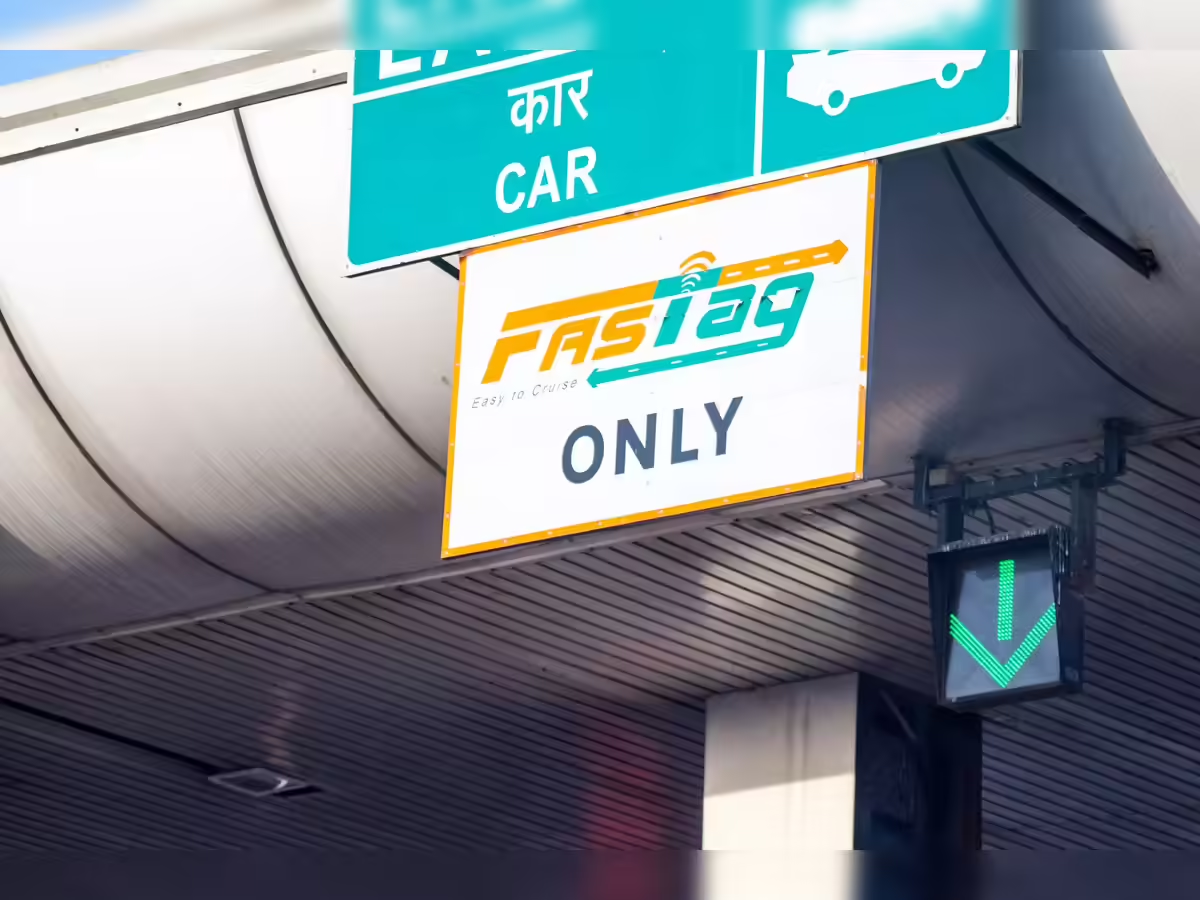

FASTag KYC update has become important for millions of vehicle owners in India as banks and payment operators continue tightening verification rules under RBI compliance guidelines. Users with incomplete KYC risk FASTag deactivation, recharge restrictions, and toll payment failures during highway travel.
FASTag KYC update is now a critical process for vehicle owners using electronic toll collection systems across India. The National Payments Corporation of India and issuing banks have been encouraging users to complete Know Your Customer verification to reduce fraud, duplicate FASTags, and inactive accounts linked to the same vehicle.
Why FASTag KYC Compliance Matters in 2026
FASTag is connected to prepaid payment systems regulated through banking and digital payment frameworks. Because of this, KYC compliance rules have become stricter in recent years. Users with incomplete or outdated information may face problems such as blacklisted FASTags, delayed toll deductions, or inability to recharge accounts.
Many banks have already started sending SMS and app notifications asking customers to complete KYC updates. Vehicle owners using FASTags issued several years ago are more likely to receive these notices because older registrations may not meet updated digital verification standards.
The main objective behind stricter FASTag KYC rules is to improve toll transaction security and prevent misuse of duplicate tags issued against a single vehicle number.
Documents Required for FASTag KYC Update
Before starting the FASTag KYC process, users should keep all required documents ready in digital format. Most banks and FASTag providers ask for:
• Aadhaar card
• PAN card
• Vehicle Registration Certificate (RC)
• Passport-size photograph in some cases
• Address proof if different from Aadhaar
• Mobile number linked with bank or FASTag account
Some issuers may request additional documents depending on account type or verification status. Commercial vehicle operators sometimes need business-related registration details as well.
Clear scanned copies or readable smartphone images are usually accepted for online uploads.
Step-by-Step Process to Update FASTag KYC Online
The FASTag KYC update process is largely similar across major banks and payment providers including SBI FASTag, ICICI Bank FASTag, HDFC FASTag, Axis Bank FASTag, Paytm-linked FASTag services, and other issuers.
Step 1: Visit the FASTag issuer website or mobile app
Open the official FASTag portal or bank application connected to your account.
Step 2: Log in using registered mobile number
Most systems allow login through OTP verification linked to the registered mobile number.
Step 3: Open KYC or Profile Update section
Look for options such as “Update KYC,” “Complete Full KYC,” or “Customer Verification.”
Step 4: Upload required documents
Submit Aadhaar, PAN, RC, and address proof documents where required.
Step 5: Verify vehicle details
Cross-check vehicle number, chassis details, and registered owner information carefully.
Step 6: Submit application
After final verification, submit the KYC request. Some providers approve updates instantly while others may take 24 to 72 hours.
Users should avoid uploading blurred or mismatched documents because verification failures are one of the most common reasons for delayed approvals.
What Happens If FASTag KYC Is Not Updated?
Incomplete FASTag KYC may create several problems for vehicle owners. In some cases, banks may classify the FASTag as low-compliance or inactive. This can affect recharge limits and toll payments.
Users may experience:
• FASTag blacklisting at toll plazas
• Delayed toll deductions
• Failed wallet recharge attempts
• Suspension of FASTag services
• Multiple FASTags linked to one vehicle being blocked
Authorities have also been focusing on the “One Vehicle, One FASTag” initiative to reduce duplicate tags and payment confusion.
Vehicle owners planning long-distance travel are advised to complete verification early to avoid sudden disruptions at highways or expressways.
Common FASTag KYC Problems Faced by Users
Many users face technical issues while updating FASTag details online. One of the biggest problems is mismatch between vehicle ownership records and Aadhaar or PAN information.
Another common issue involves mobile numbers that are no longer active. Without OTP verification, account access becomes difficult.
Older FASTags issued through offline dealership channels sometimes have incomplete digital records, requiring manual customer support intervention.
Users also report delays in RC verification for recently purchased vehicles where registration databases have not fully updated yet.
Experts recommend checking the FASTag status directly from the issuer portal before travelling on national highways.
How FASTag Rules Are Changing India’s Toll System
India’s toll collection system has rapidly shifted toward digital infrastructure over the last few years. FASTag usage has increased significantly across national highways, state expressways, and urban toll routes.
The government and financial institutions are focusing on better compliance, automated verification, and smoother vehicle movement. Updated KYC systems also help reduce fraud involving fake registrations, cloned tags, and unauthorised toll usage.
With more digital payment integration expected in transport systems, verified FASTag accounts may become increasingly important for connected mobility services in the future.
Takeaways
• FASTag KYC update is necessary to avoid account restrictions and toll payment failures
• Aadhaar, PAN, RC, and mobile verification are commonly required documents
• Users with old or inactive FASTags are more likely to face compliance notices
• Completing KYC early can prevent blacklisting and travel disruptions on highways
FAQ
Q1. Is FASTag KYC mandatory in 2026?
Yes, most FASTag issuers require complete KYC compliance for uninterrupted services and recharge access.
Q2. Can FASTag KYC be updated online?
Yes, major banks and FASTag providers allow online KYC updates through websites and mobile applications.
Q3. How long does FASTag KYC approval take?
Approval may happen instantly in some cases, while manual verification can take up to 72 hours.
Q4. What happens if my FASTag gets blacklisted?
A blacklisted FASTag may stop working at toll plazas, and users may need to pay toll charges manually until the issue is resolved.
(FASTag KYC update, RBI FASTag compliance, FASTag verification process, One Vehicle One FASTag, FASTag blacklisted solution, FASTag online update, toll payment system India, FASTag document requirements)